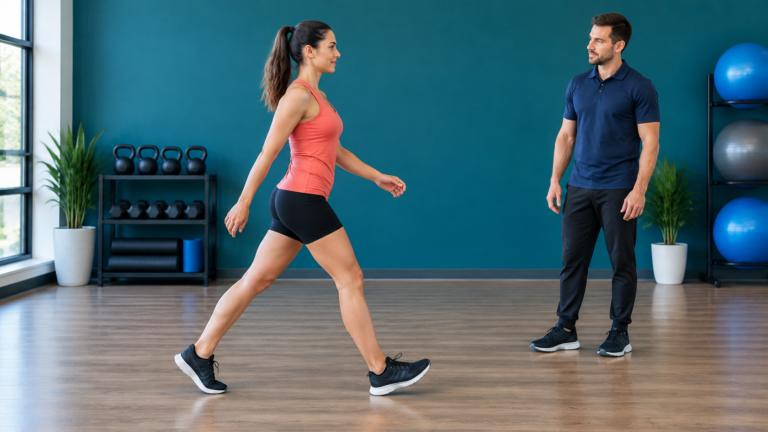
Many clients spend an hour or two a week with us. The rest of the week, well over 160 hours, belongs to them: work, meals, sleep, family, and whatever movement happens at home. A plan that only counts what happens inside the clinic leaves most of the week out of the picture. The more useful question is how coached time and home time support each other, and research on supervised training, maintenance dosing, habit formation, and self-monitoring gives a clear way to think about that relationship.
For nearly 30 years, Temple Human Performance has combined massage and osteopathic-based manual therapy with movement training, physical preparation, nutrition, and recovery tools in one approach to treatment and training. In an earlier article we described how those parts fit inside a single plan. This article looks at the same plan across time: what studies report about coached and independent training, how much training it takes to hold on to gains, how a routine becomes automatic, and how we arrange a client’s week so the session and the home practice reinforce each other.
The most direct evidence comes from a systematic review and meta-analysis by Lacroix, Hortobágyi, Beurskens, and Granacher (2017). The authors pooled 11 studies of healthy adults aged 65 and older that compared supervised with unsupervised balance and resistance training. Supervised programs improved balance and muscle strength and power to a greater extent than unsupervised programs, with the clearest differences in dynamic balance, balance test batteries, and strength and power. The difference for static balance was small and not statistically significant. The advantage of supervision was most prominent when the comparison group trained entirely on its own. When an unsupervised program included even a few supervised sessions, for example three across the whole program, the differences were much smaller. Working from a modest number of studies, the authors recommended that two of every three weekly sessions be supervised.
One of the trials behind that recommendation shows what a blended week can look like. Lacroix and colleagues (2016) randomly assigned 66 healthy older adults, average age 73, to 12 weeks of combined balance and strength training or to a control group. One training group trained twice a week under supervision and once a week alone. The other trained three times a week alone. Adherence was high in both, 92 percent and 97 percent. Improvements in a standing balance test, walking stride velocity, the Timed Up and Go test, and the Chair Stand test favored the group with supervised sessions. After 12 further weeks without training, performance remained better than baseline in 13 measures for the supervised group and in 10 measures for the home group. Both ways of training helped, and the week that combined coaching with independent practice helped more.
If both groups do the same program, why would supervision matter? Two studies of resistance training in younger adults point to what happens inside the session. Mazzetti and colleagues (2000) gave moderately trained young men an identical 12-week periodized heavy resistance program, either directly supervised by a personal trainer or unsupervised. The supervised group lifted greater training loads in the later weeks, increased those loads at a faster rate, and finished with greater maximal squat and bench press strength. Both groups improved strength and power, but the coached group progressed further.
Gentil and Bottaro (2010) compared supervision ratios in 124 untrained young men following the same program for 11 weeks, with one coach for every five trainees or one coach for every 25. Bench press strength rose 15.9 percent with closer supervision and 10.2 percent with looser supervision, and knee extensor torque increased significantly only in the closely supervised group. Attendance and training volume did not differ between groups. What did differ was the share of participants training at maximal intensity, and the authors attributed the larger gains to that higher intensity. Taken together, these studies suggest that much of the value of coaching lies in judgment within the session: choosing the right load, recognizing when to progress, and holding the quality of effort. Those are the decisions that are hardest to make alone.
Training adaptations also have to be maintained once they are built, and the dose needed to keep them is not always the dose needed to gain them. Bickel, Cross, and Bamman (2011) trained 70 adults, a younger group aged 20 to 35 and an older group aged 60 to 75, three days a week for 16 weeks. Participants were then randomly assigned for 32 weeks to stop training or to continue at one-third or one-ninth of the original dose. Both reduced doses preserved the muscle growth gained in the younger adults but not in the older adults, and the authors concluded that older adults require a higher weekly dose of loading to maintain that growth. Strength, however, was largely retained even among those who stopped, with only a slight reduction at the final time point, and strength gains in the older adults were well preserved.
This finding shapes how we think about the home portion of a plan. A smaller, steady dose can protect much of what a focused block of training builds, and for older clients that steady loading matters even more. The home practice is not an afterthought to the coached work. It is the part of the week that keeps the gains in place.
A home program only helps if it actually happens, and research on habit formation explains why some routines stick and others fade. Gardner, Lally, and Wardle (2012) describe habits as actions triggered automatically by cues in a familiar context, built through simple repetition in that same context. They summarize a study in which volunteers repeated a self-chosen health behavior, such as eating a piece of fruit or going for a walk, in response to a single daily cue such as finishing breakfast. Ratings of how automatic the behavior felt rose quickly at first and then leveled off after an average of 66 days, with considerable variation between people and behaviors. Missing an occasional day did not seriously disrupt the process, and simple actions became automatic sooner than more elaborate routines.
Kaushal and Rhodes (2015) followed 111 new gym members across 12 weeks and found that exercising at least four times a week for six weeks was the minimum needed to establish an exercise habit. Consistency, low complexity of the behavior, the environment, and how enjoyable the exercise felt all predicted how habit strength developed. The authors advised trainers to keep exercises enjoyable and simple for new clients and to focus on consistency.
Tracking helps as well. Michie and colleagues (2009) analyzed 122 evaluations of interventions designed to increase physical activity and healthy eating, involving 44,747 participants. Self-monitoring explained more of the differences between interventions than any other technique, and interventions that combined self-monitoring with at least one other self-regulation technique drawn from control theory were significantly more effective than the rest, with a pooled effect of 0.42 compared with 0.26. Because that analysis covered healthy eating as well as activity, the same principles apply to the nutrition side of our work. Within the PKT Self-Care program, the PKT Level Calendars serve this purpose, laying out each level’s training on a write-on surface that clients mark as they go.
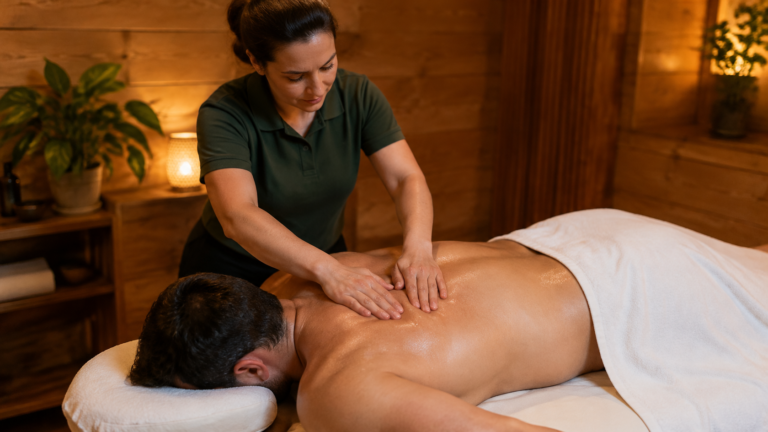
At Temple, we use the coached session for the work that benefits most from a trained eye and trained hands. That includes assessment, the hands-on work, introducing new movement, and deciding when and how to add load. The table work often opens a window, a change in comfort, range, or ease of movement, and we use it right away. The client moves actively while our hands are still involved, then carries that change into standing, loaded movement within the same session. This is where supervision earns its place, in the same way the training studies describe: an experienced practitioner reading the response and adjusting the next step.
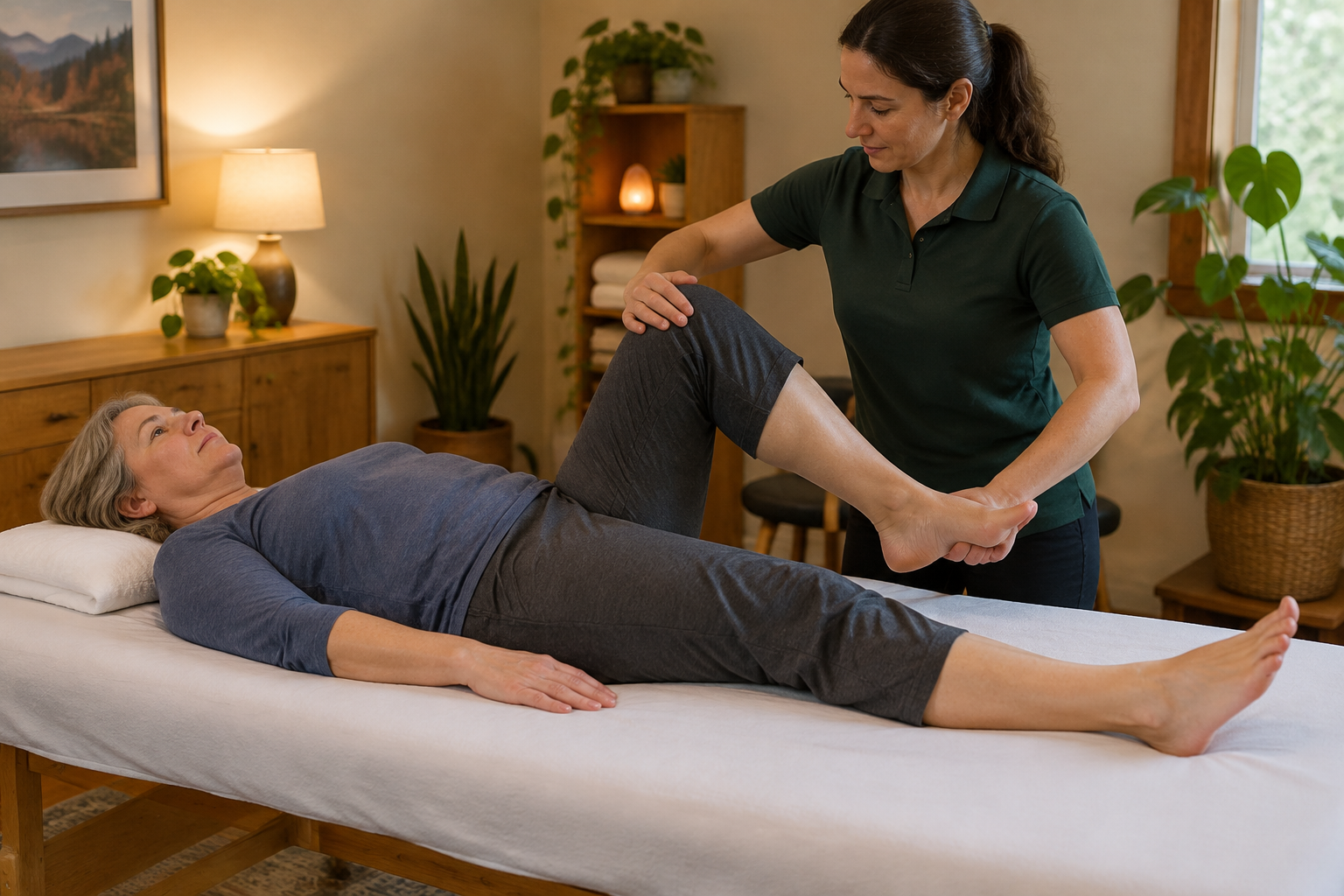
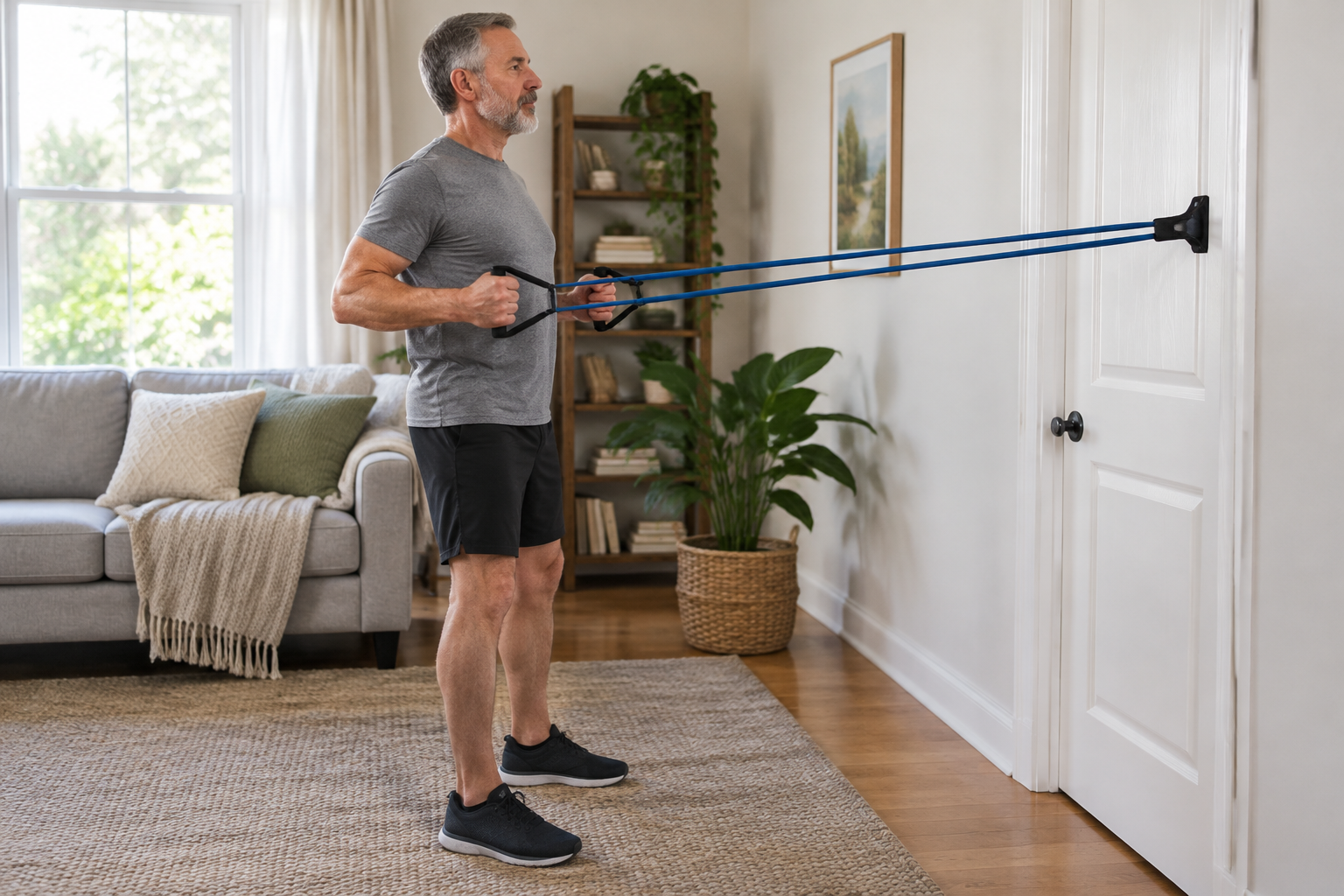
Home practice then carries the work through the rest of the week. We keep it short and specific, drawn from the PKT Self-Care program and matched to what we did together in the session. We encourage clients to attach it to a daily cue they already have, such as the morning coffee or the end of the workday, and we treat a missed day as part of normal life rather than a failure. In our experience, the clients who progress most steadily are rarely the ones with the most elaborate routines. They are the ones whose routine is simple enough to happen nearly every day.
The other parts of our work fit into the same week. Nutrition coaching follows the same habit principles: one small change, anchored to a consistent context, tracked until it no longer takes effort. Recovery tools such as the far infrared sauna, the BEMER, and the light table often fit on lighter days or after a session, as part of how we pace effort and recovery across the week rather than as stand-alone visits.
The balance between coached and home time also changes as a plan matures. Early on, when movement is new and loading decisions matter most, we tend to see clients more often. As skills become reliable and the home routine becomes automatic, sessions can spread out while home practice carries more of the week, with regular check-ins to reassess and progress. The supervised training research supports keeping some coached contact in the picture, since even a few supervised sessions narrowed the gap between home-only and supervised training. The maintenance research supports keeping the home dose steady, especially for older clients.
Physiokinetix, the education and movement system I developed, was built on the idea that professional sessions and self-care should not be separate systems. A practitioner uses hands-on techniques and other professional input to influence movement. The individual learns techniques and strategies to keep working between sessions. Over time, that participation builds capacity. The long-term aim is greater independence and movement capability, not permanent reliance on professional care.
The PKT Self-Care program follows the same progression used in the clinic, moving through Mobility, Stability, Power, and Performance. Mobility gives the body access to movement options. Stability builds active control of those options. Power adds force and progressive load. Performance applies those capacities to sport, work, daily life, and healthy aging. The levels build on one another but are not a rigid protocol, and the program uses simple, portable tools such as resistance bands, handles, anchors, and mats so the practice can happen at home, before training, or while traveling. On the professional side, Table Neuro Training, the first and flagship Physiokinetix workshop, was developed specifically to complement the Mobility and Stability levels of Self-Care, so that what a practitioner does on the table connects directly with what the client continues on their own.
Research on supervised and unsupervised training shows that coaching tends to produce larger gains in balance, strength, and power, and that much of this advantage seems to come from better decisions about load, intensity, and progression within the session. It also shows that even a few supervised sessions narrow the gap, that a smaller steady dose can preserve much of what training builds, with older adults needing more weekly loading to keep muscle growth, and that routines become automatic through simple, consistent repetition in a familiar context, supported by tracking. At Temple, we arrange the week around those findings. The coached session handles assessment, hands-on work, and progression, and simple, consistent home practice from the Self-Care program carries that work through the rest of the week, so treatment and training continue between visits.