Stress shows up in the body before anyone puts it into words. Heart rate climbs, blood pressure rises, breathing becomes shallow, muscles guard, and nights stop restoring much. A large share of that background tone is set by the autonomic nervous system. Its sympathetic branch prepares the body for effort and threat, and its parasympathetic branch supports rest, digestion, and recovery. Researchers often follow the balance between the two through heart rate variability, the small beat-to-beat changes in the timing of the heart, and especially through its high-frequency component, which reflects parasympathetic activity reaching the heart.
For nearly 30 years, Temple Human Performance has combined massage and osteopathic-based manual therapy with movement training and physical preparation in one approach to treatment and training. In an earlier article we looked at what massage research shows about musculoskeletal comfort and recovery after exercise. This article turns to a different set of outcomes: what studies in healthy adults report about state anxiety, perceived stress, heart rate, blood pressure, autonomic markers, stress hormones, and sleep after hands-on work, described in the terms those studies used.
The most widely cited synthesis in this area is a meta-analysis by Moyer, Rounds, and Hannum (2004). The authors pooled 37 studies that used random assignment and calculated effect sizes for nine outcomes. Single applications of massage reduced state anxiety, blood pressure, and heart rate. They did not reduce negative mood, immediate ratings of pain, or cortisol. Across multiple sessions, the largest effects were reductions in trait anxiety and depression, and the authors reported that a course of massage produced benefits similar in magnitude to those reported for psychotherapy.
The distinction between state and trait matters here. State anxiety is how tense and apprehensive a person feels right now. Trait anxiety is the more stable tendency to respond to life that way. The meta-analysis suggests that a single session shifts the first, while a series of sessions is where the second begins to move. The authors went further and proposed that massage research might be better understood through a psychotherapy perspective than through a purely medical model, which fits how we have always viewed the work: as something that involves the whole person, not only the tissue under the hands.
Diego and Field (2009) looked closely at the autonomic response during a session. Twenty healthy adults were randomly assigned to a 15-minute moderate pressure massage or a light pressure massage while their heart activity was recorded before, during, and after. The moderate pressure group showed a parasympathetic response: high-frequency heart rate variability rose, suggesting increased vagal activity, and the ratio of low to high frequency fell, suggesting a shift from sympathetic toward parasympathetic activity. That shift peaked during the first half of the massage. The light pressure group showed the opposite, a sympathetic response with lower high-frequency variability and a higher ratio. The pressure of the touch, not touch alone, shaped the direction of the response.
Meier and colleagues (2020) asked whether standardized massage could serve as a reliable way to induce relaxation in the laboratory. Sixty healthy women were randomly assigned to a vagus nerve massage protocol, a soft shoulder massage, or a resting control condition. During the intervention, high-frequency heart rate variability and subjective relaxation increased, and subjective stress decreased, in all three groups. Both massage protocols produced significantly higher high-frequency heart rate variability than the resting control. The authors concluded that both protocols increased psychophysiological relaxation and could be useful tools for future research. In other words, quiet rest helped, and the hands-on conditions added a measurable autonomic shift beyond it.
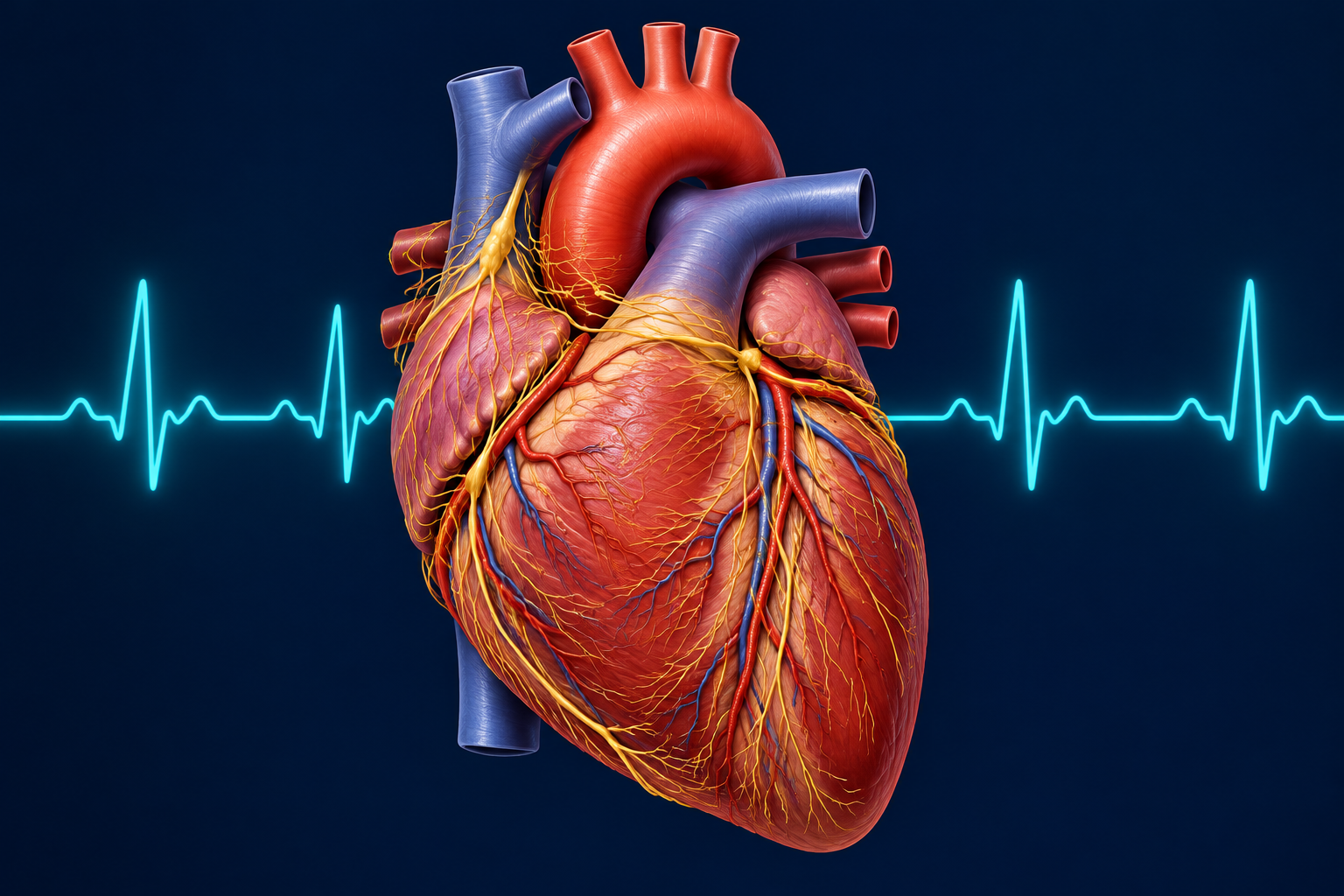
Rapaport, Schettler, and Bresee (2010) studied what a single 45-minute Swedish massage does to neuroendocrine and immune markers in medically and psychiatrically healthy adults aged 18 to 45, compared with a light touch condition using an identical protocol. Compared with light touch, massage produced a large decrease in arginine vasopressin, a hormone involved in the stress response, and a small decrease in cortisol. Massage also increased the number of circulating lymphocytes and decreased mitogen-stimulated cytokine production. The authors described the data as preliminary and concluded that a single session produces measurable biologic effects.
The same group then compared weekly and twice-weekly sessions over five weeks (Rapaport, Schettler, and Bresee, 2012). Weekly massage produced a sustained pattern of increased circulating lymphocyte markers and decreased cytokine production, similar to the single-session findings, with minimal effect on the stress hormone axis. Twice-weekly massage produced a different pattern: oxytocin rose, while vasopressin and cortisol fell. The authors concluded that the effects persisted for several days or a week and differed profoundly depending on how often sessions occurred, and they called for confirmation in larger samples.
Cortisol is the least uniform marker in this body of work. The Moyer meta-analysis did not find a pooled reduction after single sessions, while the Rapaport studies found small decreases under specific conditions. We read the hormone studies as early work on how the response may unfold, and the frequency finding is a useful reminder that the schedule of sessions is part of the dose.
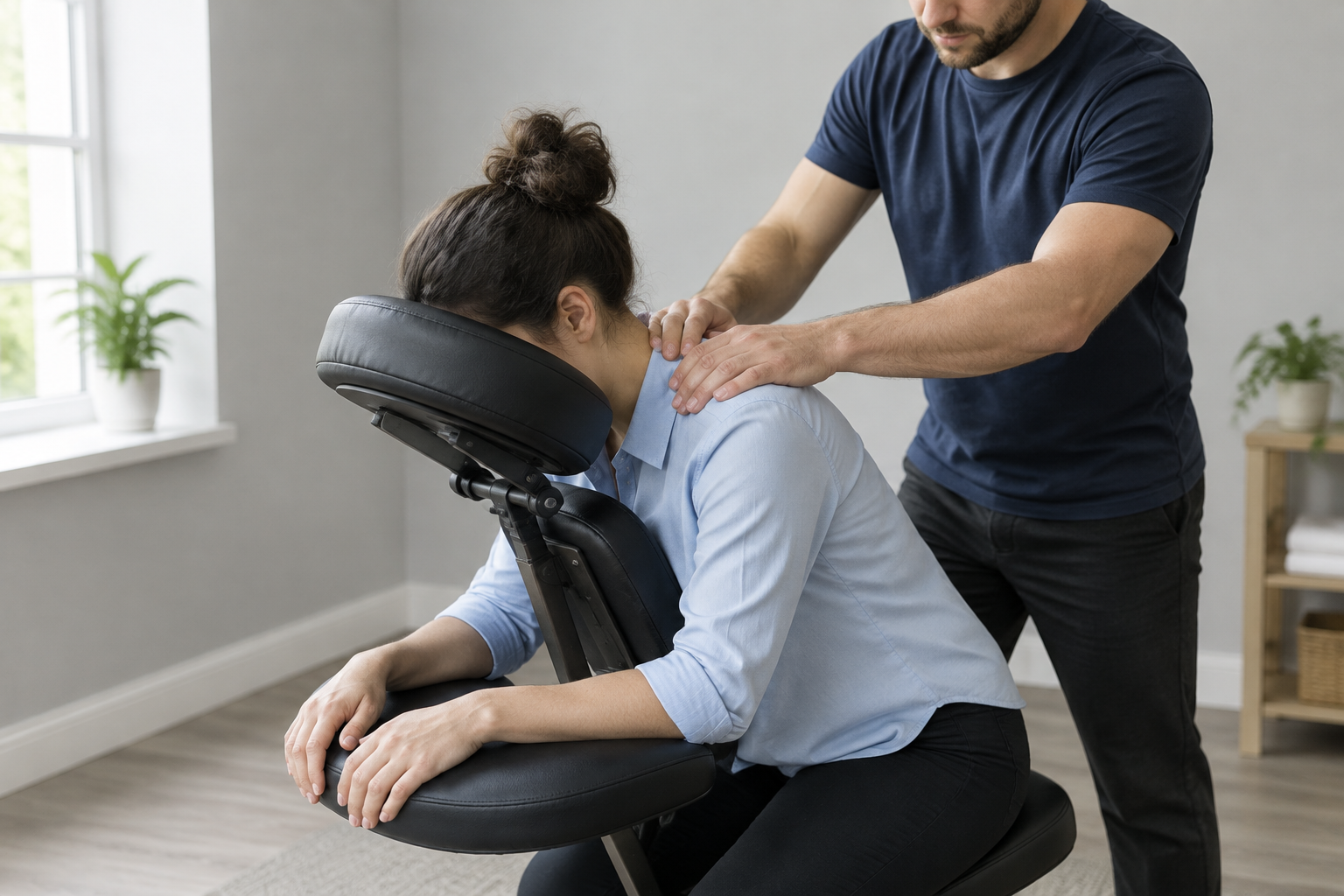
Hands-on work does not require a full table session to register. Field and colleagues (1996) gave 26 adults a 15-minute chair massage twice a week for five weeks, while 24 control adults relaxed in the massage chair for the same time. Frontal delta activity on EEG increased in both groups, suggesting relaxation. The massage group also showed decreased frontal alpha and beta activity, a pattern the authors interpreted as enhanced alertness, while the control group showed increases. After massage, participants completed math computations faster and more accurately, and anxiety was lower after massage but not after the control sessions. Salivary cortisol fell after massage on the first day only. By the end of five weeks, depression scores were lower in both groups, while job stress scores were lower only in the massage group. The picture is of a body that settled while the mind stayed sharp.
Fricker and colleagues (2024) studied a 17-minute seated Amma session, a form of acupressure massage, in 59 young healthy adults, with 33 receiving the massage and 26 controls simply seated on the massage chair. The massage group showed significant improvements in perceived anxiety and self-confidence compared with controls. Plasma oxytocin rose significantly, and heart rate decreased slightly. Cortisol levels did not track the psychological changes. The authors concluded that seated acupressure massage could be a useful tool for improving quality of life at work.
Sleep is where many people feel the cost of a stressed system most directly, and research on hands-on work and sleep in healthy adults is growing. Ntoumas and colleagues (2025) recruited 15 young adults classified as poor sleepers on the Pittsburgh Sleep Quality Index and tested three conditions one week apart: a 30-minute sports massage, a 30-minute relaxation massage, and a control condition with no massage, each followed by a daytime nap monitored with polysomnography. Muscle tone dropped by 7.2 percent after the sports massage. Relaxation scores rose by 23.4 percent after the relaxation massage, and the time to fall into the first stage of sleep improved only after the relaxation massage. The authors concluded that massage can positively influence the quality and quantity of daytime napping and may help reduce work-related stress.
In older adults, Asriadi, Nursalam, and Fadli (2026) conducted a scoping review of ten studies published between 2019 and 2024 on progressive muscle relaxation and slow stroke back massage. For slow stroke back massage, the included studies reported that it helped stabilize blood pressure, reduce stress and depressive symptoms, and enhance sleep comfort.
These findings line up with what we see on the table every day. Clients often arrive carrying the day in their shoulders, jaw, and breathing, and the first part of a session is frequently about letting the system settle. The Diego and Field work gives a concrete reason for how we use pressure: steady, moderate pressure and an unhurried pace are part of creating the parasympathetic shift, while very light contact did not produce the same response in that study. We pay attention to how breathing changes, how muscle guarding eases, and how a client’s body responds to the work over the course of the session.
Settling is not the end point. In our experience, a client who has calmed on the table often moves with less guarding in the first active work that follows, and that is the moment we like to use. We bring in simple active movement while the hands are still involved, ask the client to participate, and then carry the change into loaded movement and daily tasks. The relaxation research describes what the hands-on work can contribute to the state of the system. Our job is to connect that state to movement the client can own.
The Rapaport frequency findings also echo something we work with constantly: the schedule is part of the plan. Some clients benefit from a closer run of sessions early on, others from steady weekly work, and the right rhythm depends on goals, life demands, and how each person responds. We set frequency case by case rather than following one fixed formula.
Within Physiokinetix, the education and movement system Paul developed, movement is understood as the product of many interacting systems: neurological input, sensory information, breathing and pressure relationships, confidence, and the demands of the task, along with joints and muscles. The autonomic state of the body belongs in that list. A system that is braced against threat tends to move in guarded, limited ways, and a system that has settled has more options available.
That is why we treat the calming effect of hands-on work as one input within a larger progression rather than a separate service. The Physiokinetix framework moves through Mobility, Stability, Power, and Performance, progressive levels that build from access to movement through control, load, and meaningful activity. A settled system is a good starting point for the Mobility and Stability work that follows, and the PKT Self-Care program gives clients practical ways to keep that work going between sessions.
The research on massage and stress in healthy adults describes a consistent set of short-term responses. Single sessions reduced state anxiety, blood pressure, and heart rate in pooled analyses, and moderate pressure massage shifted autonomic activity from sympathetic toward parasympathetic activity. Laboratory and workplace studies report greater relaxation, lower anxiety, rises in oxytocin, and in one study sharper performance on a cognitive task. A course of sessions produced the largest effects, reductions in trait anxiety and depression, and the frequency of sessions changed the biological response. Work on rest and sleep, from daytime naps in poor sleepers to back massage in older adults, points in the same direction. At Temple, we use that settled state as a starting point, connecting what the hands-on work changes to the movement, loading, and self-care that build lasting capacity.