Strength is usually described as a property of muscle, but the early gains from strength training arrive faster than muscle can grow. A large part of that first improvement comes from the nervous system learning to drive the muscle more fully. That raises a practical research question: if part of voluntary force is a neural skill, can rehearsing a maximal effort in the mind, without contracting the muscle, raise the force a person can later produce?
Motor imagery is the mental simulation of a movement without overt muscle contraction. In strength research it usually means imagining a maximal or near-maximal contraction, in detail and with effort, for a set number of repetitions. It is not relaxation or visualizing a result. The person rehearses the act of producing force.
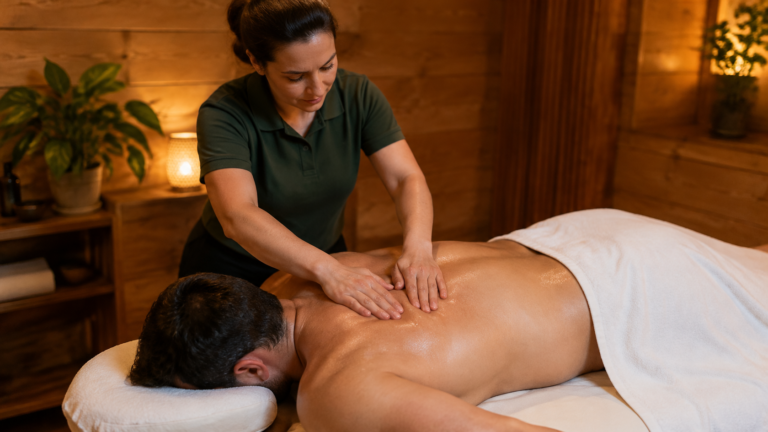
For nearly 30 years, Temple Human Performance has combined massage and osteopathic-based manual therapy with movement training and physical preparation in one plan. Imagery research interests us because it isolates the neural side of force production, which helps explain how the hands-on work, active practice, and loading in a session relate to each other.
Yue and Cole (1992) trained the small muscle that spreads the little finger away from the hand. For four weeks, five sessions a week, one group performed repeated maximal isometric contractions, a second group only imagined producing those same effortful contractions, and a third group did not train. Abduction force rose 30% in the contraction group, 22% in the imagery group, and 3.7% in the controls.
Two further measurements shaped how the result is read. Twitch force evoked by electrical stimulation of the nerve was unchanged in all groups, which the authors interpreted as consistent with an absence of muscle hypertrophy. The great toe extensors did not get stronger either, which argues against a general rise in effort during testing. The authors concluded that the gains appeared to come from practice effects on central motor programming.
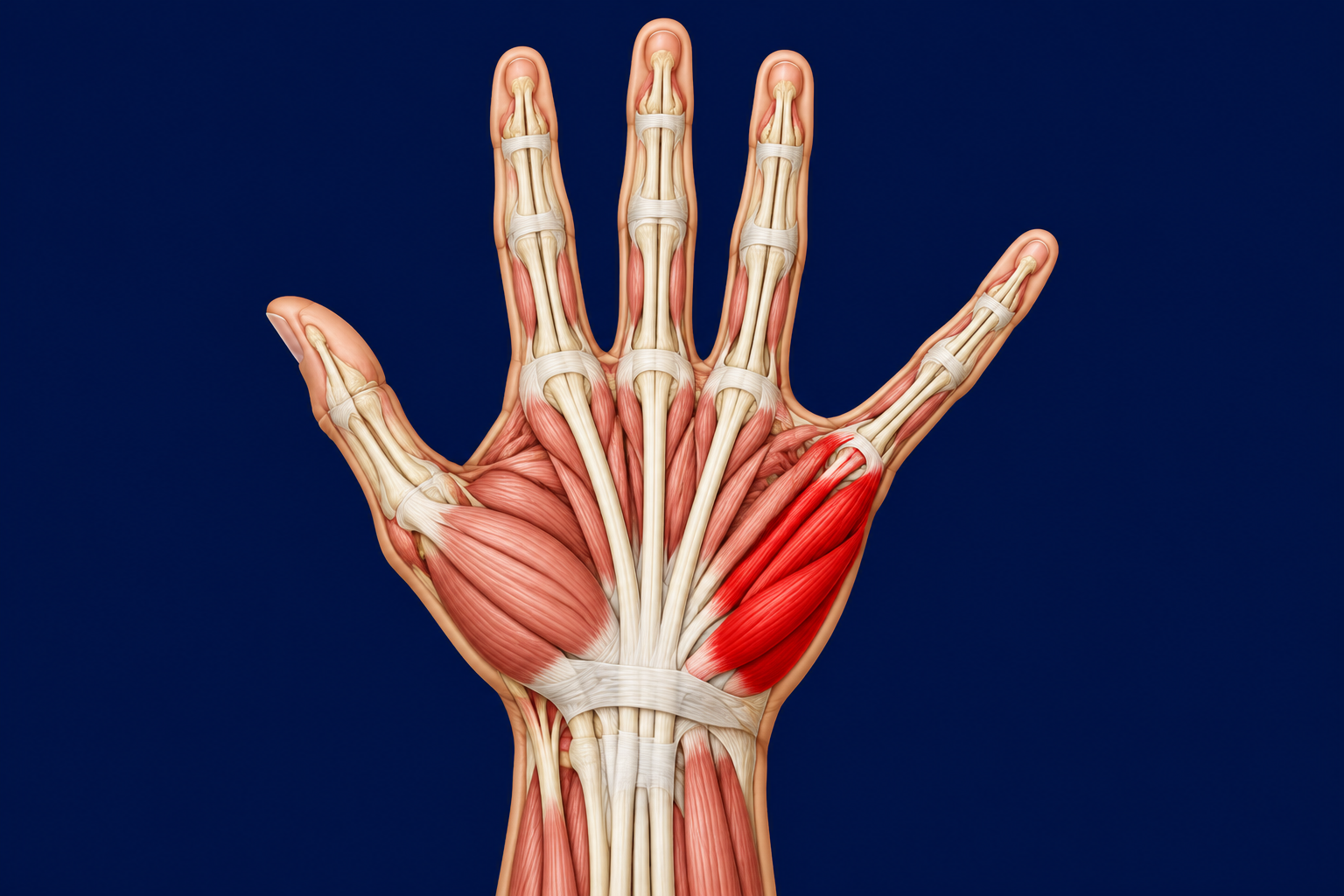
Ranganathan and colleagues (2004) extended the idea over 12 weeks, 15 minutes a day, five days a week, in young healthy volunteers. One group of 8 imagined little finger abduction, a second group of 8 imagined elbow flexion, and 8 controls trained nothing. Finger abduction strength rose 35% in the finger imagery group and elbow flexion strength rose 13.5% in the elbow imagery group, while the controls showed no significant change. Six additional volunteers who trained physical finger abductions increased that strength by 53%. The physical group was added at the end rather than assigned alongside the others, so that comparison is descriptive rather than randomized. Strength gains in the trained groups were accompanied by increases in an EEG-derived cortical potential, which the authors interpreted as a stronger cortical output signal driving the muscle.
Paravlic and colleagues (2018) meta-analyzed 13 articles with 370 healthy adults. Imagery practice moderately improved maximal voluntary strength compared with no exercise. Compared with physical practice, the difference was small and in favor of physical practice. Imagery combined with physical practice, compared with physical practice alone, showed unclear effects. The authors concluded that imagery increases maximal strength compared with no exercise, but less than physical practice does.
Liu and colleagues (2023) pooled 25 randomized trials in healthy young and older adults. Imagery training improved maximal voluntary contraction force compared with no exercise (effect size 1.10, 95% CI 0.89 to 1.30) but was inferior to physical training (effect size 0.38 in favor of physical training, 95% CI 0.15 to 0.62). The combination of imagery and physical training was equivalent to physical training alone. In subgroup analyses, effects were larger in older adults than in young adults, and larger for small finger muscles than for large upper limb muscles.
Taken together, the pattern is consistent. Imagined effort raises force on the practiced test compared with doing nothing. Physical practice raises it more. Adding imagery to physical practice has not reliably added to the gain in these pooled analyses.
The strongest evidence comes from small muscles and isometric tests, often the exact contraction that was rehearsed. That is a measure of how well the nervous system can drive a practiced task, rather than a direct measure of tissue change. In Yue and Cole, the unchanged twitch force is the clearest signal: the muscle itself did not appear to become more capable, while voluntary output on the trained task did. The cortical findings in Ranganathan describe a measured change in brain signals that accompanied strength, and the idea that this signal caused the gain is the authors’ interpretation.
Muscle, tendon, and connective tissue adapt to mechanical load. Imagery provides no mechanical load, so these studies give no reason to think it builds tissue capacity. Gains on large, multi-joint, dynamic tasks are also less certain than gains on a rehearsed finger contraction, and the subgroup differences in Liu are group-level comparisons rather than predictions for any one person.
Piveteau and colleagues (2023) tested imagery inside actual training. Seventy-five participants all trained the back squat. During rest between efforts, one group mentally rehearsed the back squat, a second group imagined a deadlift, and a control group completed a neutral cognitive task for the same time. The back squat imagery group improved back squat performance more than the control group, measured with a velocity transducer, and the authors reported support, at the margin of statistical significance (p = 0.05), for transfer of strength gains to the movement imagined but not physically trained.
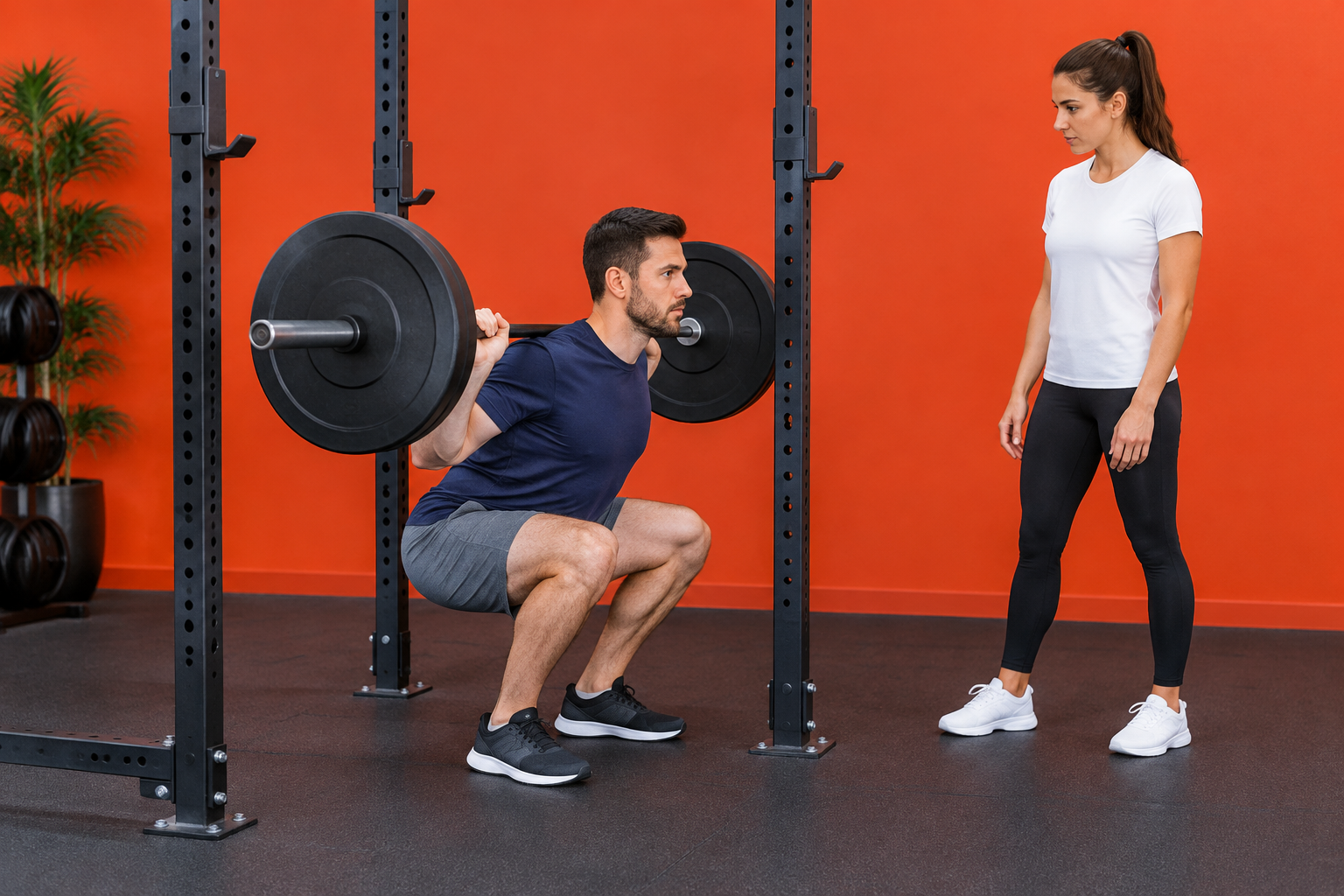
This is a different question from the meta-analyses. Here imagery filled rest periods within real loaded practice, and the comparison was against an equal amount of unrelated mental activity. The result fits with the meta-analytic picture rather than overturning it: imagery is a rehearsal of the effort, and it was layered onto physical practice rather than replacing it.
We read this research as evidence about the neural side of force production, and it informs how we think about effort rather than giving us a new protocol.
Voluntary force is partly a skill. When a client produces more force on a task within a short time, we do not assume the tissue has changed. The research supports a neural explanation for early gains, so we treat a quick improvement as better access to existing capacity and keep loading progressively to build the capacity itself.
Effort and intent matter. The imagery trials asked for vivid, effortful, maximal rehearsal, and that is the condition under which force rose. When we work at the table or in training, we pay attention to whether a contraction is performed with clear intent and full engagement, because the nervous system’s contribution to force is real and trainable.
Rehearsal does not replace load. Physical practice outperformed imagery across the pooled analyses, and adding imagery to physical practice did not reliably add more. When movement or load is limited for a period, mental rehearsal of the effort is a reasonable way to keep the task in mind, and the research supports a modest neural effect on the practiced task. It is not a substitute for returning to real movement and progressive loading as soon as that is appropriate.
Physiokinetix is a professional education and movement system built on the view that movement emerges from many interacting systems, including neurological input, motor control, and confidence. Its progressive framework moves through Mobility, Stability, Power, and Performance, and the Power level places more emphasis on producing force with speed and intent.
Imagery research gives a clear example of why the neural side of force deserves attention at every level. The nervous system governs how much of a muscle’s capacity is used, and practice can change that. At the same time, the framework places active participation and progressive loading at the center, and the imagery evidence agrees: rehearsed effort can sharpen access to force, while capacity is built by actually moving and loading. Within our approach, imagined effort is at most a supplement to the real thing.
In healthy adults, imagining maximal contractions raises voluntary force on the practiced test compared with no training, most clearly for small muscles and isometric tasks. Physical practice produces larger gains, and combining imagery with physical practice has not consistently outperformed physical practice alone, although imagery placed between real squat efforts improved squat performance more than an unrelated mental task. Unchanged twitch force and cortical signal findings point to a neural source for these gains rather than tissue adaptation. We use these findings to respect the neural skill of producing force, to read early gains accurately, and to keep real movement and progressive loading at the center of the plan.