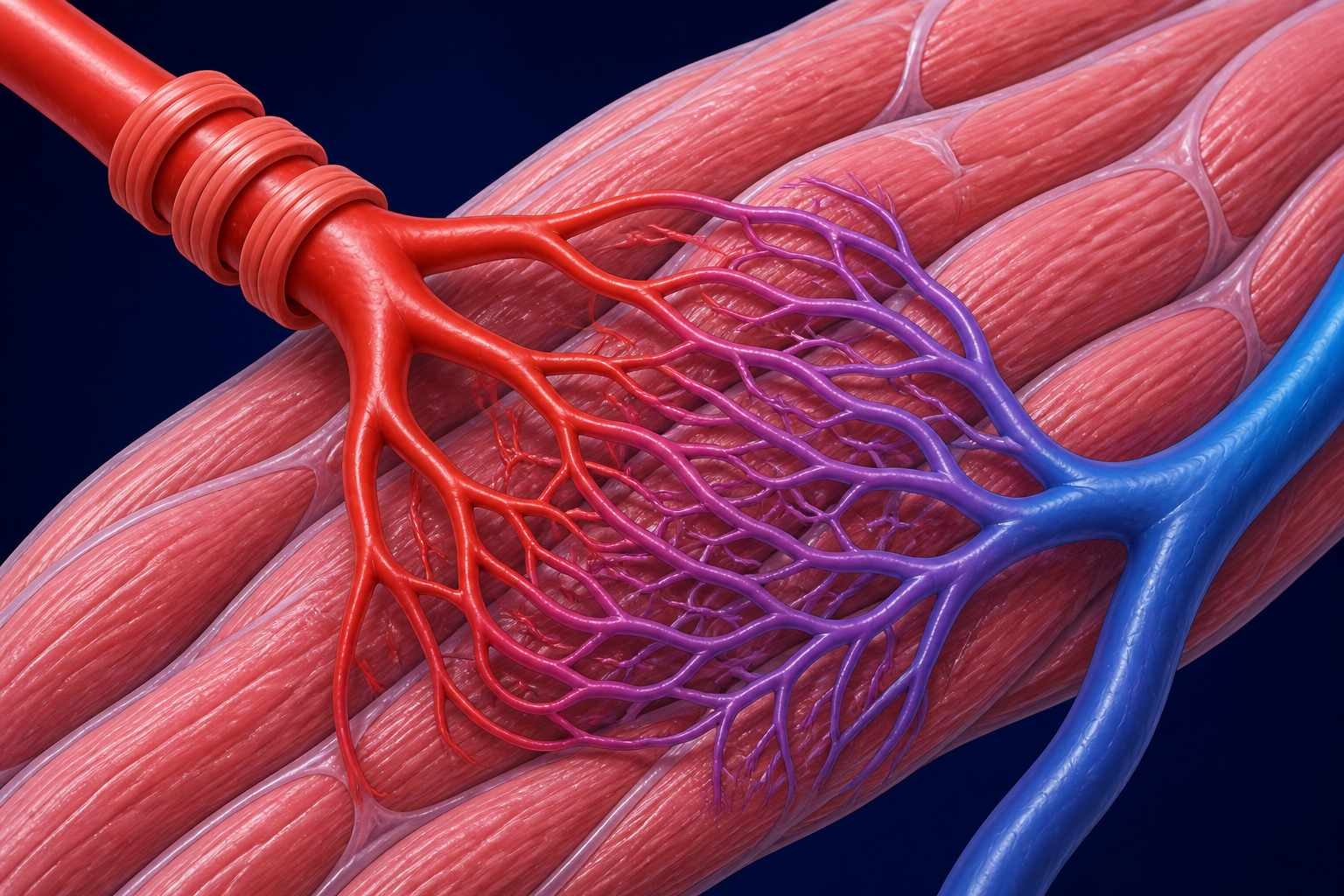
Blood reaches muscle, skin, and connective tissue through the smallest vessels in the body: arterioles, capillaries, and venules. This network is called the microcirculation, and it is not a set of passive pipes. Small arterioles contract and relax rhythmically, a behavior called vasomotion, and that rhythm helps distribute flow among capillary networks. BEMER, a device marketed as Physical Vascular Therapy, was designed around that idea. It delivers a weak, low-frequency pulsed electromagnetic field in a pattern its developers describe as biorhythmically defined, with the stated aim of stimulating vasomotion.
For nearly 30 years, Temple Human Performance has combined massage and osteopathic-based manual therapy with movement training and physical preparation in one approach to treatment and training. The BEMER bed sits in our Repair space alongside the infrared sauna and the light table. This article looks at what published studies report about BEMER and microcirculation, and what studies in active people report about recovery, performance, sleep, and comfort, in the terms those studies used.
Most of the early microcirculation work on BEMER came from Klopp and colleagues, who used high-resolution measurement of functional characteristics of the microcirculation. In a placebo-controlled, double-blind study, Klopp, Niemer, and Schmidt (2013) tested six commercially available physical devices to see whether and to what extent each could influence deficient blood-flow regulation. Two of the six proved ineffective and three were not effective enough to be considered relevant. Only one device showed an effect: the device that uses a specific, biorhythmically defined stimulus for vasomotion. The abstract does not name the device, though that description matches how BEMER’s developers describe their stimulus.
That study matters because it compared devices directly rather than testing one in isolation, and because it framed the outcome in microcirculatory terms: arteriolar vasomotion and the way blood flow is distributed. The participants had deficient regulation of organ blood flow, so the finding describes a response in that setting.
Biermann and colleagues (2020) asked a different question: what happens to skin microcirculation in healthy people. Fifteen healthy participants received nine BEMER applications over three weeks, one every 48 hours. The device was placed beneath one leg, and the other leg served as the control. Each 40-minute application followed a 10-minute rest, and two laser Doppler probes measured each anterior lateral thigh.
Flow, venous oxygen saturation, and relative venous hemoglobin all rose significantly during the sessions compared with the resting baseline, and they rose in both legs. The two legs did not differ, apart from higher flow values on the control side, and baseline values did not change over the three weeks. In the authors’ words, all measurement parameters increased compared with baseline, with no difference between the field and control sides. Because the comparison was one leg against the other in the same person lying at rest, this study describes what happened to skin flow during the session as a whole rather than an effect isolated to the field.
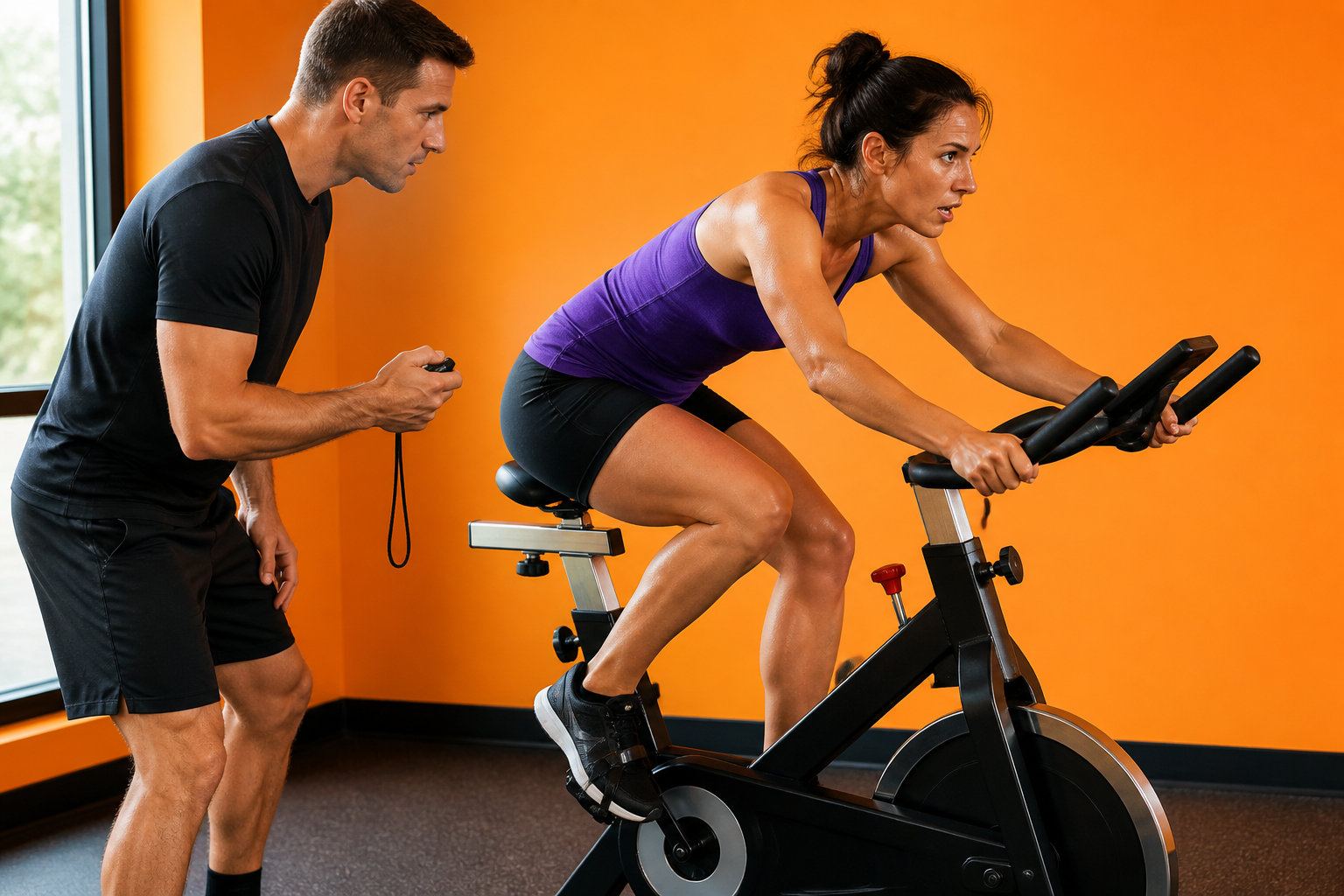
Several studies have looked at BEMER in training settings. Fehr, McEwen, and Robinson (2023) had 15 recreationally active adults perform four repeated 30-second Wingate cycling sprints in three separate sessions, with 4 minutes between sprints spent in passive recovery lying supine, active recovery pedaling at 20 percent of sprint workload, or lying on the BEMER body pad. Peak power, average power, fatigue index, and average work did not differ among the three recovery methods. Active recovery reduced ratings of pain intensity and unpleasantness across the 4 minutes, whereas those ratings rose with both the BEMER and passive conditions. The authors concluded that active recovery gave a more comfortable exercise experience with comparable performance.
Tamulevicius and colleagues (2021) followed 14 male cross-country runners, average age 19, during a preseason training camp at altitude, with 8 runners using a low-frequency pulsed electromagnetic field device in the BEMER format before and after six running sessions and the rest serving as controls. Peak oxygen uptake, ventilation, and maximum respiration rate did not change significantly in either group. Ventilatory threshold, maximum heart rate, and heart rate and respiration rate at threshold showed a significant effect of time. The authors described this as some evidence for use during short training camps to improve ventilatory threshold and called the work a pilot study.
Moen and colleagues followed 21 players from a Norwegian women’s top-series football club over 273 consecutive days, comparing a 3-month control period with a 5-month period in which the players used BEMER. In the first report (2023), sleep was measured every night with a radar-based bedside monitor. Training and match loads peaked on game days, and sleep quantity and quality were reduced on game nights. Most sleep variables increased in the BEMER period compared with the control period, and players who accumulated more than 440 hours of BEMER use showed the largest changes compared with those who used it less.
The second report (2024) used daily self-reports from the same squad over the same period. Subjective sleep duration and quality were again lower on game nights in both periods, and both increased in the BEMER period compared with the control period. The authors concluded that BEMER might serve as a tool to improve sleep. Both reports used a quasi-experimental design in which each player served as her own control across two periods of the season.
Two studies from the same research group combined BEMER with osteopathic manipulative treatment (OMT), a hands-on approach, and compared four arms: OMT only, BEMER only, OMT plus BEMER, and a light-touch and sham control, each over three weeks. In adults with chronic lower back pain, Auger and colleagues (2021) reported that pain ratings fell by 50.8 percent in the combined arm, compared with about 10 percent in each single arm, and that the combined arm showed the largest changes on the Oswestry index and the physical component of the SF-12. These differences did not reach statistical significance between groups, and the authors described a potential additive effect.
In adults with nonspecific neck pain, Palmer and colleagues (2024) reported a statistically significant difference in pain ratings between a BEMER arm and the control arm, and improvements on the Neck Disability Index, pain ratings, and SF-12 in the arms that included BEMER. The apparent additive effect of combining BEMER with OMT on pain ratings did not reach statistical significance. A 2026 systematic review of seven randomized trials on BEMER and musculoskeletal pain (Karcı and colleagues) found reductions in pain reported after BEMER across the included studies, with one of four sham-controlled trials showing BEMER superior to sham, and called for standardized, high-quality trials.
In our approach, the BEMER bed is part of the Repair side of a session, and it is never a stand-alone answer. A client may spend time on the bed before hands-on work, after a demanding training block, or on a recovery day between harder sessions. The hands-on work addresses how tissue and joints move and how the person senses them, the movement work builds control and capacity, and recovery technology is one of the conditions we arrange around both.
The research shapes how we talk about it. The microcirculation work describes a device built around a vasomotion stimulus and a measurable microvascular response in people with deficient blood-flow regulation. The training studies describe outcomes like sleep, ventilatory threshold, and comfort in the terms those studies used, and the sprint study is a reminder that active recovery remains part of the plan. We present BEMER to clients as a recovery tool within a larger plan of treatment and training, not as a replacement for movement, loading, sleep habits, or nutrition.
BEMER was designed to stimulate vasomotion in the smallest vessels, and the earliest controlled work found that, among six devices tested, the one using a biorhythmically defined stimulus showed an effect on deficient blood-flow regulation. That study did not name the device, though its description matches how BEMER’s developers describe their stimulus. Studies in healthy and active people describe skin blood flow that rose during sessions on both the field and control sides, longer and better-rated sleep across a season in elite players, some changes in ventilatory measures during a training camp, and comfort ratings that favored active recovery after sprints. Trials that paired BEMER with hands-on work report changes in pain and function ratings, with combined effects that did not reach statistical significance. At Temple, the BEMER bed sits within one plan that joins hands-on work, training, and recovery, and we describe it to clients in the same measured terms the research uses.