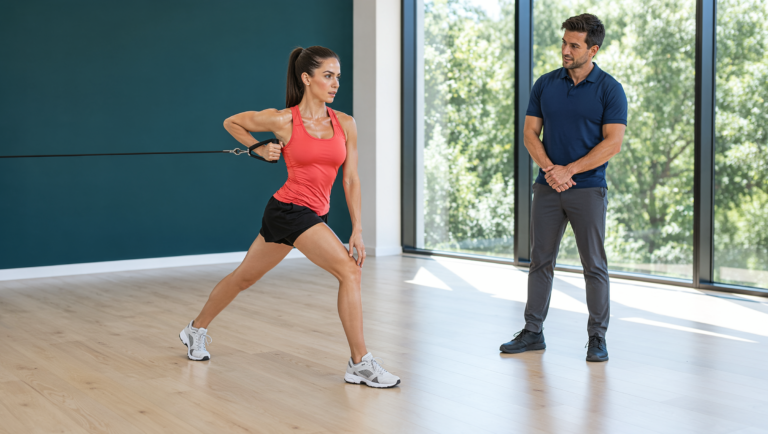
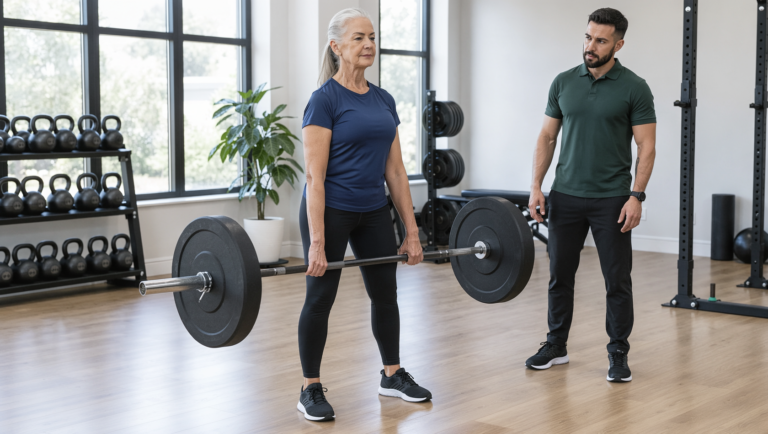
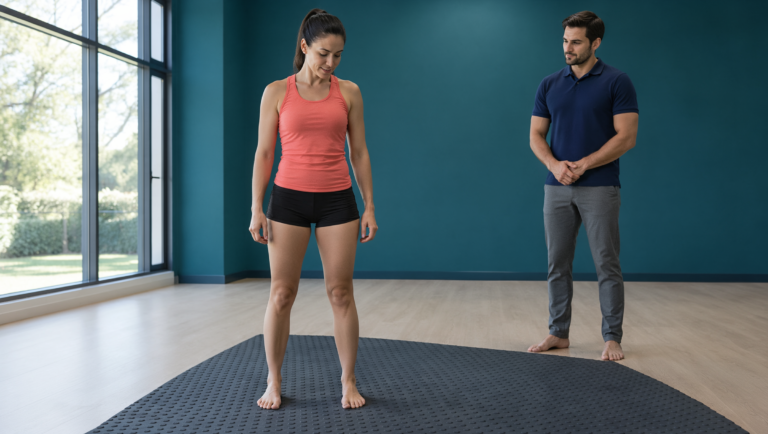
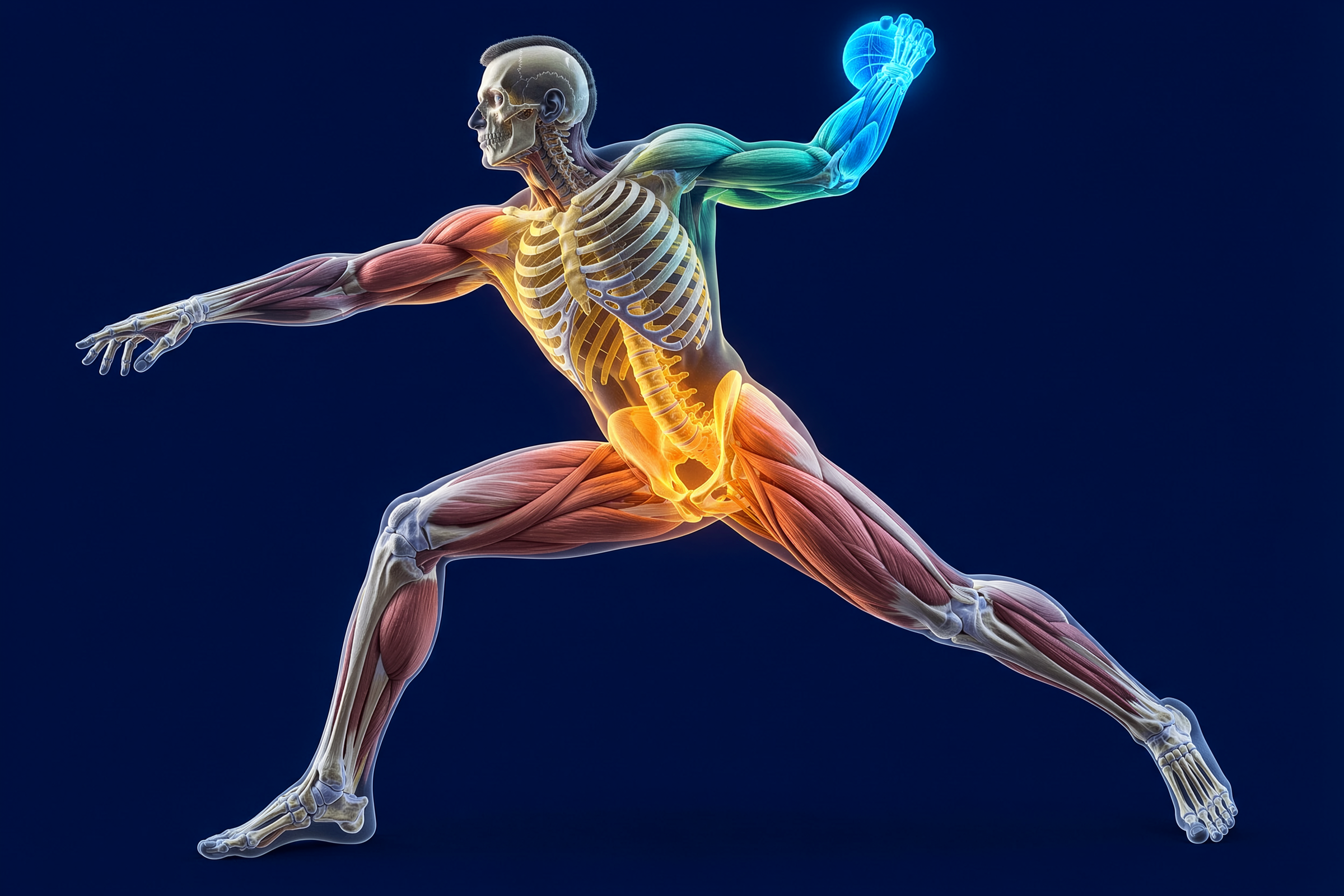
In skilled throwing, striking, and kicking, the large central segments of the body tend to reach their peak speed before the smaller outer ones. The pelvis turns, then the trunk, then the upper arm, then the forearm and hand, or in a kick, the thigh, shank, and foot. That pattern is called proximal-to-distal sequencing, and it is one of the most consistently described features of skilled overarm throwing and kicking.
It matters because it shows how a skilled movement is organized across the whole body. Speed at the hand or foot is not produced by the arm or leg alone. It builds from the center outward, and the way the hips, trunk, and shoulder girdle move together can be linked to what happens at the end of the chain.
For nearly 30 years, Temple Human Performance has combined massage and osteopathic-based manual therapy with movement training and physical preparation in one plan. We use this research as a clear example of how the trunk, hips, and limbs work as one system during a skilled task.
Putnam (1993) reviewed striking and throwing skills and described segment motions as generally sequenced in a proximal-to-distal fashion, with segment angular velocities the clearest way to describe them.
Orishimo and colleagues (2023) measured the sequence directly in 29 male pitchers (age 17 plus or minus 2 years, 23 high school and 6 college). Peak pelvis rotation speed, 596 plus or minus 88 degrees per second, occurred at 12 plus or minus 11 percent of the time from stride foot contact to ball release. Peak trunk rotation speed, 959 plus or minus 120 degrees per second, occurred at 36 plus or minus 11 percent. The pelvis led and the trunk followed, and the trunk reached the higher speed.
Yanai, Crotin, and Du (2023) recorded 72 elite baseball pitchers with an electromagnetic system that treated the scapula as a link of its own. The pelvis, thorax, and scapula rotated in a proximal-to-distal sequence, so the shoulder blade is one more segment in the chain.
In the Orishimo study, peak trunk velocity predicted ball velocity and explained 25 percent of its variability. Pelvis speed, the timing of peak pelvis speed, and hip-shoulder separation at foot contact each predicted trunk speed, and together explained 55 percent of its variability.
Cohen, Garibay, and Solomito (2019) analyzed 99 collegiate pitchers. For every 10 degrees of trunk rotation at ball release above the average, ball velocity was 0.60 meters per second higher, and for every 100 degrees per second of maximum trunk rotation speed above the average, it was 0.70 meters per second higher. Load at the elbow, measured as the varus moment, rose alongside both, by 2.54 N·m per 10 degrees and 2.90 N·m per 100 degrees per second, so faster trunk motion and elbow load tended to increase together.
Manzi and colleagues (2021) compared 317 professional and 54 high school pitchers. In both groups, less time spent in the foot-to-pelvis and pelvis-to-torso phases was associated with higher ball velocity. Wada and colleagues (2025) studied 18 collegiate pitchers and found that trunk separation at stride foot contact was the only variable positively correlated with ball speed, and that pivot-leg rotation and pelvis rotation behaved similarly in the transverse plane.
Kicking shows a similar picture. Fullenkamp and colleagues (2015) compared 10 novice and 10 skilled participants. Skilled participants showed 53 percent greater axial trunk range of motion and 62 percent greater peak trunk rotation speed, and peak trunk rotation speed (r = 0.57) and peak hip flexion speed (r = 0.63) were each moderately correlated with ball velocity after the strike. Da Silva Carvalho and colleagues (2024) studied 50 adult amateur players and found that a combination of greater hip extension and knee flexion of the kicking limb correlated with kick performance (canonical correlation 0.60), as did a combination of larger moments at the trunk and at the support and kicking limbs (0.74). Navandar, Kipp, and Navarro (2022) studied 42 professional players. In the men, better kicking was associated with a particular hip excursion pattern from the end of the backswing to the end of the follow-through (r = -0.519) and with a delayed hip internal rotation (r = 0.475).
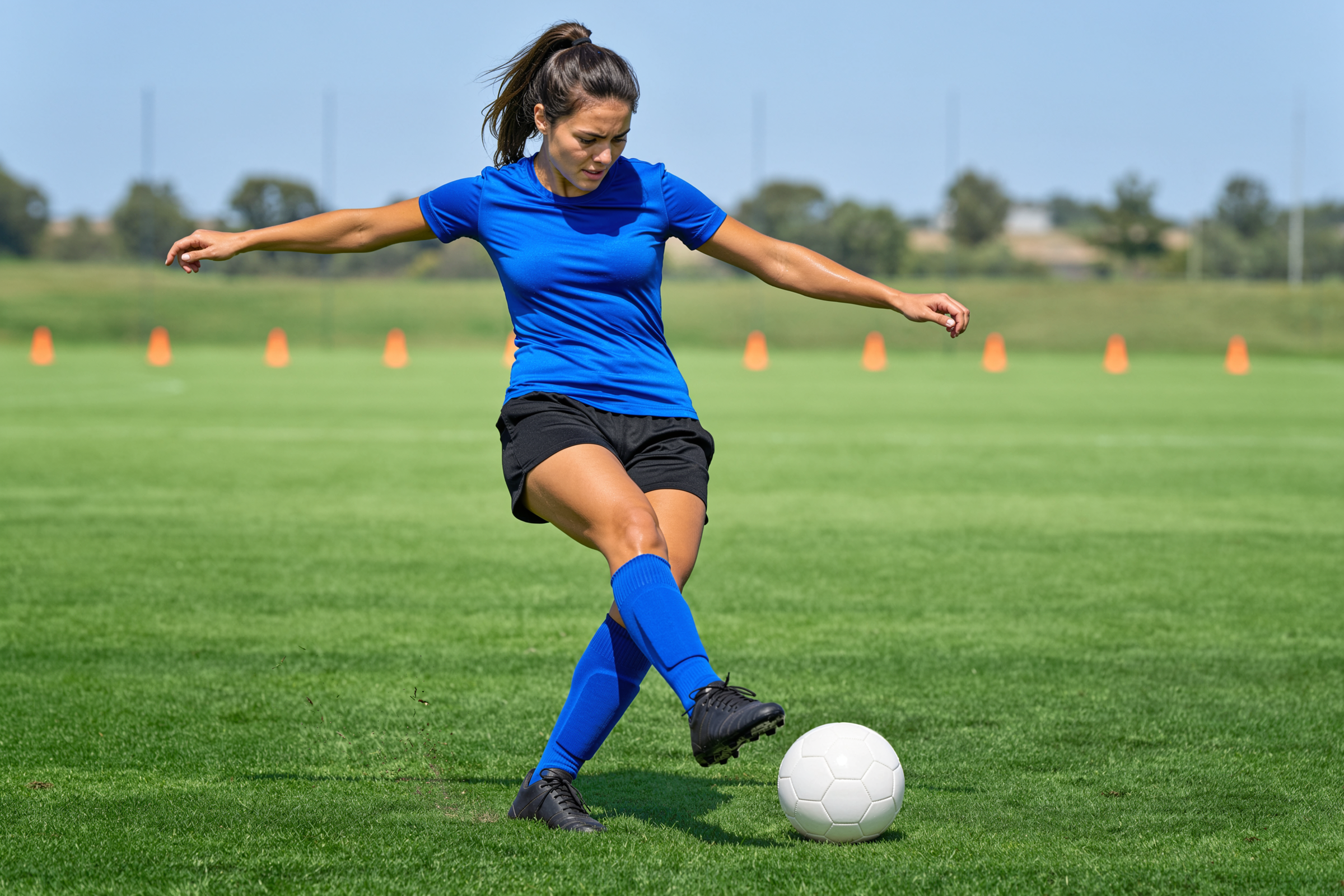
Putnam explained the sequence through the way segments interact as they move. The forward acceleration of a proximal segment causes the distal segment to lag, the distal segment is then accelerated largely by the way the proximal segment’s angular velocity acts on it, and the distal segment in turn slows the proximal one. He described this for the thigh and lower leg in kicking and for the upper arm and forearm in pitching. In that account, a sequence can arise without each segment being driven separately, which is why the order of motion across the body can matter as much as the strength of any one part.
Ellenbecker and Aoki (2020), in a narrative review of the kinetic chain in overhead athletes, concluded that the lower extremity, trunk, and scapular region play an important role in producing terminal segment acceleration in throwing and serving.
Within Physiokinetix, relationships along the kinetic chain are part of how we assess: movement at one region can influence, or be influenced by, movement somewhere else, including proximal and distal influences and contralateral relationships. Sequencing is a clear case of that idea in a skilled task. It reminds us to watch how the hips, trunk, shoulder girdle, and limbs move together and in what order, instead of judging each region in isolation.
We treat sequencing as a pattern to observe in a person’s own movement, not a template to install. In the session, we look at a person’s timing in a simple, task-relevant movement such as a rotational step, a light throw, or a kick pattern at low intensity, and we note where the movement seems to start and where it seems to stall.
Table work fits into that picture as a way to change an input, and the active movement that follows is where the change is used. Hands-on work at the hips, the thoracic spine, or the shoulder girdle can alter how a region moves or feels. Table Neuro Training (TNT), the flagship PKT workshop that complements the Mobility and Stability levels, is built on combining hands-on input with active movement input at the table. The practical step is to get the person off the table and into a movement that asks the trunk, hips, and limbs to organize together, and to see what has changed. Transfer comes through practice of the task, repeated with attention to timing and then with progressive loading, not through the table change alone.
Physiokinetix is an education and movement system, spanning self-care and professional continuing education. Its Self-Care program serves individuals at any stage of training, and its professional continuing education serves massage therapists, manual therapists, trainers, and other movement and healthcare professionals. Both rest on the view that movement comes from interacting systems, including sensory information, motor control, joint mechanics, and the relationships between regions.
The Self-Care framework progresses through Mobility, Stability, Power, and Performance. Those levels are a guide, not a rigid protocol. For sequencing, Mobility provides the options at the hips, thoracic spine, and shoulder girdle, and Stability is the ability to control a position and organize movement among those regions. From there, the work moves toward control in movement, and later toward the speed and specificity of Power and Performance. Power emphasizes force with speed and intent, and progressive loading belongs at every level. The point is not to teach a pelvis-first formula. It is to help a person find and use an organization that works for their body and task.
In skilled throwers and kickers, peak segment speeds tend to appear from the center outward, and trunk and pelvis motion are associated with the speed at the end of the chain. That is a useful picture of movement organization: the hips, trunk, and limbs working as one system, with speed building through the order and timing of their motion. We use it to look at the body as a whole, to treat table work as an input that active practice carries into movement, and to let each person’s own organization guide the next step.