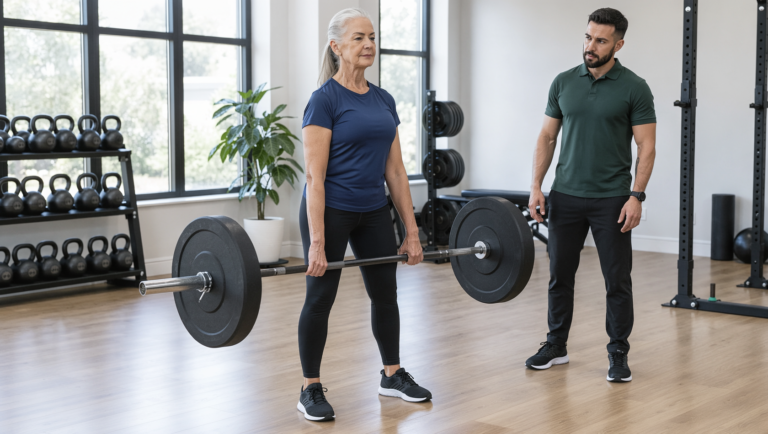
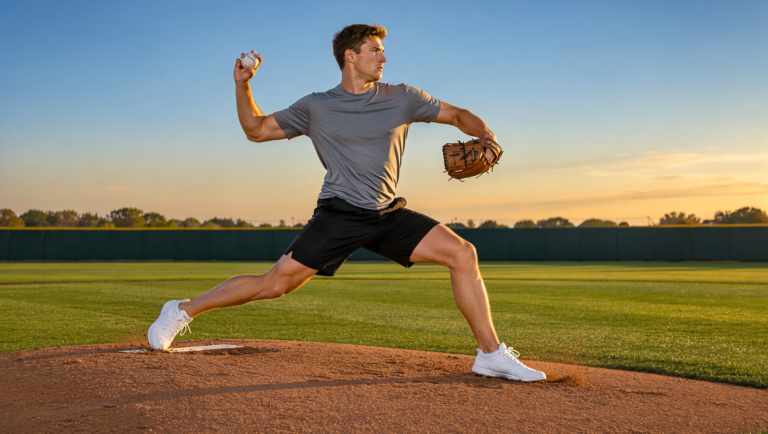
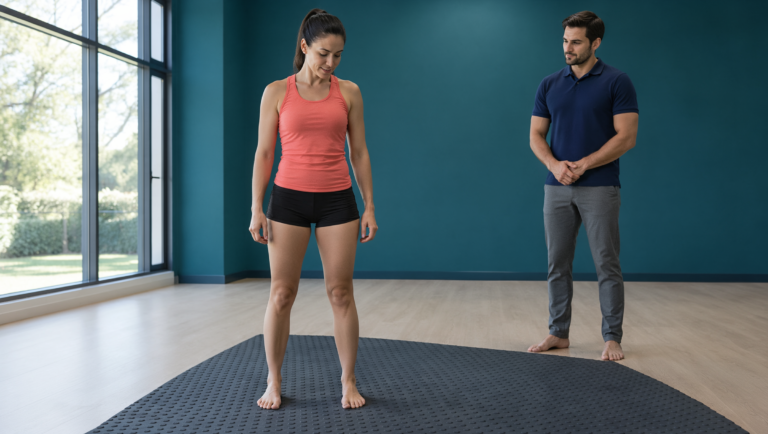
Training one arm or one leg can increase strength on the other side. That transfer is called cross-education. The untrained limb has not been loaded in the usual way, yet it can produce more force, and in some studies it can also hold force more steadily. The change appears to come from the nervous system, which organizes force on both sides of the body even when only one side is practicing.
That is useful for how we think about strength. A gain on the untrained side is a reminder that strength is not only a property of the muscle being loaded. It is also a skill of organization: how the brain and spinal pathways recruit, coordinate, and refine motor output.
For nearly 30 years, Temple Human Performance has combined massage and osteopathic-based manual therapy with movement training and physical preparation in one plan. We read the cross-education research as a window on how the nervous system organizes force, and as a reason to treat unilateral practice as meaningful work for the whole person, not only for the limb that is holding the load.
Manca, Dragone, Dvir, and Deriu (2017) pooled 31 randomized trials in 785 people. Unilateral resistance training was associated with an 11.9 percent increase in contralateral strength (95% confidence interval 9.1 to 14.8). The effect was 9.4 percent in the upper limb and 16.4 percent in the lower limb, and it appeared with isometric (8.2 percent), concentric (11.3 percent), and eccentric (17.7 percent) training.
An earlier analysis by Carroll, Herbert, Munn, Lee, and Gandevia (2006), based on 16 controlled studies, estimated the contralateral effect at about 8 percent of initial strength, or about half the gain of the trained side.
Altheyab and colleagues (2026) focused on the lower limb, pooling 29 studies. Compared with a control group, cross-education increased one-repetition-maximum load (standardized mean difference 0.59) and maximum voluntary contraction (0.55), along with concentric, eccentric, and isometric peak torque.
Green and Gabriel (2018) trained 40 people for six weeks on one side, either in wrist flexion or in ankle dorsiflexion, and then followed them for six weeks without that training. Strength on the untrained side rose by 6 percent in the arm and 13 percent in the leg at the end of training, and it continued to rise after the training stopped, to 15 percent in the arm and 14 percent in the leg. Force variability also improved on the untrained side. The authors described that lasting change as a sign of motor learning. Taken together, the transfer shows up in both the arms and the legs, in several kinds of muscle action, and it can continue as the nervous system holds onto what was practiced.
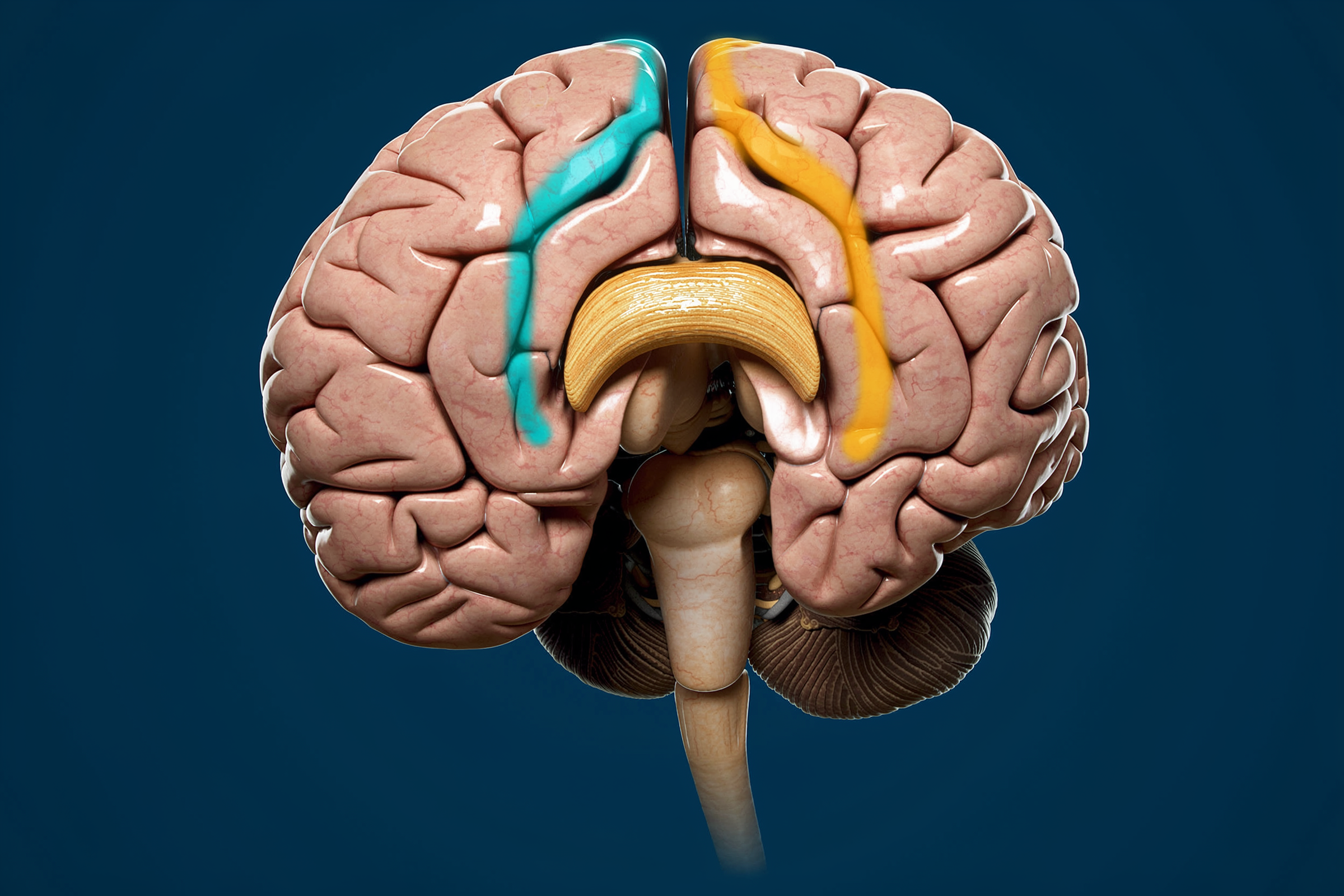
Two long-standing accounts help explain the transfer. In one, often called cross-activation or spillover, activity during a one-sided effort also reaches the motor system that controls the opposite limb. In the other, often called bilateral access, practice builds a motor representation that the untrained side can later use, in part through connections that cross between the hemispheres. Carroll and colleagues described both kinds of mechanism. In a later consensus process, Manca, Hortobágyi, Carroll, and colleagues (2021) used the same two names. The same paper describes the corpus callosum, the large white-matter bridge between the hemispheres, as important to the transfer. The transfer is typically described as specific to the homologous muscle, the matching muscle on the opposite side, and to the type of contraction that was practiced.
Hendy and Lamon (2017) reviewed the phenomenon and emphasized a neural basis: most studies report little or no gain in muscle size in the untrained limb, and increased neural drive from the motor cortex that controls that limb appears to contribute.
More recent recordings give that picture more detail. Lecce and colleagues (2025) trained the elbow flexors on one side for four weeks in 10 people. Maximum voluntary force rose by 14 percent on the trained side and by 6 percent on the untrained side, and force steadiness improved in both limbs. The untrained-side strength gain was associated with a greater proportion of common synaptic input to motoneurons and with lower motor unit recruitment thresholds.
Ruddy and colleagues (2017) studied a ballistic wrist skill rather than a slow strength task. Improvement on the untrained side reached 83.6 percent of the gain on the trained side, and the structure of the white-matter pathways connecting the left and right supplementary motor areas predicted how much transferred.
Siddique and colleagues (2025) found strength gains in the untrained arm after two weeks of unilateral elbow-flexor training, with changes in reaction time that the authors described as consistent with greater reticulospinal excitability. The spinal pathways that help organize rapid force, in other words, also appear to take part.
Manca and colleagues (2021) recommended programs of at least 13 to 18 sessions, or 4 to 6 weeks, and noted that higher-intensity work and eccentric contractions appear useful for transfer.
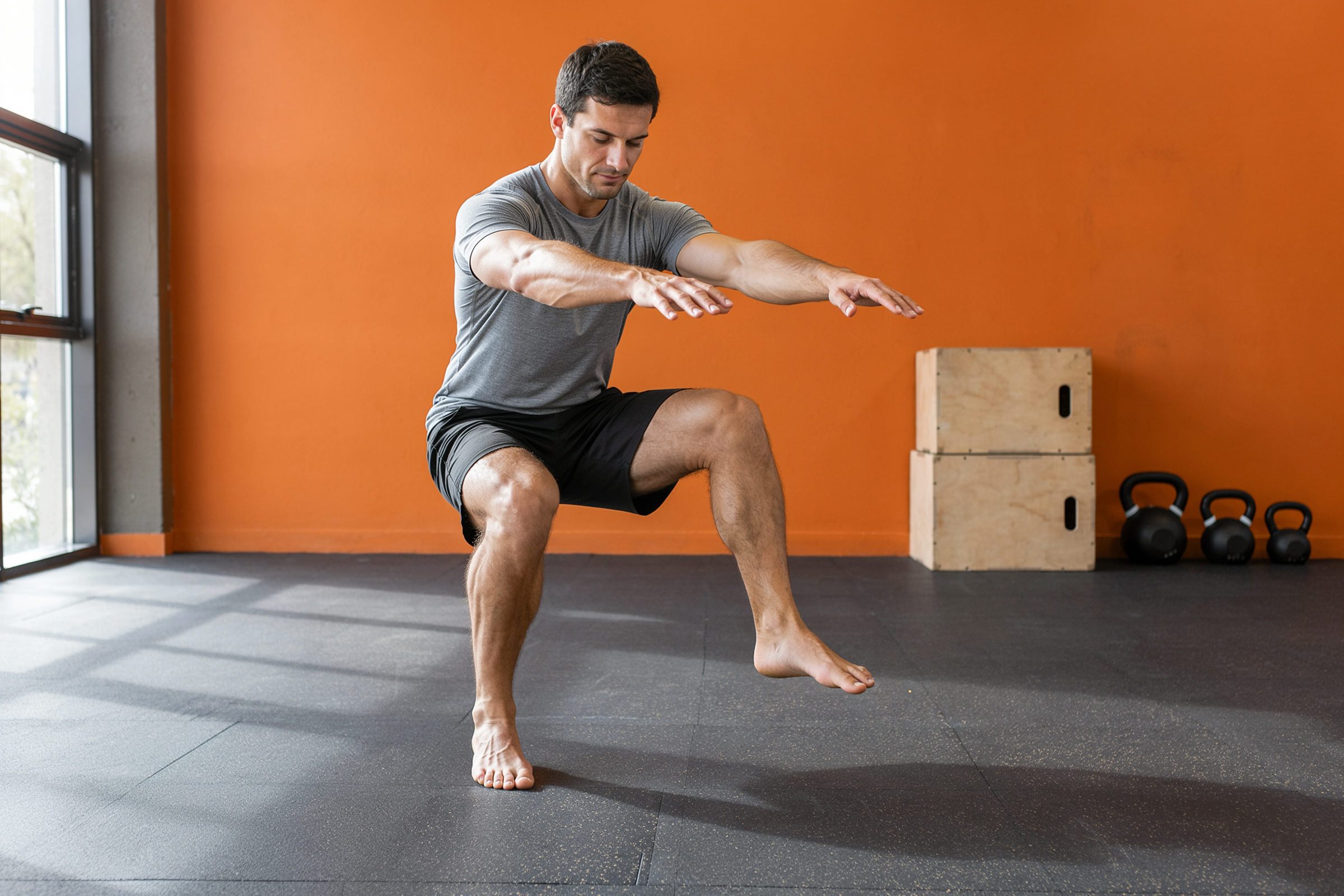
We use this work as evidence that the nervous system organizes force across both sides of the body, and that practice on one side can be a form of learning, not only a local muscle stimulus. In a session, that changes how we look at a single-arm or single-leg task. The limb that is working is not the only one that is practicing. The opposite side is also being organized.
We still train both sides. Cross-education is not a reason to leave one limb unused. It is a reason to treat unilateral work as part of a complete plan, and to notice what the other side can already do after practice. A simple movement, loaded on one side, can be a useful way to practice control, intent, and force. In self-care practice, that can be a single-arm row, a one-leg stance, or a one-sided lift, done with enough intent that the effort is clear.
A resistance band is a simple way to load one arm or one leg at a time. The tool makes the task clear; the point is the organization of the effort.
After hands-on work, we often ask the person to use a new range or a new sense of control in an active pattern. A unilateral task is a natural next step: one side produces force or holds a position, and both sides have to organize around that demand. Transfer comes through that practice, repeated and then loaded more progressively.
Physiokinetix is an education and movement system, spanning self-care and professional continuing education. Its Self-Care program serves individuals at any stage of training, and its professional continuing education serves massage therapists, manual therapists, trainers, and other movement and healthcare professionals. Both rest on the view that movement comes from interacting systems, including sensory information, motor control, and the way the nervous system organizes force.
The Self-Care framework progresses through Mobility, Stability, Power, and Performance. Those levels are a guide, not a rigid protocol. Unilateral practice can sit at every level: owning available range on one side in Mobility, controlling a position on one side in Stability, and producing force with speed and intent as the work moves toward Power and Performance. Progressive loading belongs at every level. The point is not to chase a percentage of transfer. It is to treat strength as something the nervous system learns to organize, on both sides of the body.
Training one limb can increase strength, and often steadiness, in the untrained opposite limb. The transfer appears to be a neural change: shared input to motoneurons, pathways between the hemispheres, and the way the motor system represents a practiced effort. We use that picture to treat unilateral practice as meaningful work for the whole person, to let a one-sided task carry into better organization on both sides, and to keep strength training connected to how the nervous system learns movement.