

Clinical context
In a Physiokinetix session, the hands-on work and the movement practice depend on the client taking an active part, not only on the technique we apply. At Temple Human Performance, we treat the working relationship as the frame for that participation. The client and the practitioner share an aim, agree on the tasks for that session, and keep a bond of mutual respect and trust so both people stay on the same plan.
In the research literature this relationship is usually called the therapeutic alliance. The studies that connect it with reported results come mainly from psychotherapy and from musculoskeletal care. They describe agreement and participation. They do not promise a change in pain, and they do not address a medical condition. The three-part frame matches how we already organize a session, which is why we use it.
Scientific background
Bordin’s 1979 paper is the usual source for the working alliance. Later accounts, including Wampold and Flückiger (2023), describe three elements: agreement on the goals, agreement on the tasks, and a bond. They present the concept as useful beyond one school of therapy, including in any helping practice. In psychotherapy, they describe the alliance as a robust predictor of outcomes even when earlier symptom change and other factors are considered. They are also clear that a causal claim would need an experiment assigning people to a stronger or a weaker alliance. We do not treat that literature as proof that the relationship, by itself, produces a reported change. We do use the three elements as the structure of our sessions. We name the goal, we name the tasks, and we treat the bond as mutual respect and trust.
Muran (2022) describes the same reformulation: agreement on the tasks and goals, plus an affective bond of mutual respect and trust. The bond does not replace the words. The goal and the task still have to be stated so the client and the practitioner can both repeat them.
What the research shows
In musculoskeletal care the literature is mixed. It is not one test of a single method. Babatunde, MacDermid, and MacIntyre (2017) organized existing studies in a scoping review. They did not compare methods, and they did not produce a pooled estimate of effect. Across those studies, prioritized goals, support for the client’s own choices, and the client’s motivation were described as facilitators of the alliance. In our sessions those are practical. We set a prioritized goal, we support the client’s own choices, and we treat motivation as part of the agreed task.
Arrigoni and colleagues (2024) asked manual therapists how the relationship is built, in 11 interviews. The categories they reported were meaningful dialogue, active participation, and synchronization. The study describes practice. It is not an outcome test. In our sessions, meaningful dialogue is the stated goal and the stated task, active participation is the client’s effort in the hands-on work and the movement, and synchronization is the timing of that effort with our guidance.
Holmes and colleagues (2023) followed 50 people through a course of care. Higher client ratings on the Working Alliance Inventory were associated with meaningful change on region-specific questionnaires and a pain scale. An association is not the same thing as showing that the relationship produced those changes, and the study did not compare the client’s rating with the therapist’s rating. In our work, we start from the client’s account of the goal, the tasks, and the bond. We do not replace that account with our own impression.
The cause question is still open in the literature, and we leave it open. Zilcha-Mano (2017) noted that the alliance-outcome link in psychotherapy had long been a correlation, which cannot decide whether the alliance itself produces change. Wampold and Flückiger make the same point about the need for an experiment. What these designs support is an association in the settings studied. We still organize every session around an agreed goal, agreed tasks, and a bond of mutual respect and trust, in massage and osteopathic-based manual therapy as well as in the movement.
Functional significance
Practice that continues after the session is one of the tasks in the agreement, not an extra beside it. In the Babatunde review, 26 articles addressed adherence, and 57 percent of those articles showed some correlation with the alliance. That figure is a count of articles, not a pooled effect. Agreement on goals and tasks was among the features those studies connected with carrying out the agreed practice. The review’s own conclusion stayed modest: a stronger alliance might support adherence. A warm bond does not replace a task that has been made explicit. We name the practice that continues after the session, and we name the reason for it.
Self-efficacy is a separate idea. It means the client’s confidence in being able to carry out the practice. Ankawi, Kerns, and Edmond (2019) reviewed motivation in relation to chronic pain and headache. Self-efficacy was the psychosocial factor most often studied alongside adherence, and it was positively correlated with adherence in the studies they surveyed. Confidence does not stand in for an agreed goal or an agreed task. We still state both, and we treat confidence as its own factor.
Application at Temple Human Performance
At Temple Human Performance, massage and osteopathic-based manual therapy are both core. Movement training, physical preparation, nutrition, and related support sit with them. Movement therapy, including personal training, complements the hands-on work, and the hands-on work complements the movement. One does not stand in for the other, and massage is not a step the rest of the session leaves behind.
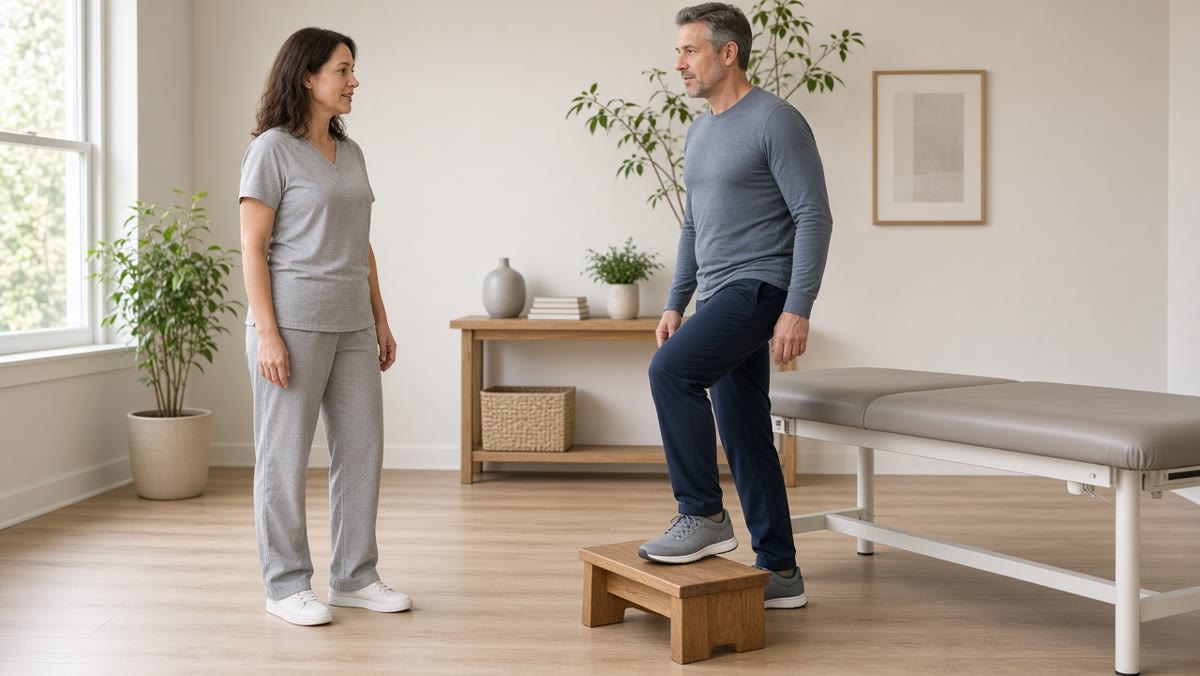
A session begins with a functional aim the client names and we can repeat, such as a stronger step, an easier reach, or more ease getting to the floor and back up. The hands-on work is agreed, and so is the movement practiced in the room and after the client leaves the table. During the hands-on work the client remains active. If a goal was not actually shared, or a task does not make sense, we raise that mismatch in the session. A person who is also managing a medical condition continues that care with a healthcare provider.
Physiokinetix perspective
Physiokinetix is our movement and education system. Individuals use it through the PKT Self-Care program, and massage therapists, bodyworkers, trainers, and a wide range of healthcare and movement practitioners learn it through professional and continuing education. Practitioners use it inside their own scope. The program teaches the method. The clinic is where we apply it with clients. Within Physiokinetix, a few terms of our own help organize the agreed task.
Much of our table work asks the client to take an active part rather than rest passively under our hands. The cue “hold it and mold it” means that the therapist’s hands guide the region while the client produces the force. We use that cue so guidance and the client’s effort are both part of the agreed task. Massage and osteopathic-based manual therapy remain the hands-on core. The active work does not replace them. It adds the client’s own effort while our hands are on the region. That kind of active table work shows up in several Physiokinetix courses and is central to Table Neuro Training, our flagship professional workshop, built to complement the Mobility and Stability levels of the PKT Self-Care program.
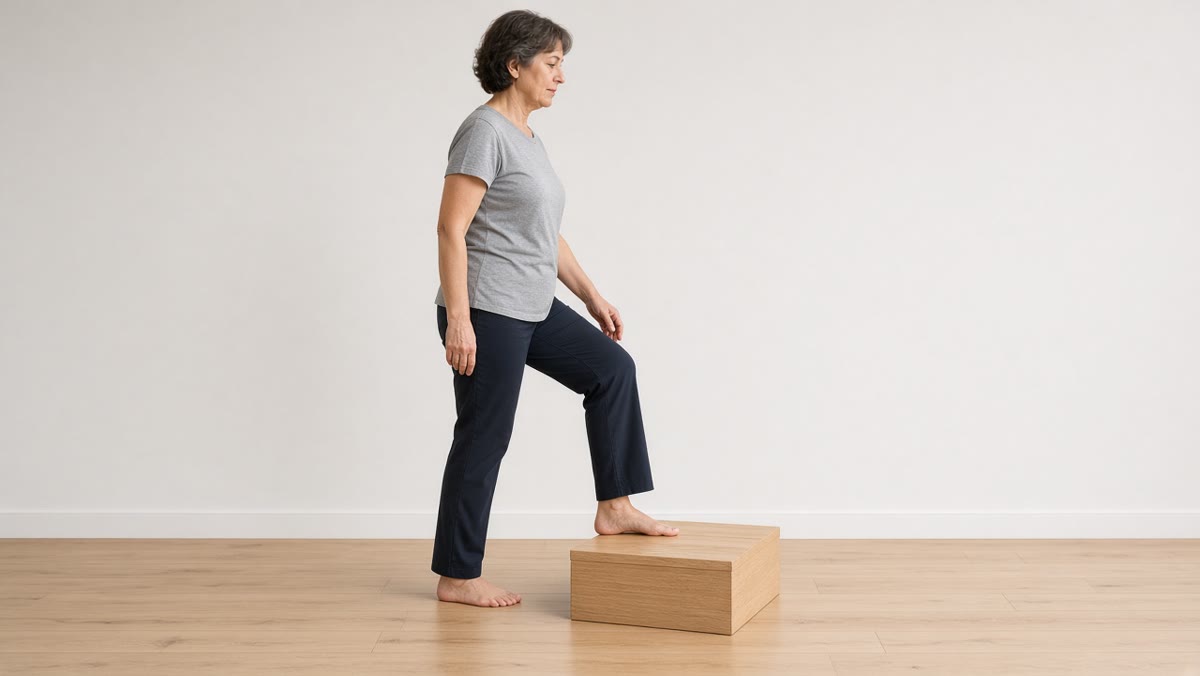
The movement that follows often runs from general to specific. General physical preparation builds broad capacity, including strength, endurance, balance, coordination, mobility, and overall work capacity. Specific physical preparation applies that capacity to a movement drawn from what the client does away from the session. We say which movement is being practiced and why it was chosen. That practice continues after the session as part of the task, not as optional advice. The aim itself is placed within the Physiokinetix progression of mobility, stability, power, and performance. That progression builds from one level toward the next without acting as a fixed protocol, so the client’s needs decide where the agreed task sits on that day.
Conclusion
A session at Temple Human Performance is organized around a goal the client and the practitioner can both repeat, tasks that cover the hands-on work and the movement, and a bond of mutual respect and trust. The client stays active on the table and in the practice that continues afterward. Massage and osteopathic-based manual therapy stay central, and the movement sits inside the agreed task.
The literature gives a clear reason to state the goal and the task explicitly, and it leaves cause unsettled. Psychotherapy research describes the alliance as a robust predictor of outcomes without settling whether the alliance itself produces the change. Musculoskeletal research links the relationship with adherence, and with questionnaire and pain-scale change, as associations. Within our approach, that is the scientific context. The session is still built on an explicit agreement, an active client, and hands-on work and movement on the same plan.
References
- Bordin ES. The generalizability of the psychoanalytic concept of the working alliance. Psychotherapy: Theory, Research & Practice. 1979;16(3):252 to 260. https://doi.org/10.1037/h0085885
- Wampold BE, Flückiger C. The alliance in mental health care: conceptualization, evidence and clinical applications. World Psychiatry. 2023;22(1):25 to 41. https://doi.org/10.1002/wps.21035
- Muran JC. The alliance construct in psychotherapies: from evolution to revolution in theory and research. World Psychiatry. 2022;21(2):308 to 309. https://doi.org/10.1002/wps.20973
- Babatunde F, MacDermid J, MacIntyre N. BMC Health Services Research. 2017;17:375. https://doi.org/10.1186/s12913-017-2311-3
- Arrigoni A, Rossettini G, Palese A, Thacker M, Esteves JE. Exploring the role of therapeutic alliance and biobehavioural synchrony in musculoskeletal care: insights from a qualitative study. Musculoskeletal Science and Practice. 2024;73:103164. https://doi.org/10.1016/j.msksp.2024.103164
- Holmes MB, Scott A, Camarinos J, Marinko L, George SZ. Disability and Rehabilitation. 2023;45(8):1363 to 1369. Online 2022. https://doi.org/10.1080/09638288.2022.2060337
- Ankawi B, Kerns RD, Edmond SN. Enhancing motivation for change in the management of chronic painful conditions: a review of recent literature. Current Pain and Headache Reports. 2019;23(10):75. https://doi.org/10.1007/s11916-019-0813-x
- Zilcha-Mano S. Is the alliance really therapeutic? Revisiting this question in light of recent methodological advances. American Psychologist. 2017;72(4):311 to 325. https://doi.org/10.1037/a0040435