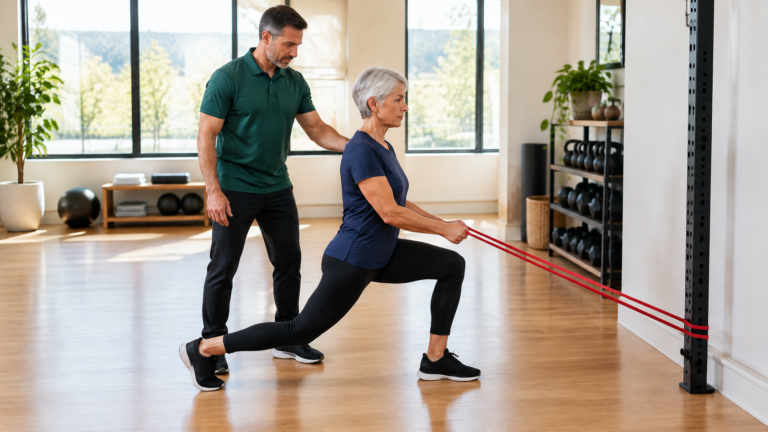
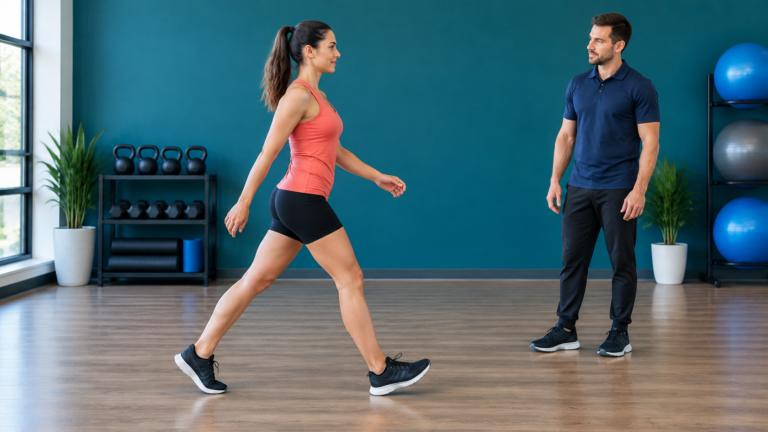
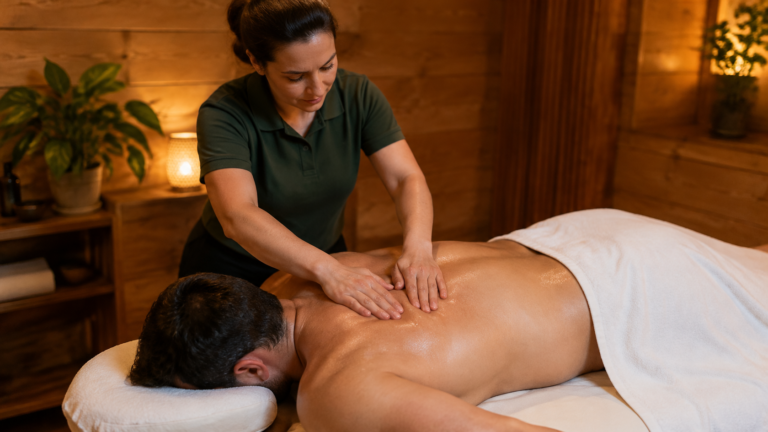
A change on the table is only the first part of a session. Hands-on work can alter how a joint moves, how a step feels, or how comfortable a position is. The next question is whether that change shows up in movement. Not every movement test asks for the same thing. Standing quietly on one leg and reaching as far as possible in several directions are different tasks, and they can give different answers about what has transferred.
That difference is easy to miss. A person can look steady in a still stance and still organize a reach poorly, or the reverse. If the only check after table work is a quiet position, a change in how the body uses a new range under a reaching demand may go unseen.
For nearly 30 years, Temple Human Performance has combined massage and osteopathic-based manual therapy with movement training and physical preparation in one plan. The research below does not prove a general improvement in balance. It does give a clear, short-term picture of how two kinds of movement tests can diverge after a manual therapy session, and that picture helps us decide what to do once a person leaves the table.
Espí-López and colleagues (2023) ran a multicenter randomized trial in 200 healthy young adults (mean age 22 years). One hundred and one received a protocol of articulatory manual therapy. Ninety-nine received no intervention. Measures were taken before the session, immediately afterward, and one week later.
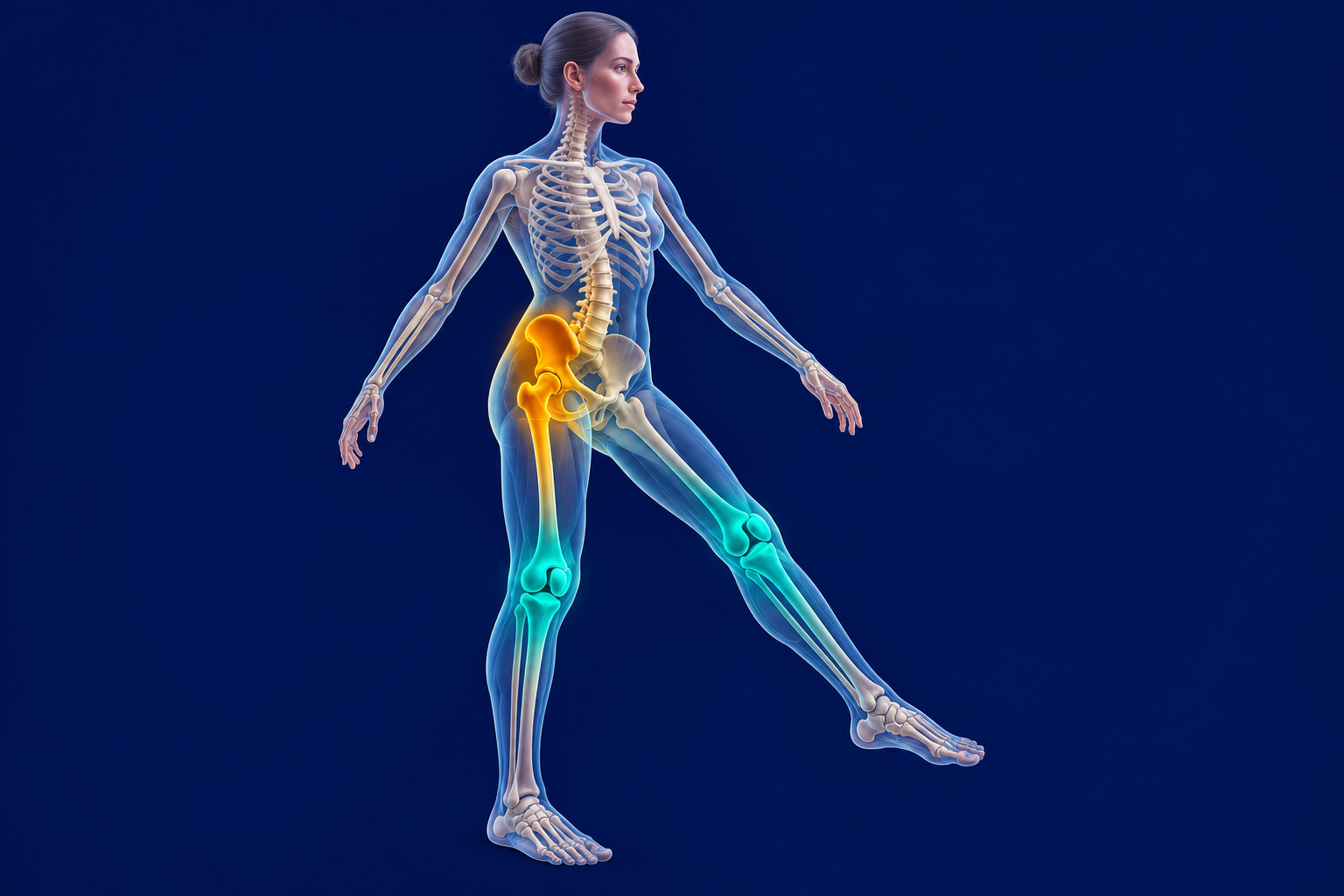
The movement tests were the Star Excursion Balance Test, in which a person stands on one leg and reaches the other foot as far as possible in several directions, and the Unipedal Stance Test, a timed quiet stand on one leg. The researchers also recorded mood and a rating of perceived change.
Group-by-time interactions favored the manual therapy group on the reach test in all six reported directions: anterior, posteromedial, and posterolateral on each leg. Quiet single-leg stance and mood showed no significant interactions. The rating of perceived change favored the manual therapy group both after the session and at one week.
The authors concluded that the intervention was associated with post-session changes in dynamic reach in these healthy participants, that some of those reach directions still differed at one week, and that the protocol did not appear to change static stance or mood.
Several limits belong with that result, because they change what it can support.
The control group received no intervention, not a sham or attention condition. Expectation, therapist contact, and familiarity with the tests cannot be separated from the hands-on work itself. The participants were young and healthy, and follow-up stopped at one week. The published abstract reports p-values but not effect sizes, mean differences, or confidence intervals, so the size of the reach change cannot be judged from that record. It also states that some reach directions held at one week without naming which ones.
The trial measured test scores, not a mechanism. It cannot explain why reach changed while quiet stance did not. Keter and colleagues (2025), in a living review of 62 reviews, summarized a range of proposed responses to manual therapy across several body systems. The quality of that evidence varied, and the authors stated that the clinical value of those findings has not been well established. Those proposed responses should not be treated as the cause of the reach result in this trial.
What remains is a more modest, and still useful, finding. In this study, a change after articulatory manual therapy showed up in a dynamic reaching task and did not show up in a quiet single-leg stand. A reach and a stance are different expressions of what may transfer after table work.

We read the trial as evidence about how to look for transfer, not as a reason to treat a reach test as a goal in itself.
After the table work, we want the person to use whatever has changed. A quiet stance can be a fair first check of control, but it is not a complete picture. We also ask for movement that uses a range, a shift of weight, and a reaching or stepping demand, because that is closer to how the change has to work in daily activity. The Espí-López result is consistent with that practice: the task that involved reaching picked up a short-term difference that the still stance did not.
We do not treat a better reach score as proof that the session is finished. The changes in this trial were short-term, and some of them were only partly described at one week. Hands-on work and a first movement test are the beginning of a plan that still needs practice, load, and a return to the tasks that matter to the person.
We also keep the comparison honest. A no-intervention control leaves room for expectation and attention to have played a part. In the session, we still follow table work with active movement because that is how the person learns to organize the change. We simply do not overstate what a single trial in healthy young adults can guarantee.
Physiokinetix is a professional education and movement system built on the view that movement comes from interacting systems, including joint mechanics, sensory information, and motor control. A central idea is that a hands-on change becomes more meaningful when the person then uses it in active movement and, when appropriate, under load. That sequence is a guide for the session, not a rigid protocol.
The Self-Care framework progresses through Mobility, Stability, Power, and Performance. Mobility is about having options in range and being able to use them. A reaching task is one way to see whether a new option is actually available. Stability is about controlling a position while moving, which is exactly what a single-leg reach requires and a quiet stand only partly tests. Power and Performance take those capacities into faster, heavier, or more specific demands. Progressive loading belongs at every level. The point is not to turn the reach test into a formula. It is to choose a movement that can show whether a change has organized into use, and then to build from there.
This is distinct from treating joint mobilization as the whole story, or from treating the structure of practice as the topic. The question here is narrower: after table work, a dynamic reach and a quiet stance can tell different stories about what has transferred, and the session should be designed with that in mind.
In healthy young adults, a multicenter trial found that articulatory manual therapy was followed by short-term changes in a dynamic reach test compared with no intervention, while quiet single-leg stance and mood did not show significant group-by-time effects. Some reach differences were reported at one week, without a published account in the abstract of which directions or how large the changes were. No mechanism was measured. We use this as a reason to look for transfer in movement that actually uses a range, not only in a still stance, and to treat that first movement as the start of practice rather than the end of the work.