

Clinical context
When a region is painful or feels threatened, people often keep doing the task, but they do it differently. The step shortens. The trunk stiffens. The reach changes direction. The nervous system is not simply turning muscles off. It is changing the plan for how force is shared and how the movement is prepared.
That change in strategy is the clinical problem this article addresses. At Temple Human Performance, we meet it in both the hands-on work and the movement that follows. Massage and osteopathic-based manual therapy stay central. Movement training and physical preparation sit with them. The question for the session is how the person is currently organizing the movement under discomfort, and what practice is safe and useful next.
Scientific background
Older accounts of pain and muscle often leaned on a single pattern: inhibit the painful agonist, facilitate the antagonist, and reduce motion. Later work argued that this picture is too simple. Hodges and Tucker (2011) proposed that the nervous system redistributes activity within and between muscles, across several levels of the motor system, so that mechanical behavior changes in a protective way. Stiffness, force direction, load sharing, and movement path can all shift. Those shifts may help in the short term. The same redistributions can become costly over time if loading stays altered, movement variability falls, or a protective pattern is held long after the immediate threat has eased.
Meier and colleagues (2019), writing about low back pain, place motor adaptation alongside sensory input and note that adapted strategies vary across people. Some look protective early on. Some may increase spinal loading and contribute to strain or recurrence. That discussion is mechanistic. It does not prove that every protective change becomes lasting pathology.
Kantak, Johnson, and Zarzycki (2022) label the broader picture pain-related movement dysfunction, framing altered movement across sensory-perceptual, cognitive, psychological, and motor processes, with strategies that can persist after pain settles. Murray and Sessle (2024) describe pain-sensorimotor interaction as plastic central change that shapes motor-unit patterns aimed at reducing pain and maintaining homeostasis, under biological, psychological, and social influences, with the possibility that those patterns become maladaptive. Both are frameworks. They organize thinking. They are not primary experiments that measure a clinic outcome.
What the research shows
Experimental work supports a task-dependent picture rather than one fixed muscle response. Devecchi and colleagues (2023) systematically reviewed and meta-analyzed studies of experimentally induced lumbar pain in healthy people. Adaptations were not uniform across tasks. Meta-analyses showed increased erector spinae activity during full trunk flexion and delayed onset of transversus abdominis during postural perturbations. Lower-quality evidence also pointed toward more superficial lumbar activity during locomotion or voluntary trunk movement, reduced activity in selected deep and superficial muscles during some perturbation conditions, and reduced lumbar range of motion. Heterogeneity tracked partly with the pain model used. Agreement with clinical populations supports using experimental models to study mechanisms. That is not proof of one universal pain strategy.
Anticipation alone can reshape motor preparation. Neige and colleagues (2018) paired laser pain with one arm-movement direction and measured corticospinal excitability in biceps brachii during an instructed-delay task. During preparation, excitability was higher when biceps would act as the antagonist for the pain-associated movement than when it would act as the agonist. Non-pain movements were initiated faster than baseline, while pain-associated movements did not show the same speeding of initiation. The authors interpret a short-term protective preparation that could be costly if maintained. The scope is acute experimental arm pain and preparation, not chronic spinal pain outcomes.
A separate question is whether pain blocks motor skill learning. Matthews and colleagues (2022) systematically reviewed experimental and clinical studies. Confidence was limited under GRADE. Across most task-performance measures after acquisition, pain did not change learning gains. Retention and plasticity measures conflicted. People can often still improve task performance with practice while in pain, even when movement strategy and neural measures differ. The review does not support a blanket claim that pain prevents motor learning.
Functional significance
For session design, three points guide our work.
First, the change is individual and task-specific. A person may stiffen the trunk in one task and show delayed deep abdominal timing in another. We look at the movement that is actually difficult, rather than assuming a single muscle story. That matches Devecchi's task-dependence and Hodges and Tucker's redistribution model.
Second, protective preparation is real. Expectation of discomfort can change how the next effort is set up. We use a graded return to the task, a clear agreement on what will be practiced, and hands-on work aimed at the region. Those steps follow from the mechanism. They do not require us to treat every protective change as a lasting problem.
Third, practice stays in the room. Because learning gains often still occur despite pain, we do not withhold all active work solely because discomfort is present. Strategy still matters. How the person is loading and timing the movement remains part of the plan.
Application at Temple Human Performance
At Temple Human Performance, we begin with the client's named functional aim and with observation of the strategy in use: guarded trunk, shortened step, altered reach, lost variation, or delayed preparation for a known task. Massage and osteopathic-based manual therapy are core. We use them to work with tissue quality, joint motion, and the sensory picture of the region, and we keep the client active rather than passive whenever that fits the agreed task.
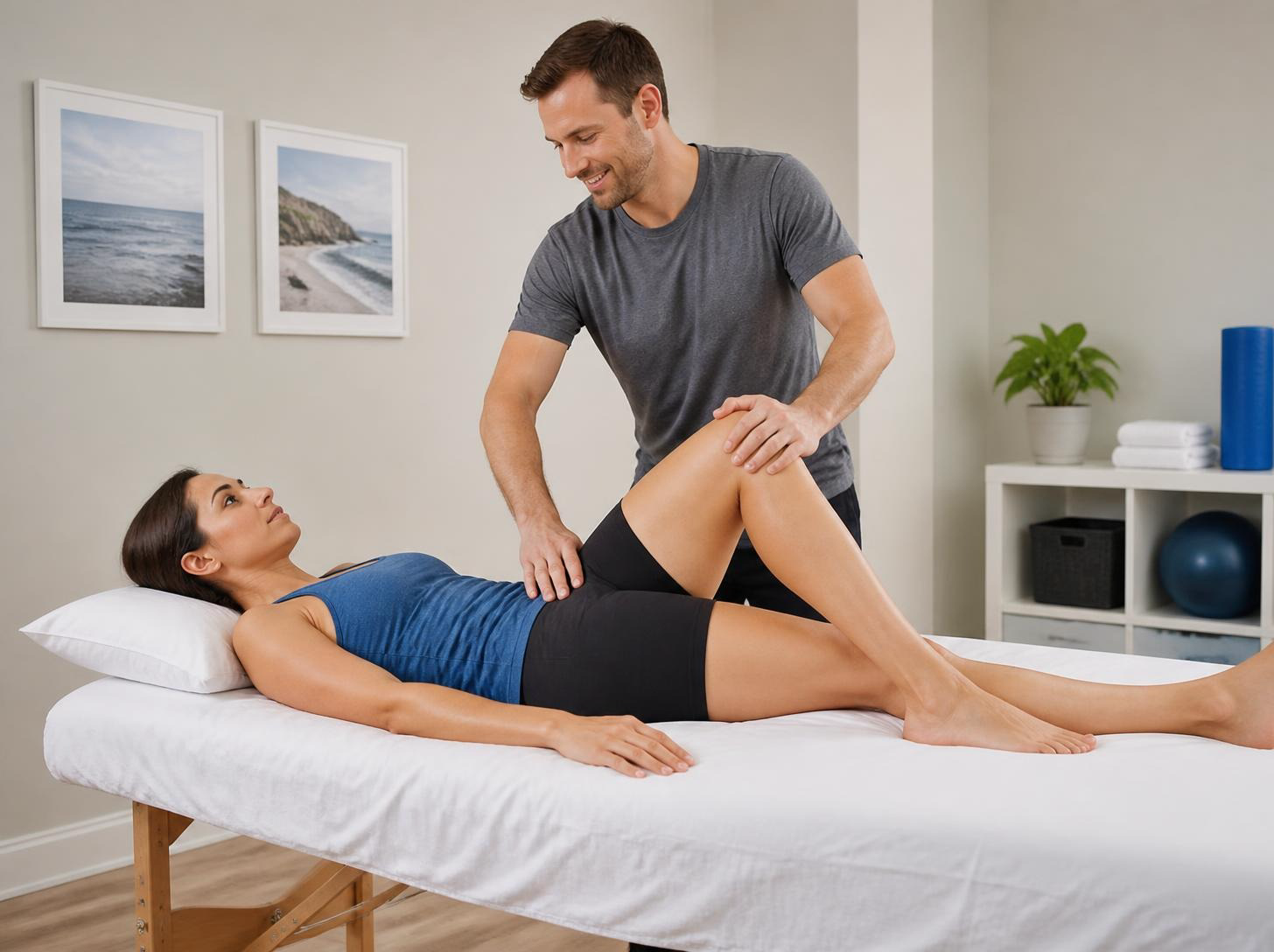
During table work, the client often produces effort while our hands guide the region. That combination lets us feel how force is being shared and whether a protective pattern softens as input and effort are coordinated. Movement training follows on the same plan. We choose a simple pattern the client can organize with less threat, then progress toward the movement drawn from daily activity or sport. Physical preparation and the hands-on work stay complementary. Neither replaces the other.
We do not treat every guarded pattern as something to erase in one visit. Some protection is useful while tissue and confidence catch up. We do watch for strategies that keep loading narrow, reduce options, or stay stuck after discomfort has eased. Reassessment of the same task across the session keeps the plan honest.
Physiokinetix perspective
Physiokinetix is our movement and education system, and it reaches people in two ways. Individuals work with it directly through the PKT Self-Care program, while massage therapists, bodyworkers, trainers, and many other healthcare and movement practitioners learn it through our professional and continuing education. Practitioners use it inside their own scope. Within the Physiokinetix framework, we use framework language to organize the same principle.
Much of our table work is active, with the client generating effort while the hands-on input continues. The cue "hold it and mold it" means the therapist's hands guide the region while the client produces the force. We use that cue when the goal is to feel and reshape how effort is shared under guidance, not to replace massage or osteopathic-based manual therapy. Those remain the hands-on core. Active table work appears in several Physiokinetix courses, and it sits at the center of Table Neuro Training, our flagship professional workshop, which was built to complement the Mobility and Stability levels of the PKT Self-Care program.
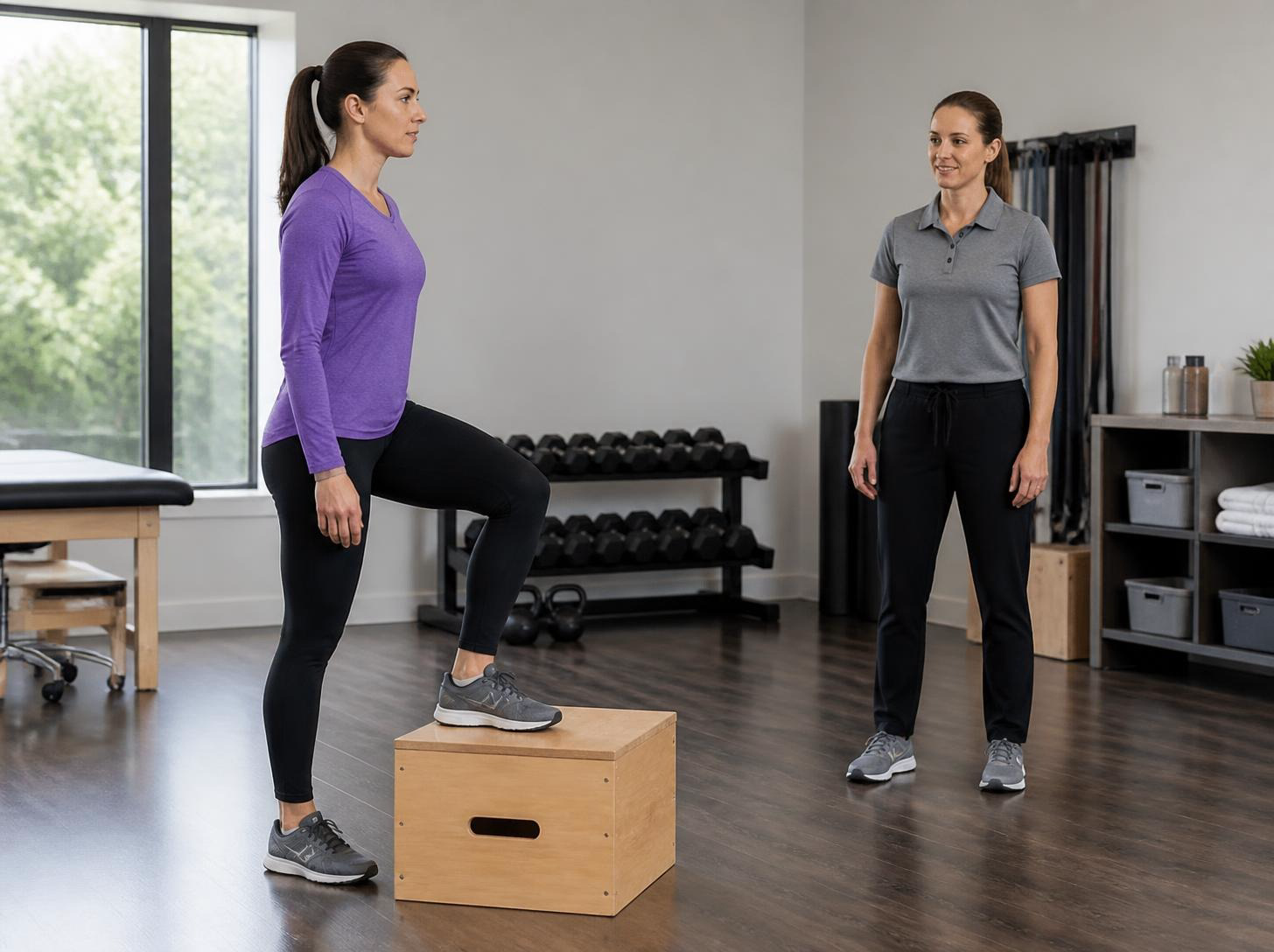
After the table, the movement work often runs from general to specific. General physical preparation builds broad capacity, such as strength, endurance, balance, coordination, mobility, and overall work capacity, and specific physical preparation applies that capacity to a movement drawn from what the client does away from the session. When pain has changed the plan, general work can restore options and confidence. Specific practice then asks for the real task with a strategy that is less rigid. Both ideas support the larger Physiokinetix progression of mobility, stability, power, and performance, which builds step by step without acting as a fixed protocol. Pain often shifts where a person starts on that progression, and what the person needs decides where we work on a given day.
Conclusion
Pain changes how people move. The stronger account in current theory and review is redistribution and task-dependent adaptation, not a single stereotype of muscle shutdown. Anticipation can reshape preparation. Strategies that protect in the short term can become costly if they narrow loading and options, though that pathway is not inevitable for every person. People can often still improve a practiced task while in pain, even when strategy differs.
At Temple Human Performance, we read the strategy in front of us, work with it through massage and osteopathic-based manual therapy with an active client, and carry the same aim into loaded practice. Within Physiokinetix, the progression from mobility and stability toward power and performance gives that plan its direction, and the person in front of us decides where on that progression the work begins. The science explains why the plan has to change when pain is present. The session is where we rebuild a workable strategy.
References
1. Hodges PW, Tucker K. Moving differently in pain: a new theory to explain the adaptation to pain. Pain. 2011;152(3 Suppl):S90-S98. doi:10.1016/j.pain.2010.10.020. PMID:21087823
2. Devecchi V, Falla D, Cabral HV, Gallina A. Neuromuscular adaptations to experimentally induced pain in the lumbar region: systematic review and meta-analysis. Pain. 2023;164(6):1159-1180. doi:10.1097/j.pain.0000000000002819. PMID:36730706
3. Neige C, Mavromatis N, Gagné M, Bouyer LJ, Mercier C. Effect of movement-related pain on behaviour and corticospinal excitability changes associated with arm movement preparation. J Physiol. 2018;596(14):2917-2929. doi:10.1113/JP276011. PMID:29855037
4. Matthews D, Cancino EE, Falla D, Khatibi A. Exploring pain interference with motor skill learning in humans: A systematic review. PLoS One. 2022;17(9):e0274403. doi:10.1371/journal.pone.0274403. PMID:36099284
5. Meier ML, Vrana A, Schweinhardt P. Low Back Pain: The Potential Contribution of Supraspinal Motor Control and Proprioception. Neuroscientist. 2019;25(6):583-596. doi:10.1177/1073858418809074. PMID:30387689
6. Kantak SS, Johnson T, Zarzycki R. Phys Ther. 2022;102(4):pzab289. doi:10.1093/ptj/pzab289. PMID:35079833
7. Murray GM, Sessle BJ. Pain-sensorimotor interactions: New perspectives and a new model. Neurobiol Pain. 2024;15:100150. doi:10.1016/j.ynpai.2024.100150. PMID:38327725