

Clinical context
Persistent aches in the back, neck, knees, and hands are among the most common physical complaints in adults, and most of the attention they receive goes to tissue and movement: what is tight, what is weak, what is overloaded. Food rarely enters that conversation, yet every tissue involved in movement is built, maintained, and repaired from what a person eats, and the chemical environment those tissues work in is shaped every day by diet. A growing body of research has asked a practical question: when adults living with chronic pain change the overall quality of what they eat, does their pain change?
At Temple Human Performance, nutrition sits beside massage and osteopathic-based manual therapy, movement training, and physical preparation as one part of a single treatment-and-training approach. This article looks at what systematic reviews report about whole-food dietary patterns and chronic musculoskeletal pain, what the Mediterranean-style research shows about markers of inflammation, what the omega-3 research shows for joint pain, and how we bring food into the same plan as the table work and the training.
Scientific background
Nutrition research has gradually shifted from single nutrients toward dietary patterns. A pattern describes the overall makeup of what someone eats over weeks and months: how much of the diet comes from vegetables, fruit, legumes, whole grains, nuts, fish, and olive oil, and how much comes from refined, highly processed foods. Patterns matter because foods are eaten together and their effects overlap, so the quality of the whole diet often tells more than any one ingredient.
Field and colleagues (2021) framed the problem this way: a typical Western diet is high in processed, highly palatable foods that displace nutrient-dense whole foods, and that pattern is linked with inflammation and oxidative stress. Low-grade inflammation is a persistent, mild elevation of the body’s inflammatory signaling, far below what accompanies an acute injury or infection. It is usually measured through blood markers such as high-sensitivity C-reactive protein (CRP), a protein made by the liver in response to inflammatory signals, and interleukin-6 (IL-6), one of the messenger molecules that drives that response. Pain researchers are interested in this environment because inflammatory and oxidative signaling are thought to influence how sensitive the nervous system becomes, and sensitivity is a central feature of persistent pain.
Omega-3 fatty acids are one of the most studied parts of this picture. The long-chain forms, EPA and DHA, come mainly from oily fish such as salmon and sardines. Plant foods such as flaxseed, chia, and walnuts provide a shorter-chain omega-3, ALA. These fats are built into cell membranes and serve as raw material for signaling molecules involved in both starting and resolving inflammation.
What the research shows
The broadest review of this question comes from Field and colleagues (2021), who searched eight databases for studies in which people with chronic pain followed a whole-food dietary intervention. They identified 43 studies reporting on 48 chronic pain groups. The interventions included elimination approaches (11), vegetarian or vegan diets (11), single-food changes (11), calorie or macronutrient restriction (8), an omega-3 focus (5), and Mediterranean diets (2). Seventeen groups reached what the authors called a clinically objective improvement in pain, defined as a reduction of two points or 33 percent on a visual analog pain scale, and 27 studies reported significant improvement in secondary metabolic measures. A meta-analysis of 25 groups showed a significant effect of diet on pain reduction, whether the groups were sorted by diet type or by type of chronic pain. The conclusion was an overall positive effect of whole-food diets on pain, with no single diet standing out. The authors read that as a sign that what these approaches share, including diet quality, nutrient density, and weight loss, may be what influences pain physiology. The included studies ranged from controlled trials to pre-post designs and case reports, so the review describes a consistent direction more than a precise effect size for any one diet.
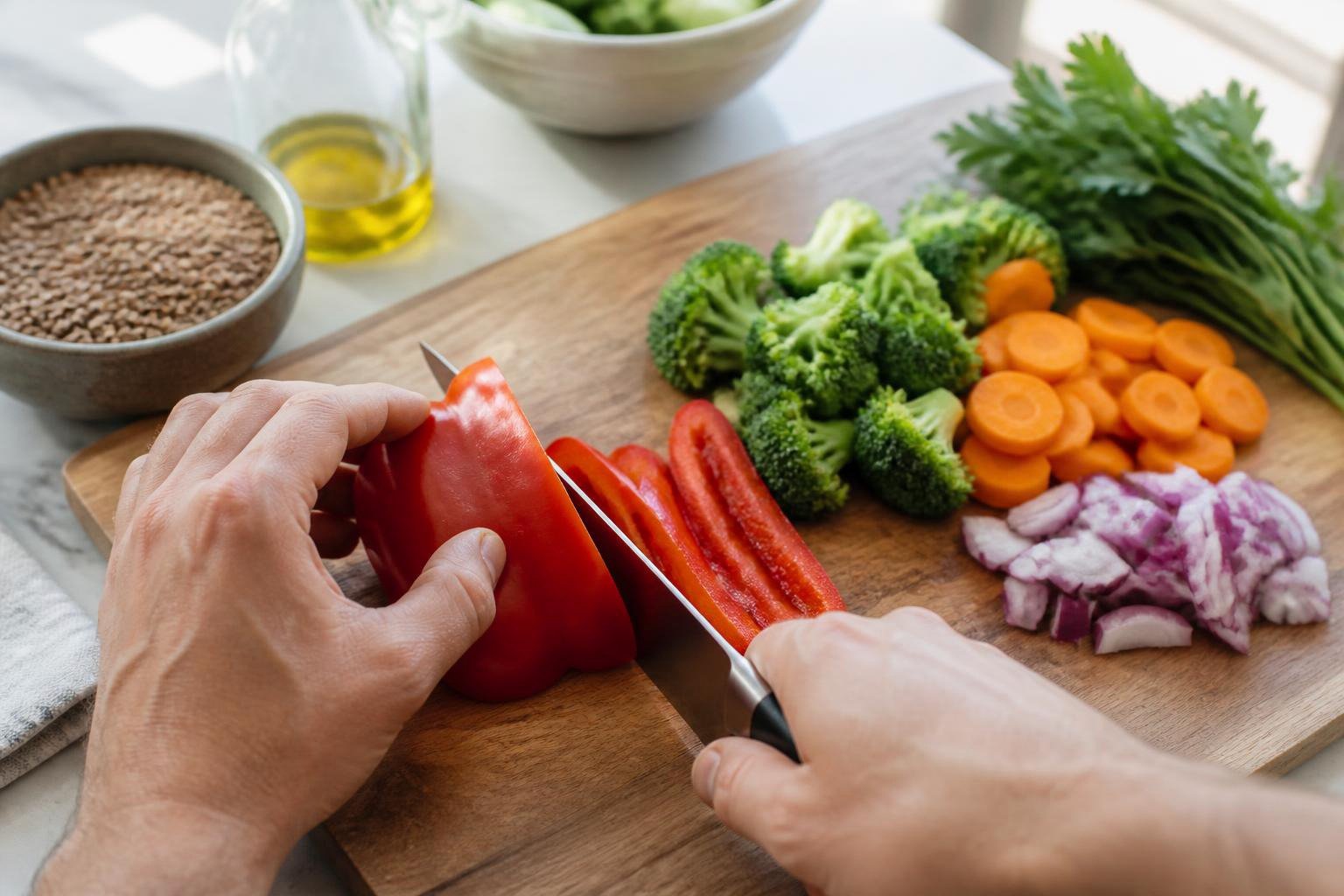
A systematic review focused on chronic musculoskeletal pain (Elma et al., 2020) reached a similar picture. From more than 20,000 screened records, 12 studies met the criteria: nine experimental and three observational. Seven of the nine experimental studies reported a pain-relieving effect of dietary changes, and the authors concluded that plant-based diets might have pain-relieving effects in chronic musculoskeletal pain. The observational studies linked what people ate with how they experienced pain: protein, fat, and sugar intake were associated with pain intensity and pain threshold, and in osteoarthritis, pain severity showed a positive relationship with fat and sugar intake.
The Mediterranean-style pattern has also been tested directly for its effect on inflammation. Schwingshackl and Hoffmann (2014) pooled 17 randomized controlled trials with 2,300 adults, each lasting at least 12 weeks. Compared with control diets, a Mediterranean diet produced greater decreases in high-sensitivity CRP (weighted mean difference of -0.98 mg/L), IL-6 (-0.42 pg/mL), and intercellular adhesion molecule-1 (ICAM-1), an adhesion molecule linked with inflammation in the lining of the blood vessels. It also produced a greater increase in flow-mediated dilation, a measure of how well arteries widen, and in adiponectin, a hormone made by fat tissue. The authors concluded that a Mediterranean diet decreases inflammation and improves endothelial function. These outcomes are blood and vascular markers rather than pain scores, and they describe the internal environment that the pain reviews point toward.
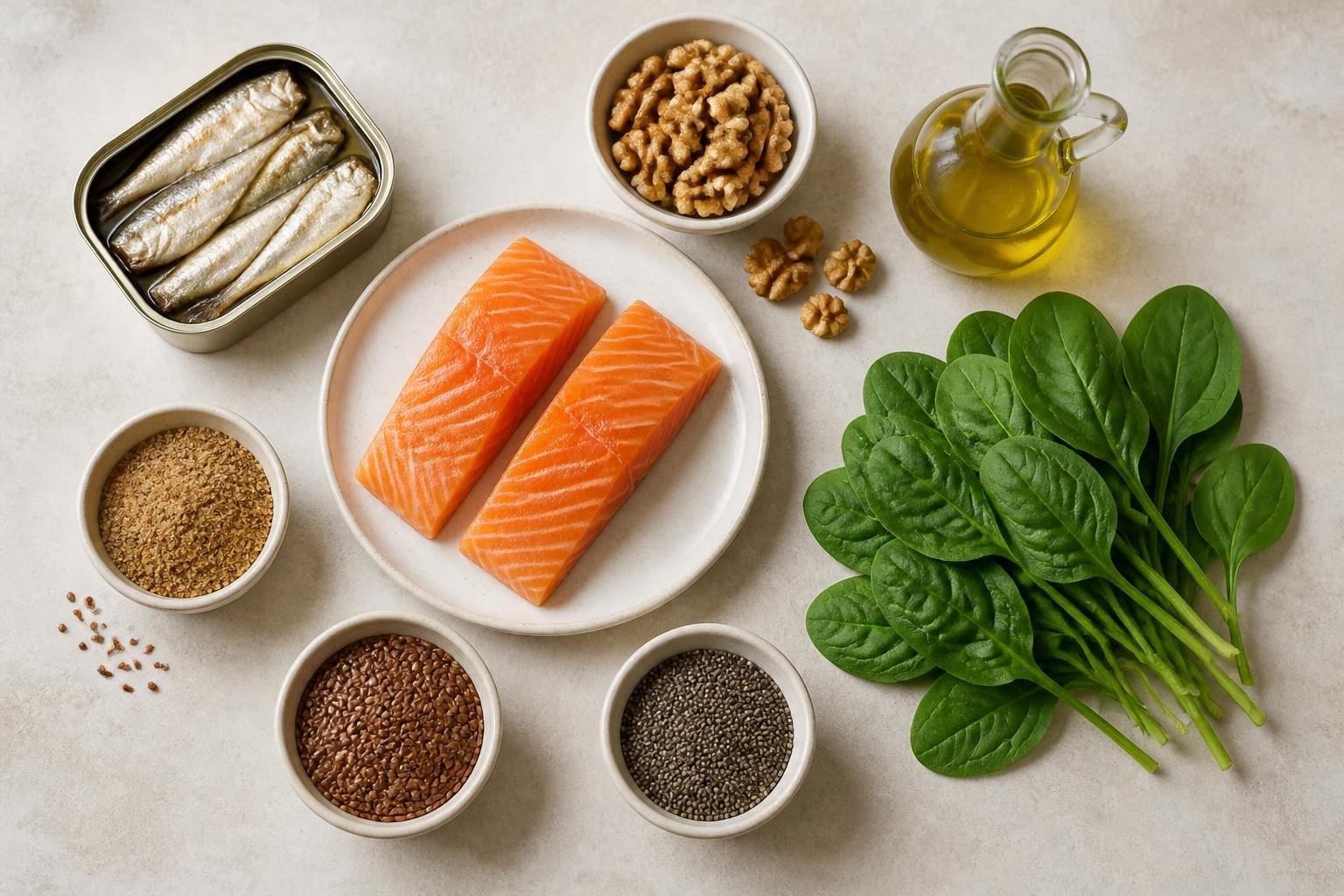
For omega-3 fats, Goldberg and Katz (2007) pooled 17 randomized controlled trials in adults with joint pain associated with rheumatoid arthritis, inflammatory bowel disease, or painful menstrual periods. After three to four months of omega-3 supplementation, participants reported lower joint pain intensity (standardized mean difference -0.26), fewer minutes of morning stiffness (-0.43), and fewer painful or tender joints (-0.29). These effects are modest in size, and they fit with the omega-3 focus that appeared among the whole-food interventions in the Field review.
Functional significance
Across these reviews, the consistent signal is about the overall quality of the diet rather than a single food or a single supplement. Whole-food interventions of several different kinds were associated with less pain, a Mediterranean-style pattern lowered markers of inflammation, and omega-3 fats produced modest improvements in self-reported joint pain and stiffness. Field and colleagues pointed to the common ground: more nutrient-dense whole food and less of the processed food it displaces.
That matters for movement. Pain and stiffness shape how a person loads the body. A sore knee shortens the stride, stiff hands change grip, and a back that aches each morning makes the first hour of the day guarded and cautious. Reducing the background contributors to sensitivity does not replace skilled hands-on work or progressive training, but it changes the environment in which both happen. A person whose system is less reactive tends to have more room to move, practice, and load.
Dietary patterns also suit the long time frame of musculoskeletal change. The trials in the Mediterranean review lasted at least 12 weeks and the omega-3 trials three to four months. Food quality builds over months, much as strength, capacity, and tissue tolerance do, which makes it a natural companion to a training plan.
How we apply it at Temple Human Performance
Nourish is one of the four parts of our model, alongside Educate, Repair, and Perform, and it applies to everyone who comes through the door, not only to people with a nutrition goal. When a client comes to us with persistent aches or stiffness, the first conversation covers how they move, how they train, how they sleep, and how they eat. Eating habits are part of the assessment because they are part of the picture.
Nutrition work at Temple is education first and built on real food. Our certified holistic health coach works with clients on a plan that fits their history, lifestyle, and goals, rather than handing out a canned diet. In general terms, the direction is the one the research describes: meals built around vegetables, fruit, legumes, whole grains, nuts, olive oil, and fish, with fewer ultra-processed foods and refined carbohydrates. Health history, body composition, and clear goals give us a baseline, so changes can be measured over time. Anything that calls for medical evaluation is referred to the appropriate provider, and we keep that line clear.
Within the same plan, the table work, the movement, and the food each address a different part of the same problem. The hands-on work changes how a region feels and moves in the session, the training builds capacity to keep that change, and nutrition shapes the internal environment those tissues live in between visits. The same principle runs through Physiokinetix, the education program I developed: principles over fixed recipes, because two people with similar complaints can bring very different histories, capacities, and responses. A client who trains hard and a client who sits at a desk all week may both have sore knees, and their nutrition conversations will look different for the same reason their sessions do.
In my own years of practice, the clients whose progress holds longest are usually the ones whose daily habits, including how they eat, support what happens on the table and on the training floor.
Conclusion
Systematic reviews of dietary interventions for chronic pain show a consistent direction. Whole-food diets of several types were associated with less pain, with no single diet standing out, which points toward diet quality and nutrient density as the shared ingredients. In chronic musculoskeletal pain specifically, most experimental studies reported a pain-relieving effect of dietary change, and plant-based patterns showed promise. A Mediterranean-style pattern lowered blood markers of inflammation over trials of at least 12 weeks, and omega-3 fats produced modest improvements in self-reported joint pain and stiffness over three to four months. Taken together, the research supports diet quality as a meaningful contributor to how the musculoskeletal system feels and functions. In our clinic, food belongs in the same plan as the hands-on work and the training.
References
1. Field R, Pourkazemi F, Turton J, Rooney K. Dietary interventions are beneficial for patients with chronic pain: a systematic review with meta-analysis. Pain Medicine. 2021;22(3):694 to 714. https://doi.org/10.1093/pm/pnaa378
2. Elma Ö, Yilmaz ST, Deliens T, Coppieters I, Clarys P, Nijs J, Malfliet A. Do nutritional factors interact with chronic musculoskeletal pain? A systematic review. Journal of Clinical Medicine. 2020;9(3):702. https://doi.org/10.3390/jcm9030702
3. Schwingshackl L, Hoffmann G. Mediterranean dietary pattern, inflammation and endothelial function: a systematic review and meta-analysis of intervention trials. Nutrition, Metabolism and Cardiovascular Diseases. 2014;24(9):929 to 939. https://doi.org/10.1016/j.numecd.2014.03.003
4. Goldberg RJ, Katz J. A meta-analysis of the analgesic effects of omega-3 polyunsaturated fatty acid supplementation for inflammatory joint pain. Pain. 2007;129(1-2):210 to 223. https://doi.org/10.1016/j.pain.2007.01.020