

Clinical context
Musculoskeletal discomfort is one of the most common reasons adults seek out hands-on care. A lower back that aches after a long week at a desk, a neck that tightens over a stressful month, legs that feel heavy two days after a hard training session: none of these is unusual, and each one shapes how freely a person moves through the day. Massage is one of the oldest responses to this kind of discomfort, and it has become one of the more closely studied forms of hands-on work.
At Temple Human Performance, massage and osteopathic-based manual therapy sit alongside movement training and physical preparation as parts of a single treatment-and-training approach. This article looks at what the major systematic reviews report about massage for low back pain, neck pain, and recovery after hard exercise, what those findings mean for comfort and function, and how we bring the table work and the movement work together in the clinic.
Scientific background
In the research literature, massage means manual manipulation of the soft tissues, most often with the hands and occasionally with a mechanical device. Common techniques include effleurage, a gliding, stroking pressure, and petrissage, a deeper kneading and lifting of the muscle. Study sessions range from a few minutes on a single muscle group to an hour of broader work, delivered once or repeated over several weeks.
Several mechanisms have been proposed for how this work changes comfort. Pressure and stretch on the skin, fascia, and muscle send a dense stream of sensory information to the nervous system, which can change how strongly painful signals are perceived and how much protective tone is held around a region. Massage is also thought to shift the autonomic nervous system toward a calmer, parasympathetic state, and recovery research has linked it to changes in local circulation and in blood markers of muscle damage. These mechanisms are not fully settled, and more than one is probably active in a given session. What they share is the idea that hands-on input acts on a responsive nervous system, not simply on tissue pressed into a new shape.
Delayed onset muscle soreness, usually shortened to DOMS, is the familiar ache that follows unaccustomed or intense exercise, especially work built on eccentric (lengthening) muscle actions such as downhill running or slow lowering under load. It usually builds over the first day and peaks somewhere between 24 and 72 hours, often with a temporary loss of strength and range of motion. Because it is predictable and measurable, DOMS has become a standard model for testing recovery methods.
What the research shows
The Cochrane review of massage for low back pain (Furlan et al., 2015) pooled 25 randomized trials with 3,096 adults, nearly all with subacute or chronic nonspecific low back pain. For subacute and chronic pain, massage produced better short-term pain scores than inactive comparisons such as sham, a waiting list, or no intervention, with a standardized mean difference of -0.75 across 7 trials and 761 participants. Short-term function improved as well (-0.72 across 6 trials and 725 participants). These are moderate to large effects, although the advantage over inactive comparisons was not sustained at long-term follow-up. Against active comparisons, such as joint manipulation, exercise, relaxation, and self-care education, massage still produced better pain scores in the short term (-0.37, 12 trials) and at longer follow-up (-0.40, 5 trials), while function did not differ between massage and those alternatives. A single small trial in acute low back pain also favored massage for short-term pain. No serious adverse events were reported in any trial. The most common side effect was a temporary increase in soreness, reported in 1.5 to 25 percent of participants depending on the study. The reviewers rated the overall evidence as low to very low quality, mainly because massage is difficult to blind and many trials were small, so their confidence in the size of these effects was limited.
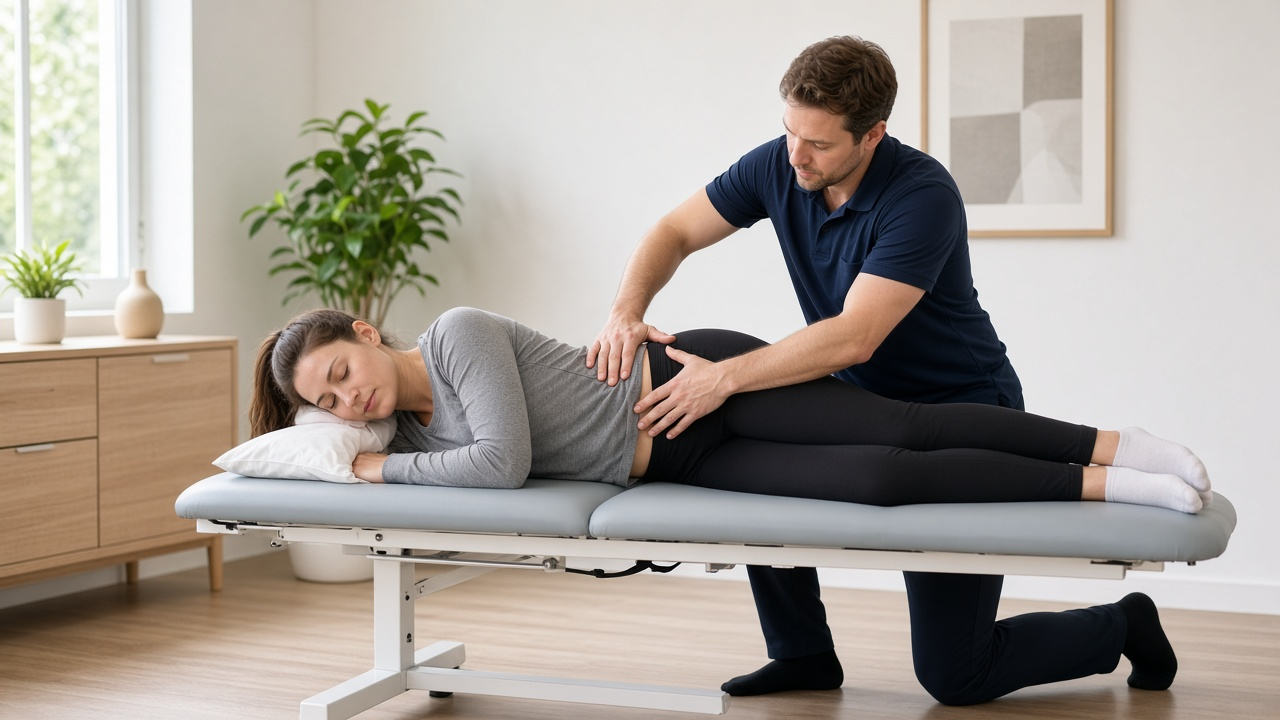
The 2024 Cochrane review of massage for neck pain (Gross et al., 2024) gathered 33 trials with 1,994 participants, all with subacute or persisting neck pain. In its main comparison, massage against a placebo or sham at around 12 weeks, low-certainty evidence suggested little to no difference in pain, function, or health-related quality of life, with a possible slight improvement in how participants rated their own treatment success. Most of the placebo-controlled trials delivered only a single massage session, and the evidence was downgraded for that reason. When trials were grouped by dose, a clinically important difference appeared in favor of a higher dose: at least eight sessions over four weeks, each lasting 30 minutes or more. Side effects such as temporary soreness after a session were reported, although adverse events were not documented well enough across trials to say how often they occur. The authors called for larger, adequately dosed trials.
A broader meta-analysis from the Evidence for Massage Therapy Working Group (Crawford et al., 2016) looked across adults with pain in the general population, including 67 trials, 60 of them rated high quality. Massage reduced pain compared with sham (standardized mean difference -0.44), with no intervention (-1.14), and with active comparisons (-0.26). Against active comparisons it also improved anxiety and health-related quality of life. The working group’s steering committee strongly recommended massage compared with no intervention for people seeking help with pain, and gave a weaker recommendation relative to sham and other active approaches.
The recovery literature is consistently positive. Guo and colleagues (2017) pooled 11 randomized trials with 504 participants who received massage or no intervention after strenuous exercise. Soreness ratings were lower with massage at 24 hours (standardized mean difference -0.61), 48 hours (-1.51), and 72 hours (-1.46), with an overall effect of -1.16. Massage also improved maximal isometric force (0.56) and peak torque (0.38), and lowered blood creatine kinase, a marker of muscle damage (-0.64). The authors identified about 48 hours after exercise as the point of greatest benefit, and noted that the included trials were small and methodologically limited, so the exact size of these effects should be read with some care.
Dupuy and colleagues (2018) took a wider view, comparing many recovery methods across 99 studies of healthy adults after a single exercise session. Active recovery, massage, compression garments, cold water immersion, contrast water therapy, and cryotherapy each produced small to large reductions in DOMS. Among all the methods compared, massage showed the largest effect on both DOMS and perceived fatigue, and it was also among the most effective for lowering inflammatory markers after exercise.
Functional significance
The clearest and most repeatable benefit of massage is a reduction in pain and soreness over the hours, days, and weeks following the work. For low back pain, that benefit appears against inactive comparisons and holds up, at a smaller size, against other active approaches. For neck pain, the benefit depends heavily on dose, and the trials that delivered a single session tell us little about a well-planned series. For recovery from hard training, massage reduces soreness and fatigue and is associated with faster return of muscle force.
Pain and soreness matter for movement, not only for comfort. A sore or guarded region changes how a person loads it. People shorten their stride, stiffen through the trunk, avoid turning the head fully, or skip the next training session. A period of reduced discomfort is therefore an opportunity. It is a window in which a person can move through a range that was recently guarded, practice controlling it, and begin to load it again. The research supports the comfort effect. Using that window for active movement and progressive loading is how we put it to work.
The safety picture supports that use. With no serious adverse events in the low back trials and temporary soreness as the most common response, hands-on work can be repeated across a series of sessions and paired with active training.
How we apply it at Temple Human Performance
When a client comes to us with back or neck discomfort or training soreness, the first step is a conversation and an assessment. We look at how the person moves, where load is concentrated, how the region responds to different positions and efforts, and what the person needs to be able to do. That information decides where the hands-on work goes and what the movement portion of the session will ask for. Anything that calls for medical evaluation is referred to the appropriate provider, and we keep that line clear.
The table work itself is not a single brief touch. A session with us is a full appointment of focused soft-tissue and joint work, and when comfort is the main goal we often build a short series of visits rather than relying on one. That pattern lines up with the dose signal in the neck pain review.
Within the same session, the change from the hands-on work is followed by active movement. After work through the lower back and hips, that may mean slow hip hinges, sit-to-stand practice, or walking with attention to how the trunk and pelvis share the load. After neck work, it may mean controlled head turns, shoulder blade movement, and relaxed breathing. Within the Physiokinetix framework that I developed, this sequence runs from hands-on input to active movement and then to progressive loading, and the four framework levels of Mobility, Stability, Power, and Performance describe how that capacity is built over time. Clients who want structure between visits can use Physiokinetix Self-Care, which follows the same progression at home.
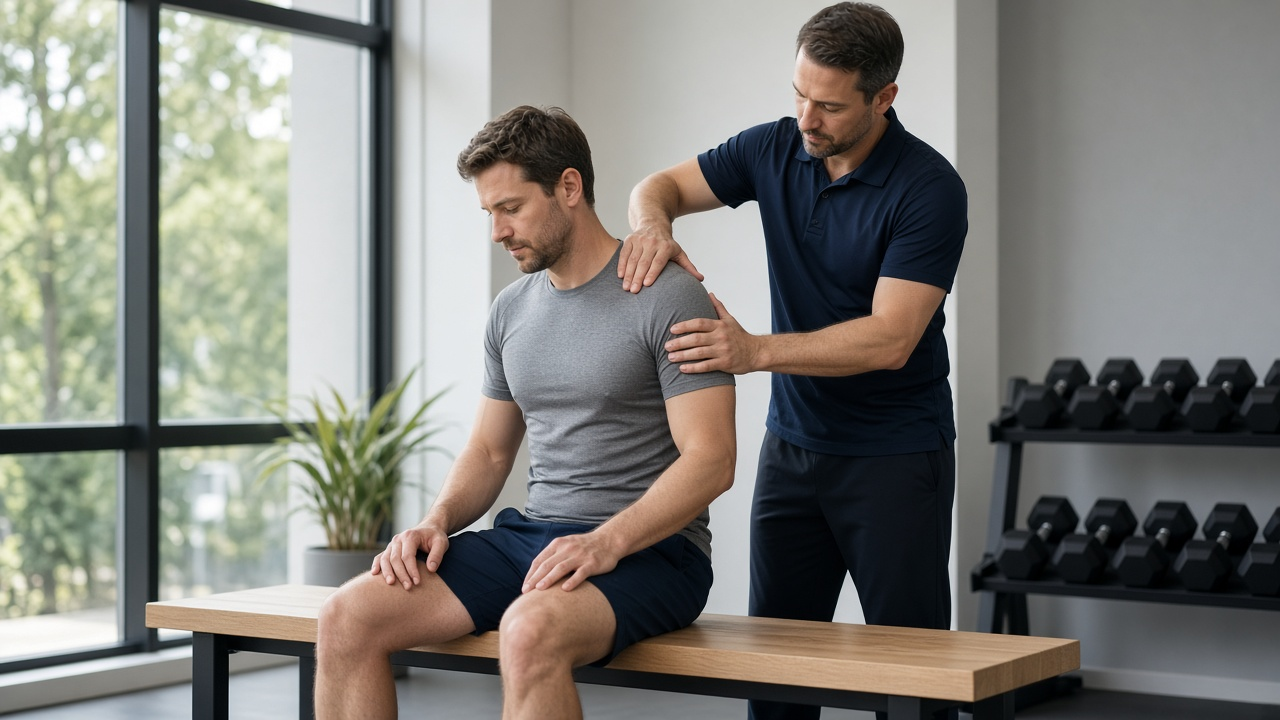
For athletes and active adults, we often place recovery-focused work in the days after their hardest training, which fits the timing in which the DOMS research shows its largest effects. The aim is to keep training consistent, so the next session is productive rather than skipped. In my own years at the table, the clients who hold their gains longest are usually the ones who treat the comfort from a session as a chance to move well, rather than as the end point.
Conclusion
Systematic reviews of massage show a consistent pattern. For low back pain, massage improves short-term pain and function compared with inactive comparisons and continues to show pain benefits against other active approaches, with only minor side effects reported and evidence that is still of limited quality. For neck pain, results hinge on dose, and a higher-dose subgroup showed a clinically important difference that single-session trials are not built to capture. For recovery after hard exercise, massage reduces soreness and perceived fatigue and supports the return of muscle force, with its strongest effect around two days after training. Taken together, the literature supports hands-on work as a meaningful way to improve comfort, particularly when it is adequately dosed, and the period of comfort it creates is where active movement and progressive loading do their part. In our clinic, the two belong to the same plan.
References
1. Furlan AD, Giraldo M, Baskwill A, Irvin E, Imamura M. Massage for low-back pain. Cochrane Database of Systematic Reviews. 2015;(9):CD001929. https://doi.org/10.1002/14651858.CD001929.pub3
2. Gross AR, Lee H, Ezzo J, Chacko N, Gelley G, Forget M, et al. Massage for neck pain. Cochrane Database of Systematic Reviews. 2024;(2):CD004871. https://doi.org/10.1002/14651858.CD004871.pub5
3. Crawford C, Boyd C, Paat CF, Price A, Xenakis L, Yang E, et al. The impact of massage therapy on function in pain populations. A systematic review and meta-analysis of randomized controlled trials: Part I, patients experiencing pain in the general population. Pain Medicine. 2016;17(7):1353 to 1375. https://doi.org/10.1093/pm/pnw099
4. Guo J, Li L, Gong Y, Zhu R, Xu J, Zou J, et al. Massage alleviates delayed onset muscle soreness after strenuous exercise: a systematic review and meta-analysis. Frontiers in Physiology. 2017;8:747. https://doi.org/10.3389/fphys.2017.00747
5. Dupuy O, Douzi W, Theurot D, Bosquet L, Dugué B. An evidence-based approach for choosing post-exercise recovery techniques to reduce markers of muscle damage, soreness, fatigue, and inflammation: a systematic review with meta-analysis. Frontiers in Physiology. 2018;9:403. https://doi.org/10.3389/fphys.2018.00403