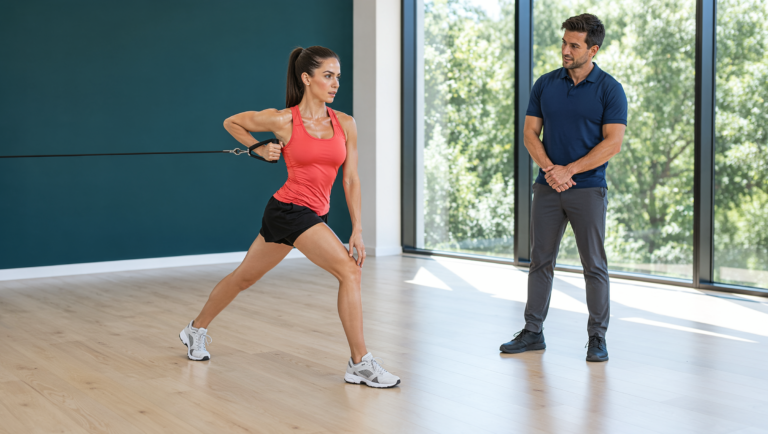
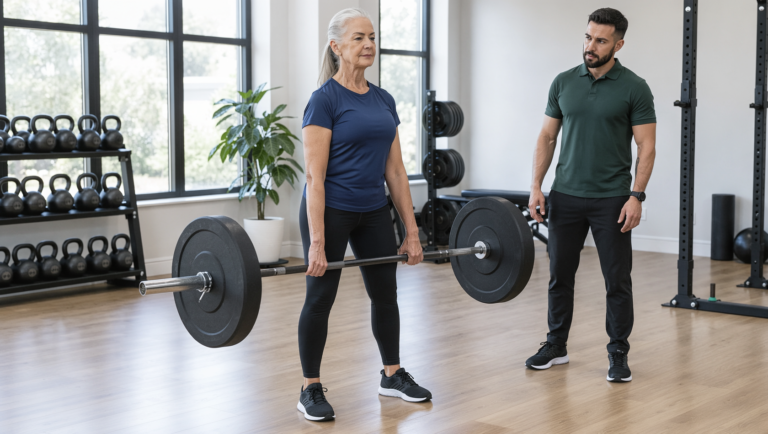
Every training session draws on the body’s water supply. Sweat carries water and electrolytes away during effort, warm rooms and long sessions increase the loss, and the amount varies a great deal from one person to the next. Hydration is easy to overlook until thirst arrives. The research on body water and performance gives a more useful picture: how much fluid loss begins to matter, which kinds of work are most affected, and which simple markers help a person know where they stand.
For nearly 30 years, Temple Human Performance has combined massage and osteopathic-based manual therapy with movement training, physical preparation, and nutrition in one approach to treatment and training. Hydration sits on the nutrition side of that work, but it shows up in every part of the week: in coached strength sessions, in sauna sessions that bring on a heavy sweat, and in the quality of effort a client brings to the table and the training floor. This article looks at what studies report about hydration and strength, endurance, effort, and attention, what the main fluid replacement guidance recommends, and how we use those findings with clients.
Researchers use a few terms with specific meanings. Euhydration describes a normal level of body water. Dehydration is the process of losing body water, and hypohydration is the resulting state of reduced body water. In their review of dehydration physiology, assessment, and performance, Cheuvront and Kenefick (2014) emphasize that how water is lost matters. Sweat is more dilute than blood, so losing it concentrates the body’s fluids, while some other forms of loss reduce fluid volume without changing concentration. Both affect how the body responds, and both shape how hydration is best assessed.
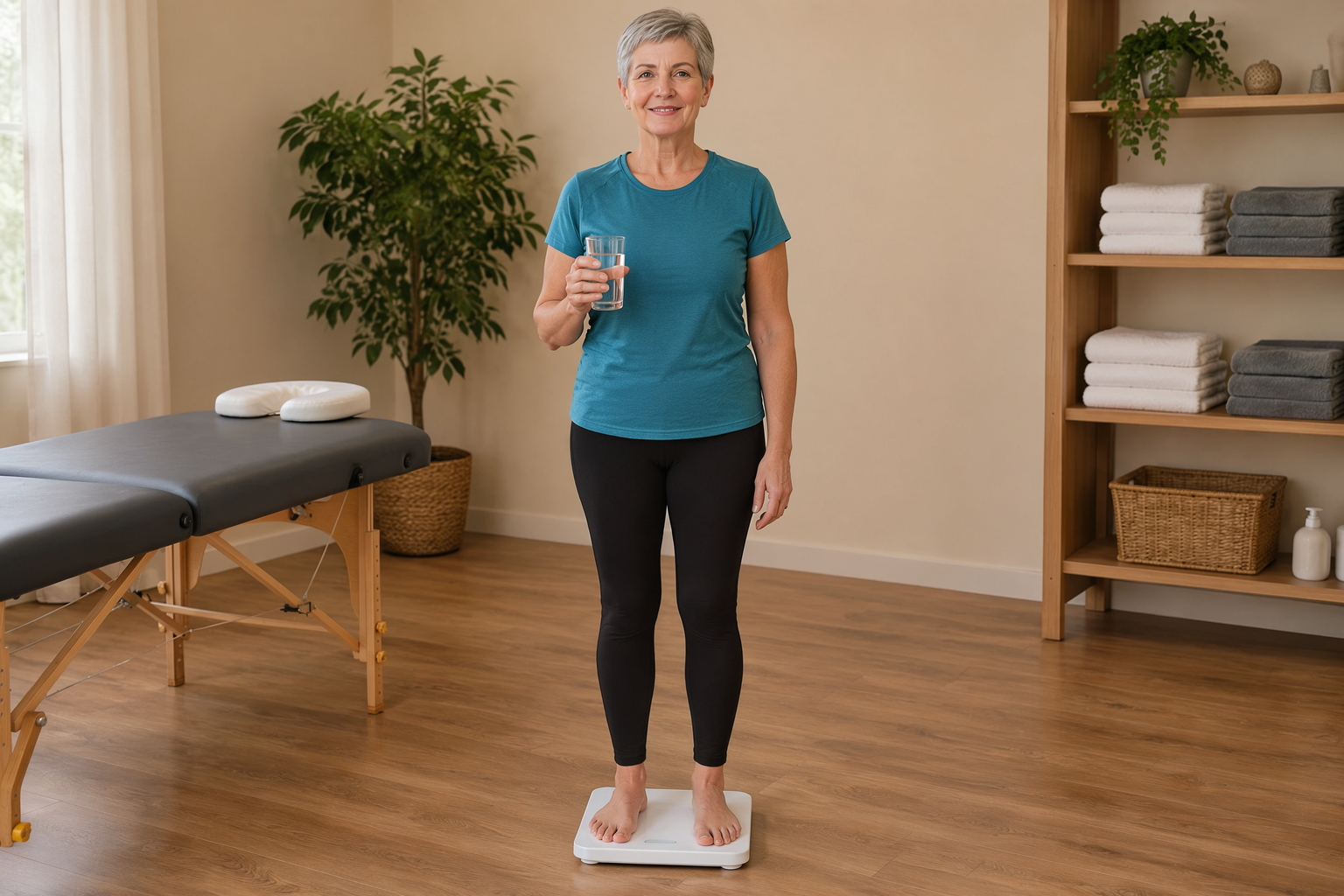
In practice, most of the fluid an active person loses comes from sweat. The American College of Sports Medicine position stand on exercise and fluid replacement (Sawka et al., 2007) notes considerable variability in sweating rates and in the electrolyte content of sweat between individuals. For that reason it recommends individualized fluid replacement rather than one fixed amount for everyone, and it points to a simple tool for estimating individual sweat losses: measuring body weight before and after exercise.
Strength and power work was once thought to be largely unaffected by hydration, because a heavy set lasts only seconds. Judelson and colleagues (2007) reviewed the studies on this question and found that much of the inconsistency in earlier results came from methodological choices that either exaggerated or masked the effect of fluid loss. After accounting for those factors, hypohydration consistently reduced strength by about 2 percent, power by about 3 percent, and high-intensity endurance, meaning maximal efforts lasting between 30 seconds and two minutes, by about 10 percent. The authors concluded that hypohydration limits strength, power, and high-intensity endurance and is an important factor when the goal is maximal muscular performance. They also noted that the mechanism is not yet clear and may involve the neuromuscular system directly.
A later meta-analysis by Savoie and colleagues (2015) pooled 28 studies. Hypohydration reduced muscle endurance by about 8.3 percent, muscle strength by about 5.5 percent, and anaerobic power by about 5.8 percent, with similar effects in the upper and lower body. Anaerobic capacity and vertical jumping were not significantly changed. The decreases were smaller in trained individuals and when water loss was induced passively rather than through exercise, which the authors describe as substantially mitigating the effect. Their overall conclusion was that hypohydration, or factors associated with dehydration, are likely to be associated with practically important decrements in muscle endurance, strength, and anaerobic power. Cheuvront and Kenefick (2014) describe the strength and power effect in similar terms: marginal, but potentially important, without a clear threshold at which it begins.
For a client in a strength session, a few percent can be the difference between completing the last good repetitions of a set and stopping short. Muscular endurance, the ability to keep producing quality work across repeated efforts, showed the largest effect in the pooled data.
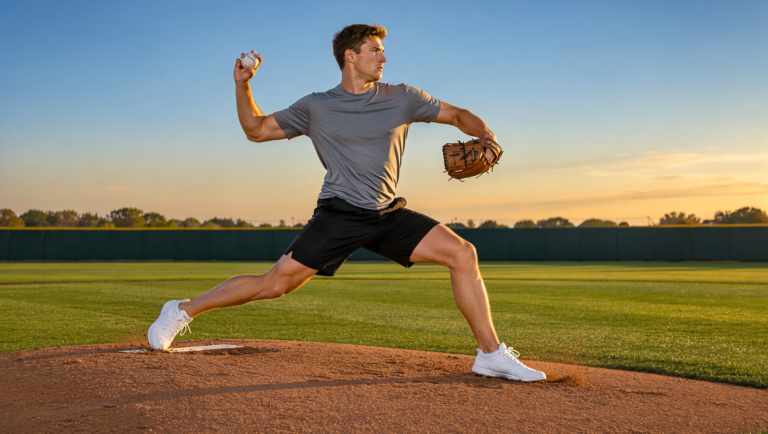
Endurance work shows the clearest relationship with body water. In their analysis of the performance literature, Cheuvront and Kenefick (2014) describe a threshold of about 2 percent of body mass, beyond which endurance performance is impaired, an effect they attribute mainly to the loss of fluid volume. Kenefick and Cheuvront (2012), writing about recreational sport and physical activity, add that heat exposure magnifies the effect of dehydration on prolonged aerobic activity.
Starting a session already short on fluid also matters. Deshayes, Jeker, and Goulet (2020) pooled 15 well-controlled studies, involving 186 participants, in which people began running or cycling exercise lasting up to about an hour after losing an average of 3.6 percent of body mass. Compared with starting well hydrated, pre-exercise hypohydration reduced aerobic performance by about 2.4 percent, peak oxygen consumption by about 2.4 percent, and oxygen consumption at the lactate threshold by about 4.4 percent, across environments ranging from 19 to 40 degrees Celsius.
How hard the work feels changes as well. In a meta-analysis of 16 studies with 147 participants, Deshayes, Pancrate, and Goulet (2022) found that ratings of perceived exertion during endurance exercise rose by about 0.21 points on the Borg scale for each additional 1 percent of body mass lost. The authors judged that this rise is unlikely to be practically meaningful until losses reach at least 3 percent of body mass, which is one more reason to keep losses from accumulating across a long or hot session.
Attention is part of the picture too. Adan (2012) reviewed the studies on cognitive performance and reported that dehydration of about 2 percent impaired tasks requiring attention, psychomotor skill, and immediate memory, along with how people rated their own state. Long-term memory, working memory, and executive function were more preserved, especially when the dehydration came from moderate exercise, and Adan noted that methods across studies have varied. For movement work, the relevant finding is the one on attention and psychomotor skill, since learning a new pattern or controlling a heavy load depends on both.
The ACSM position stand (Sawka et al., 2007) lays out three goals. Before activity, the aim is to start with normal body water and electrolyte levels, drinking several hours ahead when needed so there is time for fluid to be absorbed and for urine output to return to normal. During exercise, the aim is to prevent excessive dehydration, defined as more than a 2 percent loss of body weight from water deficit, along with excessive changes in electrolyte balance. After exercise, the aim is to replace any fluid and electrolyte deficit. The position stand also notes that beverages containing electrolytes and carbohydrate can offer benefits over water alone under certain circumstances.
Simple markers make these goals usable outside a laboratory. Armstrong and colleagues (1998) followed nine highly trained men through a 42-hour protocol of dehydration, cycling to exhaustion, and oral rehydration. Urine color tracked changes in body water as effectively as, or better than, urine osmolality, urine specific gravity, urine volume, and several blood measures. McKenzie, Muñoz, and Armstrong (2015) tested urine color in 22 healthy men cycling in a hot room. A rating of 5 or darker on the urine color chart used in the study identified a body mass loss of 2 percent or more with 88.9 percent sensitivity and 84.8 percent specificity.
Kenefick and Cheuvront (2012) add useful context. Fluid needs depend on sweat losses, which follow the intensity and duration of activity and vary among individuals. Their predictions for running distances from 5 to 42 kilometers at recreational paces showed fluid losses below 2 percent of body mass, so aggressive fluid replacement may not be necessary, while competitive paces produce greater losses and greater needs. Because a single urine sample taken at a random time has limitations, they suggest first-morning urine concentration and body mass, together with a general sense of thirst, as simple ways to assess hydration status.
At Temple, we treat hydration as part of the physical preparation for a session rather than an afterthought. Before demanding strength or conditioning work, we pay attention to how a client arrives: a long workday without much to drink, a hot afternoon, or an early session right after waking. When the plan calls for heavier loading or longer intervals, we would rather the client start that work with normal body water than try to catch up halfway through. During longer sessions, regular drinking along the way works better than large amounts all at once.
The sauna adds a second source of fluid loss. A session in the far infrared sauna produces a substantial sweat, and when it follows a training session the two losses add together. We treat drinking before and after those sessions, and replacing what was lost, as part of finishing the session well. For clients who train hard or sweat heavily, the before-and-after body weight approach from the ACSM guidance is a simple way to see their own typical loss rather than guessing.
Hydration also comes up naturally during hands-on work. The table is often where clients describe their week, including how they have been sleeping, eating, and drinking, and that conversation feeds into the training plan. Nutrition coaching gives the same subject more structure: fluid intake across the day, the role of water-rich whole foods, and how drinking habits fit around training and work.
In our experience, the markers clients use most consistently are the simplest ones: the color of first-morning urine, a body weight check on heavy training days, and attention to thirst. Those match the tools the research supports, and they turn hydration into something a client can monitor without equipment or guesswork.
Physiokinetix, the education and movement system I developed, views movement as the product of many interacting factors, including neurological input, tissue loading, motor control, strength and endurance, coordination, and the demands of the task and the environment. Body water belongs on that list as one of the conditions that shape how well a person can use the capacity they have. A strength session performed short on fluid is still useful, but the research suggests the quality of the work, especially across repeated efforts, may be reduced.
The PKT framework progresses through Mobility, Stability, Power, and Performance. Mobility opens movement options, Stability builds active control of them, Power adds force production, muscular endurance, and progressive load, and Performance applies those capacities to sport, work, daily life, and healthy aging. The levels build on one another without functioning as a rigid protocol. The hydration findings matter most as clients move into Power and Performance, where repeated efforts and higher loads make up a larger share of the work.
Physiokinetix also holds to the principle of knowledge, not diagnosis, and it connects professional sessions with self-care so the individual can take an active part between visits. Hydration fits that bridge well. We explain what the research shows, teach a few practical markers, and let clients apply them on their own as part of their PKT Self-Care practice, so the conditions for good training are in place well before they arrive for a session.
Research on hydration and physical performance shows that reduced body water is associated with lower muscular endurance, strength, and anaerobic power, with the largest pooled effect on muscular endurance and smaller effects in trained individuals. Endurance performance shows the clearest relationship, with impairment described beyond about 2 percent of body mass loss and magnified by heat, and starting exercise already hypohydrated reduces aerobic performance and oxygen uptake. Perceived effort rises as fluid loss grows, and attention and psychomotor tasks can be affected at around 2 percent. Fluid replacement guidance emphasizes starting sessions with normal body water, limiting losses during exercise to less than about 2 percent of body weight, replacing deficits afterward, and individualizing the plan because sweat rates differ so widely. Urine color, first-morning measures, body weight change, and thirst give practical ways to monitor all of this. At Temple, we build those principles into how clients prepare for coached sessions, how sauna sessions are finished, and how nutrition coaching and home practice support training, so treatment and training take place on a well-hydrated foundation.