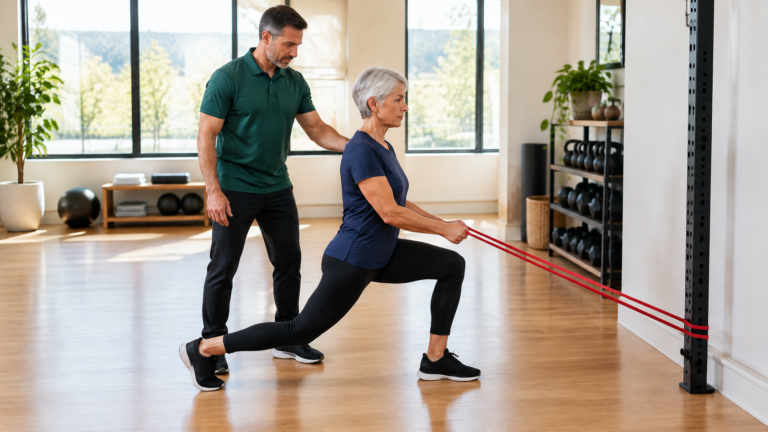
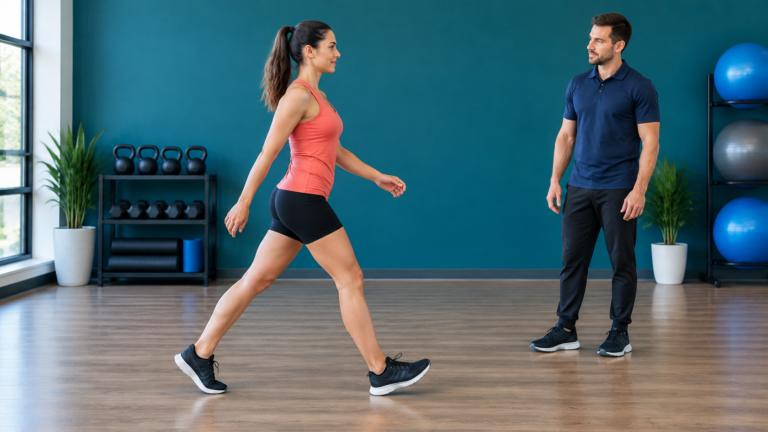
Rising from a low chair, catching a stumble, stepping up onto a curb before the light changes, and pushing off to change direction on a court share a demand that a test of maximal strength does not capture. Each task gives the muscles only a fraction of a second to produce force. A person can be strong enough to move a heavy load slowly and still be unable to produce enough force quickly enough when the task is time limited. Exercise science describes this capacity with two related measures, rate of force development and muscle power, and a substantial body of research has examined how both respond to training, including in middle-aged and older adults.
At Temple Human Performance, we combine massage and osteopathic-based manual therapy with movement training and physical preparation in one plan. Within that plan, the speed at which a client can produce force is a capacity we train on purpose rather than a by-product we expect to follow from slow strength work. The research explains why rapid force and maximal strength differ, what kind of training changes each, and how safe fast training is for older adults.
Rate of force development, usually shortened to RFD, is the slope of the force-time curve at the start of a contraction. It describes how quickly force rises once a muscle is switched on. Researchers typically measure it during a rapid isometric contraction and report it over windows from contraction onset, such as the first 50, 100, or 200 milliseconds, or as the steepest point of the curve. Maximal strength is the highest force a muscle can produce when time is not limited, and reaching it usually takes longer than many everyday and athletic tasks allow.
Power is the rate of doing work, which in practice is the product of force and velocity. It can rise when force increases, when speed increases, or when both do. The two factors trade against each other. Muscles produce their greatest force at slow speeds and their greatest speed against light loads, so the load at which power peaks sits somewhere in between and differs from one exercise to another. Slow, heavy strength training sits at the force end of that relationship. Power and RFD training ask the body to produce substantial force within a short time.
Folland and colleagues (2014) showed that the determinants of rapid force change within a single contraction. In 40 untrained adults performing explosive knee extensions, force in the first 50 milliseconds was explained mainly by neural drive to the quadriceps, recorded with surface electromyography, together with the muscle’s contractile response to a single electrical stimulus. Between 50 and 100 milliseconds, RFD was most closely related to the muscle’s intrinsic capacity for rapid force, measured with brief high-frequency electrical stimulation. By 100 to 150 milliseconds, maximal voluntary force had become the main determinant. Early rapid force also varied enormously between people, by about 13-fold at 50 milliseconds. The earliest phase of a fast contraction depends heavily on how the nervous system activates the muscle and how the muscle itself responds, while the later phase increasingly reflects how strong the muscle is.
Training adaptations in older adults point in a similar direction. Siddique and colleagues (2022) meta-analyzed 20 studies of strength training in older adults and summarized a further 36 in a best-evidence synthesis. They found strong evidence that training increased maximal force, RFD, muscle activation, and muscle mass, with gains appearing within 2 to 12 weeks. Evidence for change at specific sites in the nervous system, such as voluntary activation and spinal excitability, was limited. The authors proposed that greater motor unit recruitment and improved discharge rates likely contribute, which fits the view that much of the early change in rapid force is neural.
Guizelini and colleagues (2018) pooled 13 training effects from 10 studies of healthy adults with a mean age of 60 years or older. Compared with control groups, resistance training improved maximal strength by about 18 percent and RFD by about 27 percent. Age, training type (heavy strength or explosive), training duration between 4 and 16 weeks, and sessions per week did not significantly change those effects. The changes in strength and in RFD were not significantly related to each other, and the authors cautioned against using one as a substitute for the other when assessing older adults. With only 10 studies, the analysis had limited ability to separate training types, so the absence of a difference between heavy and explosive training is better read as unresolved than as equivalence.
Blazevich and colleagues (2020) asked which features of training drive RFD. Across 54 studies with 59 intervention groups, resistance training increased RFD measured at 50 milliseconds (standardized mean difference 0.58) and at 200 milliseconds (0.39), as well as peak RFD (0.35). For peak RFD, gains relative to control groups were significant after training with fast movements (0.54), after slow movements performed with the intent to produce force as quickly as possible (0.41), and after exercises whose movement pattern matched the test (0.38). Slow training without that intent (0.21, p = 0.05) and exercises that did not match the test pattern showed no clear effect. The largest increases tended to occur in the first weeks of training, with less ongoing improvement, or even a decline, over longer programs, particularly when training was slow or lacked fast intent. Data in women were sparse, with a nonsignificant negative trend, and the authors identified this as a gap for future research.
For muscle power in people aged 50 and older, Straight and colleagues (2016) analyzed 52 effects from 12 randomized controlled trials measuring leg press or knee extension power. Resistance training had a small to moderate effect overall (Hedges’ d 0.34), equivalent to about 55 watts. High-velocity training produced a clearly larger effect than traditional training (0.62 compared with 0.20), and training volume also moderated the result.
Balachandran and colleagues (2022) compared the two approaches head to head in 20 randomized trials with 566 healthy, community-living older adults (mean age 70, 65 percent women). Power training meant lifting the weight as fast as possible and lowering it under control. It was associated with a modest improvement in physical function compared with traditional strength training (standardized mean difference 0.30 across 13 trials with 383 participants), and with greater gains in power (0.44), while strength, muscle mass, and gait speed did not differ between approaches. The certainty of evidence was low. Adverse events were 3.27 per 1,000 person-sessions with power training and 2.08 with traditional training, mainly arthritis flare-ups and knee or muscle soreness, with no serious adverse events in either group. Adherence was about 82 percent for both. These safety figures carry real limits: 14 of the 20 trials reported adverse events insufficiently, studies with lower-functioning participants reported more events, none of the trials objectively tracked movement velocity, and most were short and small.
Radaelli and colleagues (2023) addressed the gap between this evidence and practice in a current opinion article. They describe power training as moving loads of roughly 20 to 70 percent of a one-repetition maximum as fast as possible in the lifting phase, followed by a controlled, slower lowering phase, and note that power output in functional tasks can improve substantially within 12 weeks. Despite roughly 300 studies on the topic in the preceding decade, some international guidelines for older people do not mention power training, and the authors set out the case for its safety, feasibility, and effectiveness. As an opinion piece, it frames the evidence rather than adding new data.
Three points from this research shape how we think about power in practice.
First, strength and rapid force are related but separate qualities. The early phase of a fast contraction depends heavily on neural activation and the muscle’s own contractile speed, and changes in strength and RFD did not track each other in older adults. A client who tests well on a slow strength measure may still be slow to produce force when a task is time limited, so the two need to be observed and trained in their own right. Heavy strength work still matters, because the later phase of rapid force and the ceiling for power both depend on maximal force.
Second, intent carries as much weight as load. Slow movements attempted as fast as possible improved peak RFD, while slow movements without that intent showed no clear effect. A heavy lift that moves slowly because it is heavy can still train rapid force if the effort is to accelerate it, and a light movement done casually may train very little. The instruction and the effort behind a repetition are part of the training variable.
Third, age is not by itself a reason to avoid fast training. In adults over 50, high-velocity training produced larger power gains than traditional training, and in healthy older adults power training improved physical function modestly with adverse event rates close to those of slow training. The evidence is low in certainty, the trials were short, harms were often poorly reported, and lower-functioning participants had more events. Those limits argue for careful dosing and progression rather than for leaving rapid force untrained.
In our sessions, power is one part of a progression that also includes the hands-on work, range, and control a client needs before fast loading makes sense.
Assessment includes how quickly a client moves, not only how far or how strongly. We watch a client rise from a chair without using the hands, step up onto a box, or shift weight quickly from one foot to the other. Hesitation at the start of a movement, a slow push-off, or a rise that relies on momentum from the trunk tells us something different from a strength test, and it helps decide whether rapid force is a current priority.
The hands-on work prepares the ground. On the table we influence comfort, range, joint mechanics, and sensation, and the client works actively throughout, pressing into a hand, holding a position, or moving through a range that has felt restricted. Control in those positions comes next, so that a client can manage the joint angles and positions a fast movement will demand. Fast effort is then introduced in forms the client can already perform well, such as a sit-to-stand from the edge of the table done as quickly as control allows, with an even, controlled return.
Off the table, we place fast efforts early in the training portion of a session, while the client is fresh, and before more fatiguing strength or endurance work. Each repetition is performed with the intent to move quickly in the lifting or pushing phase and with control on the return. Sets stay short and end when speed or quality visibly drops, because a slow, tired repetition no longer trains the quality we are after. Load progresses from body weight toward light and then moderate external resistance, using tools such as a step, a medicine ball, a kettlebell, or a band. Heavier, slower strength work stays in the plan alongside the fast work, since both contribute to rapid force.
We also track the response between sessions. Soreness or an irritable joint the next day guides the following session’s choice of load, range, and volume. For clients who are deconditioned or returning to activity after a setback, the starting point is lower and the progression slower, which is consistent with the higher event rates seen in lower-functioning participants.
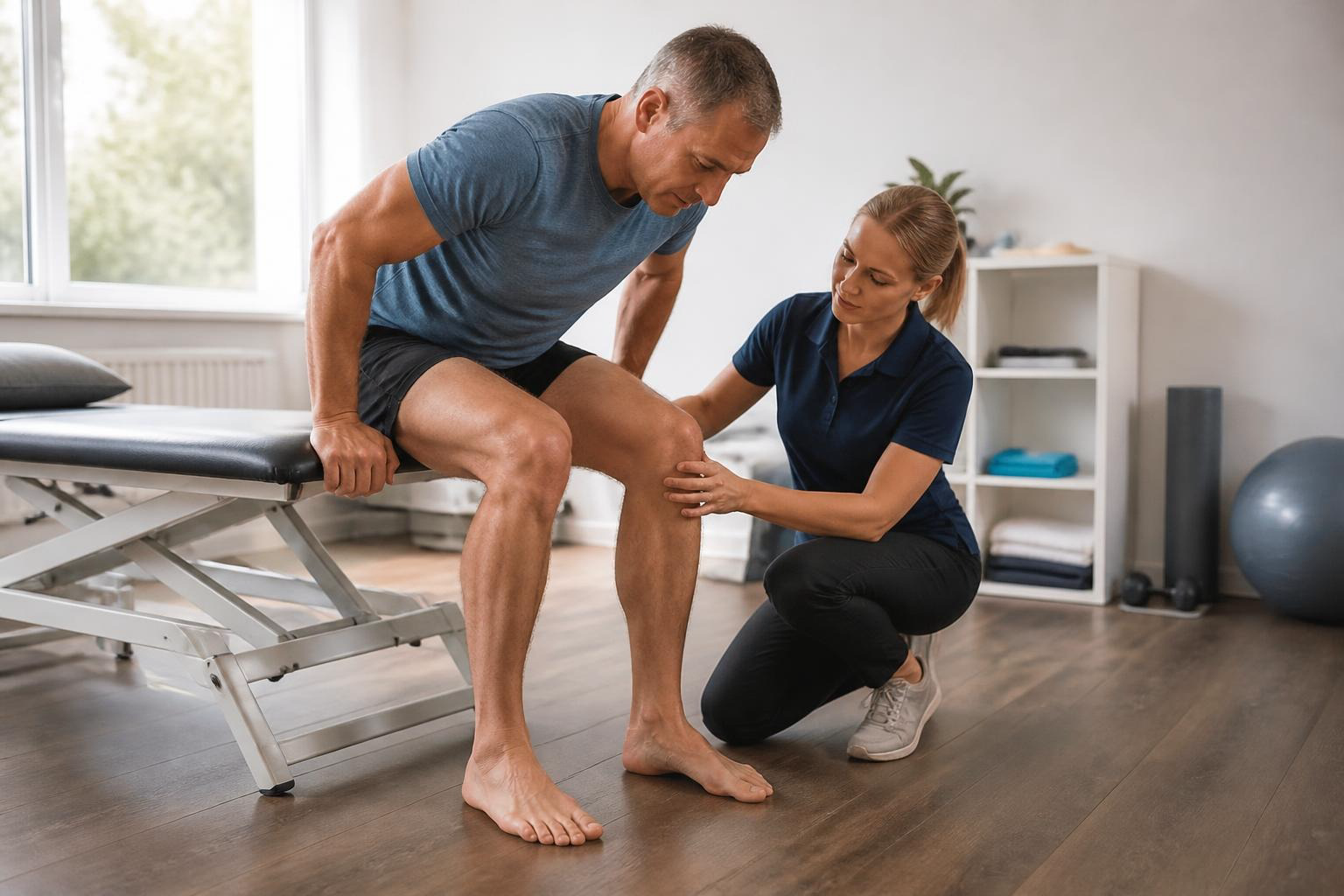
Physiokinetix Training is the professional education and movement system Paul developed, and Temple Human Performance is where we apply it with clients every day. Individuals use it through the PKT Self-Care program, and manual therapists, bodyworkers, trainers, and a wide range of healthcare and movement practitioners learn it through professional and continuing education. The system treats movement as the product of interacting influences, including neural input, joint mechanics, motor control, strength, task demands, and confidence, and it connects hands-on input with active movement, progressive loading, and functional performance.
Progression in Physiokinetix is organized across four levels: mobility, stability, power, and performance. Mobility gives a person access to useful ranges of motion. Stability is the active control of movement and position. Power introduces greater force production and progressive loading, and rate of force development belongs here alongside strength, muscular endurance, and tolerance for greater physical demand. Performance applies those capacities to sport, work, daily activity, and healthy aging. The levels build on one another without operating as a rigid protocol. A client may begin fast, low-load work at the hip while still developing range at the shoulder, and stability work continues as power work begins. The individual’s needs decide where we work on a given day.
General physical preparation develops broad capacities such as strength, coordination, balance, and work capacity, and specific physical preparation applies them to the demands of a particular activity. Rapid force fits both. As a general capacity, it supports everyday tasks that come with time limits. As specific preparation, the speed and pattern of the training are shaped toward the movement a client wants to perform, which matches the finding that movement-specific exercises produced reliable RFD gains.
Physiokinetix also gives attention to how the body responds when movement does not go according to plan, such as an unexpected load or a loss of balance. Responding to those moments requires force within a short window, which is one reason we treat rapid force as part of building resilience rather than as a quality reserved for athletes.
Table Neuro Training, the first and flagship Physiokinetix workshop for practitioners, was developed to complement the mobility and stability levels of the PKT Self-Care program. The power and performance levels extend from there toward greater resistance and functional application, much of it on the training floor rather than the table.
The PKT Self-Care program carries the same progression into the time between sessions, using simple tools and body positions. Fast sit-to-stands from a chair, quick step-ups, and short presses against resistance bands can all be performed with intent to move quickly and with control on the return. The aim is a client who can produce force when a task demands it, independently and over the long term.
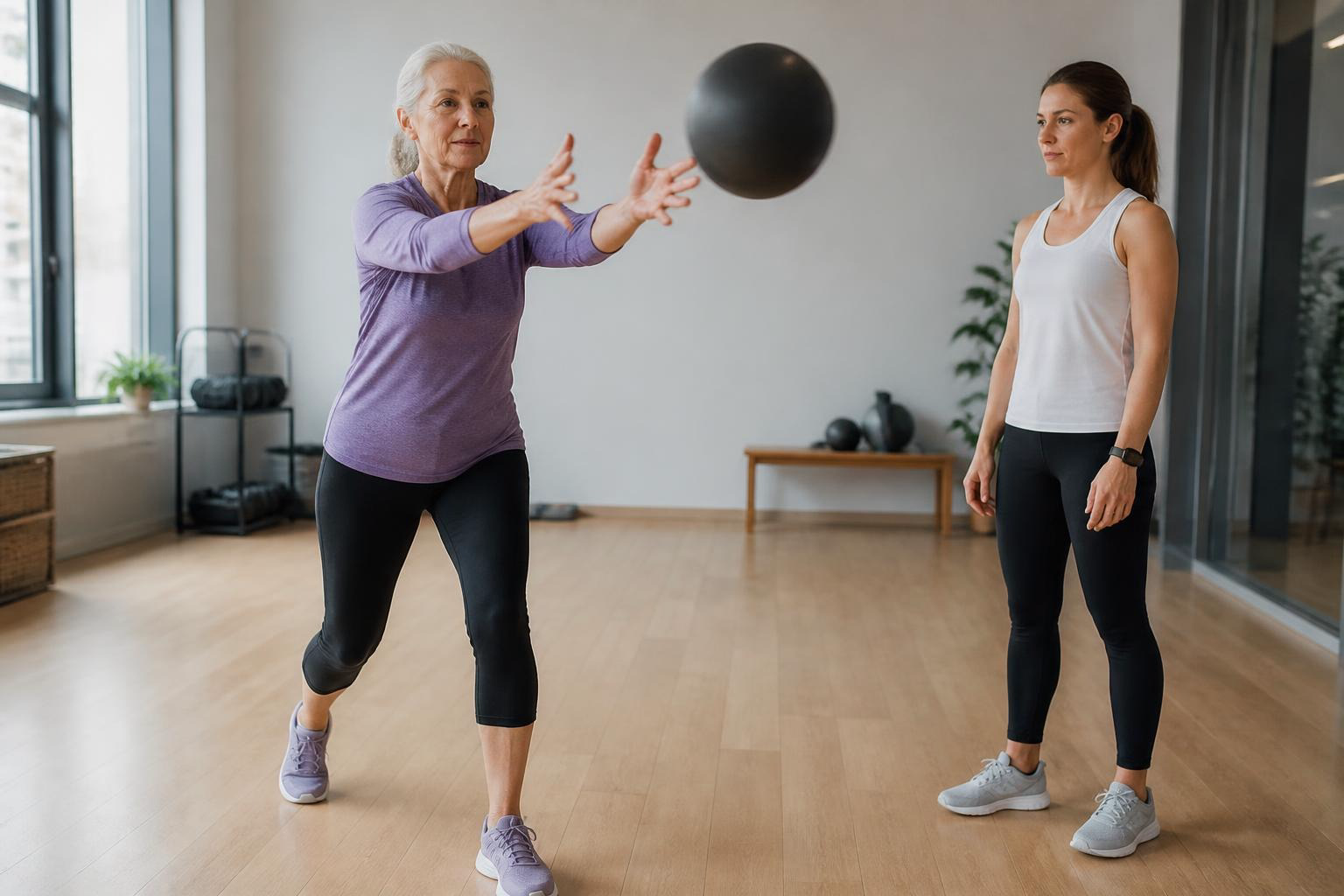
Rate of force development describes how quickly force rises at the start of a contraction, and power combines force with velocity. Both differ from maximal strength. The earliest phase of rapid force depends heavily on neural activation and the muscle’s contractile properties, and in older adults, changes in strength and rapid force do not track each other closely. Across meta-analyses, resistance training improves RFD, training with fast movement or with clear intent to move quickly produces the most reliable gains, and high-velocity training improves power more than traditional training in adults over 50. In healthy older adults, power training improves physical function modestly with adverse event rates similar to slow training, although the evidence is low in certainty and harms are often underreported.
Within our approach, these findings shape where power sits in a progression. Hands-on work and active effort on the table prepare range and control, fast efforts with clear intent are placed early and kept short, heavier strength work continues alongside them, and load rises as the client’s response allows. Rapid force is treated as a capacity worth training at any age, built on the mobility and stability that come before it and carried into the tasks that matter to each person.
1. Folland JP, Buckthorpe MW, Hannah R. Human capacity for explosive force production: neural and contractile determinants. Scandinavian Journal of Medicine and Science in Sports. 2014;24(6):894 to 906. https://doi.org/10.1111/sms.12131
2. Siddique U, Frazer AK, Avela J, Walker S, Ahtiainen JP, Howatson G, et al. Determining the cortical, spinal and muscular adaptations to strength-training in older adults: a systematic review and meta-analysis. Ageing Research Reviews. 2022;82:101746. https://doi.org/10.1016/j.arr.2022.101746
3. Guizelini PC, de Aguiar RA, Denadai BS, Caputo F, Greco CC. Effect of resistance training on muscle strength and rate of force development in healthy older adults: a systematic review and meta-analysis. Experimental Gerontology. 2018;102:51 to 58. https://doi.org/10.1016/j.exger.2017.11.020
4. Blazevich AJ, Wilson CJ, Alcaraz PE, Rubio-Arias JA. Effects of resistance training movement pattern and velocity on isometric muscular rate of force development: a systematic review with meta-analysis and meta-regression. Sports Medicine. 2020;50(5):943 to 963. https://doi.org/10.1007/s40279-019-01239-x
5. Straight CR, Lindheimer JB, Brady AO, Dishman RK, Evans EM. Effects of resistance training on lower-extremity muscle power in middle-aged and older adults: a systematic review and meta-analysis of randomized controlled trials. Sports Medicine. 2016;46(3):353 to 364. https://doi.org/10.1007/s40279-015-0418-4
6. Balachandran AT, Steele J, Angielczyk D, Belio M, Schoenfeld BJ, Quiles N, et al. Comparison of power training vs traditional strength training on physical function in older adults: a systematic review and meta-analysis. JAMA Network Open. 2022;5(5):e2211623. https://doi.org/10.1001/jamanetworkopen.2022.11623
7. Radaelli R, Trajano GS, Freitas SR, Izquierdo M, Cadore EL, Pinto RS. Power training prescription in older individuals: is it safe and effective to promote neuromuscular functional improvements? Sports Medicine. 2023;53(3):569 to 576. https://doi.org/10.1007/s40279-022-01758-0