Muscle strength and aerobic fitness both decline with age, and the decline tends to show up first in ordinary tasks: carrying groceries up a flight of stairs, getting off the floor after playing with grandchildren, walking a long airport concourse without needing to stop. These changes are often accepted as an inevitable part of getting older. The research on structured training in middle-aged and older adults tells a more hopeful story. Strength and endurance remain trainable well into later life, and the way the training is dosed, progressed, and supervised has a large influence on how much benefit people see.
Personal training at Temple Human Performance is built around that evidence. This article looks at what the major reviews and position stands say about resistance and aerobic training for adults in midlife and beyond, how much training appears to be enough, what the safety literature shows, and how we organize training in the clinic.
Resistance training is any structured exercise in which muscles work against an external load, such as machines, free weights, elastic bands, or body weight. Its main training variables are intensity (how heavy the load is relative to what a person can lift), volume (sets and repetitions), frequency (sessions per week), rest, and progression over time. Aerobic training is rhythmic, sustained work with large muscle groups, such as walking, cycling, rowing, or swimming, and it is dosed by intensity, session length, and weekly minutes.
The American College of Sports Medicine position stand on exercise for older adults (Chodzko-Zajko et al., 2009) and its broader stand on exercise quantity and quality (Garber et al., 2011) set out the core framework that most later guidance still follows: regular aerobic activity at a moderate or vigorous intensity, muscle strengthening for the major muscle groups on two or more days per week, and flexibility and balance work, with each element progressed gradually and adjusted to the individual. The 2018 Physical Activity Guidelines for Americans (Piercy et al., 2018) restated the same targets for adults, at least 150 minutes per week of moderate aerobic activity or 75 minutes of vigorous activity plus at least two days of muscle strengthening, and added multicomponent training that includes balance for older adults.
The most extensive review of strength training in older adults is the Cochrane review by Liu and Latham (2009), which pooled 121 randomized trials with more than 6,700 participants. Progressive resistance training performed two to three times per week produced a large average improvement in muscle strength, with a standardized mean difference of 0.84 across 73 trials. Gains in measures of physical function, such as gait speed and the time needed to rise from a chair, were smaller but still favored training. The reviewers also noted that adverse events were poorly reported in many trials, which limits how precisely the risks can be described.
The 2023 American Heart Association scientific statement on resistance training (Paluch et al., 2024) brought together a much larger and more recent body of evidence. It concluded that resistance training improves muscular strength, body composition, and physical function in adults with and without cardiovascular disease, and that it is associated with favorable changes in blood pressure, glucose regulation, and lipids. In large observational studies, people who reported regular muscle strengthening had roughly 15 percent lower all-cause mortality and 17 percent lower cardiovascular risk, with most of the apparent benefit reached at around 30 to 60 minutes per week. Those mortality figures are associations from cohort studies rather than results of training trials, and they do not show that strength training by itself caused the difference.
Aerobic and resistance training work well together. A 2022 meta-analysis by Khalafi and colleagues pooled 49 studies of middle-aged and older adults and compared concurrent training, meaning aerobic and resistance work in the same program, with either type alone. Concurrent training improved cardiorespiratory fitness more than resistance training alone and improved muscular strength more than aerobic training alone, while matching each single mode on its own main outcome. For most people in this age range, the review found no meaningful interference between the two.
Some of the most persuasive evidence concerns independence and falls. The LIFE trial (Pahor et al., 2014) randomized 1,635 sedentary adults aged 70 to 89 to a structured program of walking, strength, flexibility, and balance work or to a health education program, and followed them for an average of 2.6 years. The physical activity group had a lower rate of major mobility disability, defined as losing the ability to walk 400 meters, with a hazard ratio of 0.82, and a larger reduction in persistent mobility disability. In the Cochrane review of exercise for preventing falls in community-dwelling older people (Sherrington et al., 2019), exercise reduced the rate of falls by about 23 percent, with high-certainty evidence. Programs built mainly on balance and functional exercise, and programs that combined several types of exercise, showed the clearest effects. Evidence for resistance training on its own as a falls intervention was less certain.
Taken together, these findings support a few practical conclusions. Strength responds strongly to progressive loading at any age, while carryover into daily function is real but more modest, so the training needs to include movements that resemble the tasks people care about. Combining aerobic and strength work gives broader benefit than either alone. Balance and functional challenge deserve their own place in the program when steadiness and falls are concerns. Dose matters, but the evidence does not point to a single ideal routine. The guidelines describe ranges, and the reviews show benefit across a variety of program designs.
Safety also shapes how training is started. Current preparticipation guidance from the American College of Sports Medicine and the American Heart Association focuses on current activity level, known cardiovascular, metabolic, or kidney conditions, symptoms, and the intended intensity, rather than age alone. For most healthy adults, moderate training started gradually carries low risk. People with known conditions or symptoms are advised to check with their physician before moving into vigorous work.
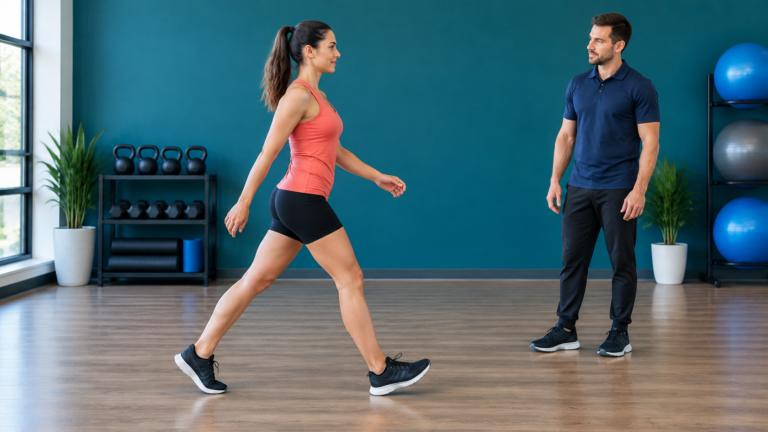
When a client begins personal training with us, we start with a conversation about health history, current activity, and goals, followed by a look at how the person moves, how strong they are in a few basic patterns, and how they tolerate effort. Anyone with symptoms or conditions that call for medical input is encouraged to talk with their physician before the program advances to harder work. We are training physical capacity, not managing disease, and we keep that line clear.
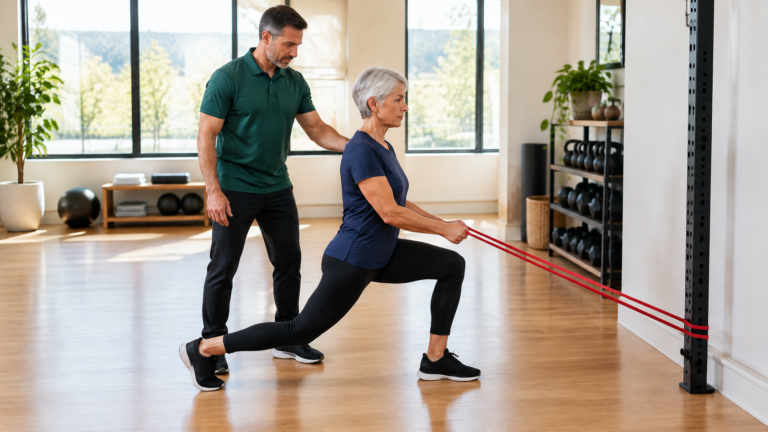
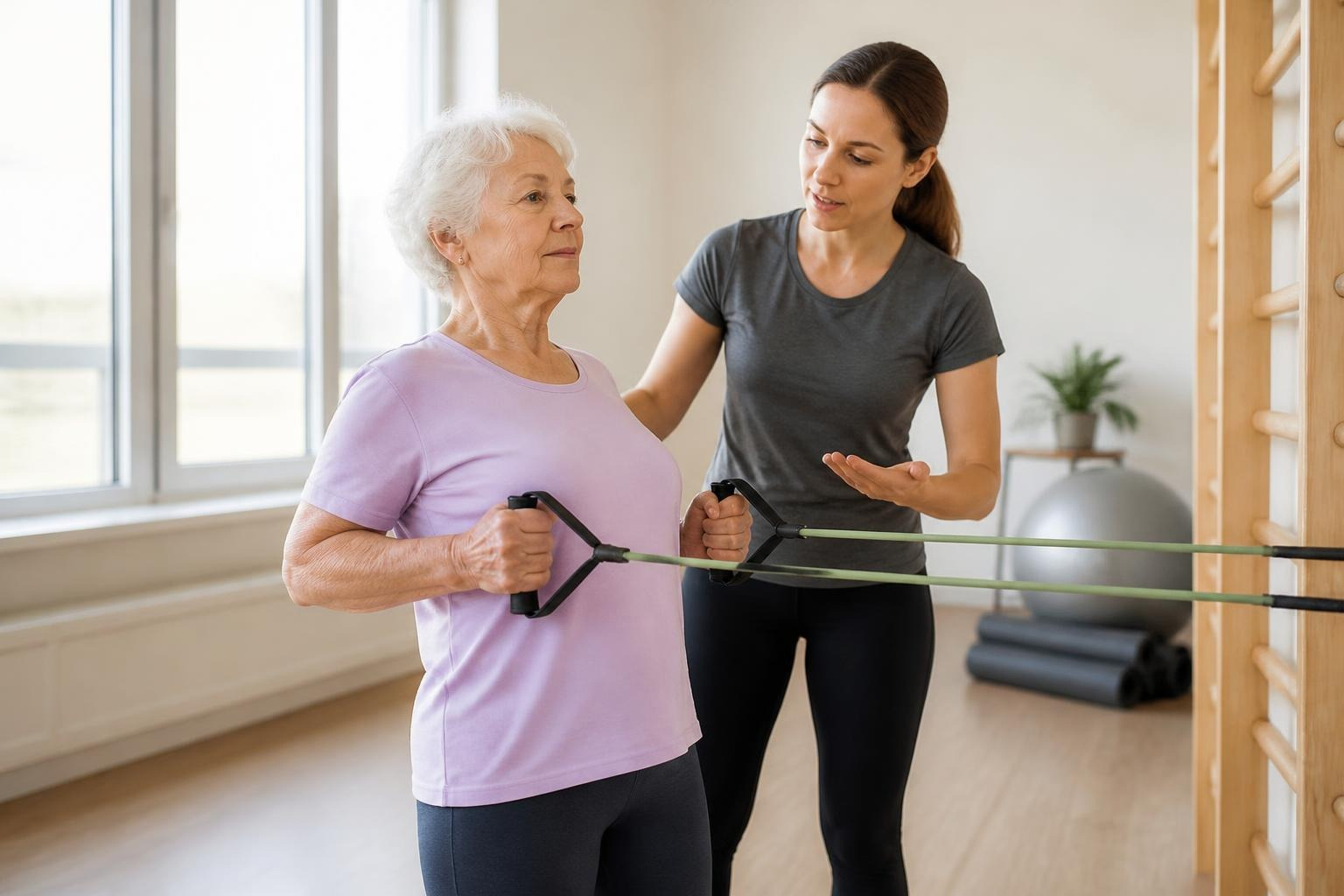
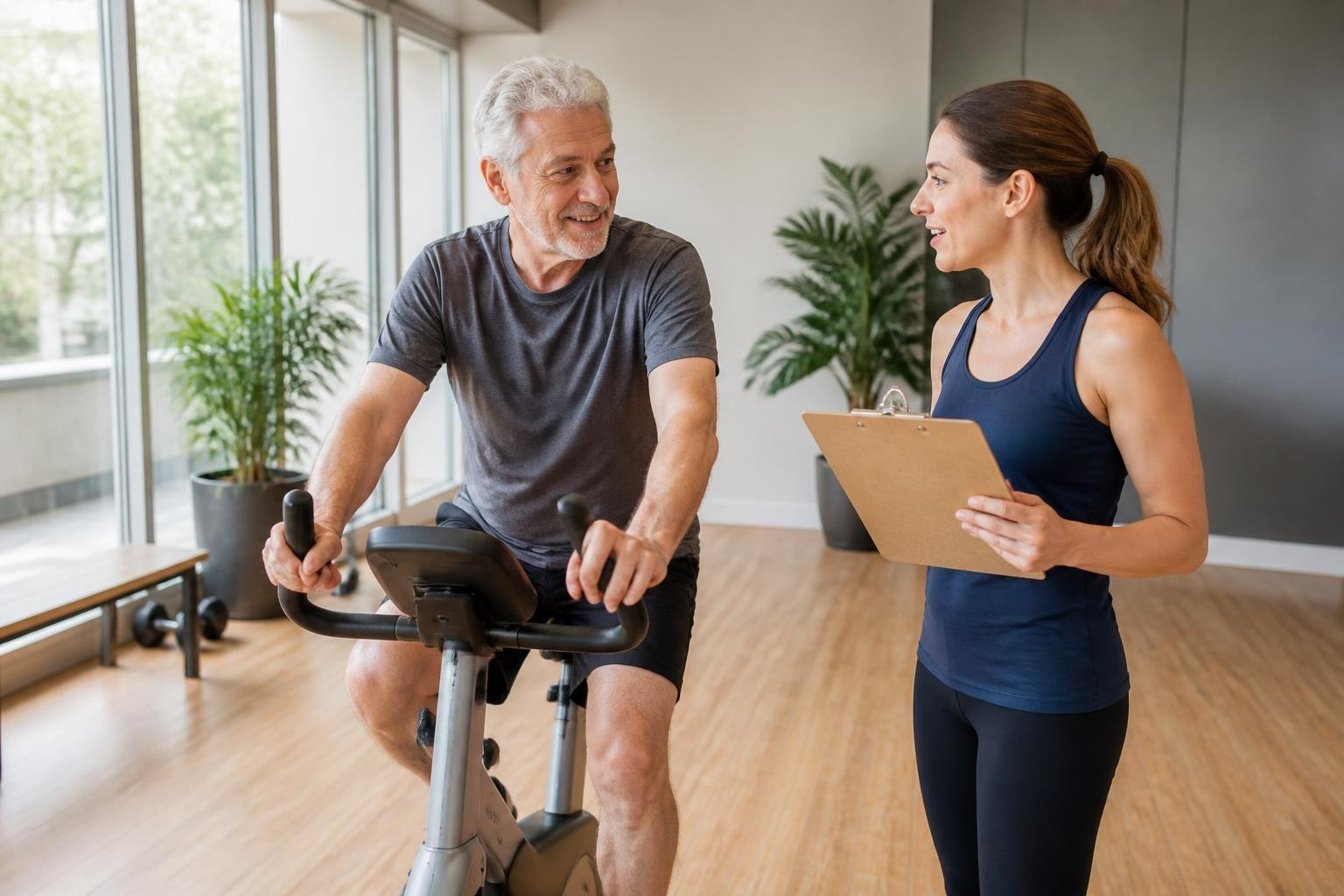
From there, the program usually follows the structure the position stands describe. Two or three strength sessions per week cover the legs, hips, trunk, and upper body with movements such as squats to a box, step-ups, hinges, presses, and rows. Loads start conservatively and rise as technique and confidence settle, using repetitions in reserve and the client’s own sense of effort alongside the numbers. Resistance comes from machines, dumbbells, and our resistance bands, which make it easy to grade the load in small steps and to continue the same exercises at home. Aerobic work is built toward the weekly guideline over several weeks, often starting with steady walking or cycling and adding longer or more vigorous intervals as fitness allows. Balance and functional tasks are woven into most sessions.
We change one variable at a time when possible and review progress every few weeks, so that each step up in load or volume rests on the last one. In my own work with older clients, the most reliable predictor of success has been consistency over months rather than the perfect choice of exercises, and the program is designed to be something people can sustain. For clients who want a more guided, progressive movement path between sessions, Temple also offers Physiokinetix Self-Care, which builds from mobility and stability toward greater load.
The evidence on training for middle-aged and older adults is among the most consistent in exercise science. Progressive resistance training produces large gains in strength, aerobic training builds cardiorespiratory fitness, and the two combine without meaningful conflict. Structured, multicomponent programs have been shown in trials to reduce falls and to help preserve walking ability, while the mortality findings remain observational associations. The guidelines provide a clear starting dose, and the details of progression and individual adjustment are where supervised training adds value. That is the work we do in the clinic: applying well-established principles carefully, one client at a time.
1. Liu CJ, Latham NK. Progressive resistance strength training for improving physical function in older adults. Cochrane Database of Systematic Reviews. 2009;(3):CD002759. https://doi.org/10.1002/14651858.CD002759.pub2
2. Paluch AE, Boyer WR, Franklin BA, Laddu D, Lobelo F, Lee DC, et al. Resistance exercise training in individuals with and without cardiovascular disease: 2023 update: a scientific statement from the American Heart Association. Circulation. 2024;149(3):e217 to e231. https://doi.org/10.1161/CIR.0000000000001189
3. Chodzko-Zajko WJ, Proctor DN, Fiatarone Singh MA, Minson CT, Nigg CR, Salem GJ, et al. American College of Sports Medicine position stand. Exercise and physical activity for older adults. Medicine and Science in Sports and Exercise. 2009;41(7):1510 to 1530. https://doi.org/10.1249/MSS.0b013e3181a0c95c
4. Garber CE, Blissmer B, Deschenes MR, Franklin BA, Lamonte MJ, Lee IM, et al. American College of Sports Medicine position stand. Quantity and quality of exercise for developing and maintaining cardiorespiratory, musculoskeletal, and neuromotor fitness in apparently healthy adults: guidance for prescribing exercise. Medicine and Science in Sports and Exercise. 2011;43(7):1334 to 1359. https://doi.org/10.1249/MSS.0b013e318213fefb
5. Piercy KL, Troiano RP, Ballard RM, Carlson SA, Fulton JE, Galuska DA, et al. The Physical Activity Guidelines for Americans. JAMA. 2018;320(19):2020 to 2028. https://doi.org/10.1001/jama.2018.14854
6. Khalafi M, Sakhaei MH, Rosenkranz SK, Symonds ME. Impact of concurrent training versus aerobic or resistance training on cardiorespiratory fitness and muscular strength in middle-aged to older adults: a systematic review and meta-analysis. Physiology and Behavior. 2022;254:113888. https://doi.org/10.1016/j.physbeh.2022.113888
7. Pahor M, Guralnik JM, Ambrosius WT, Blair S, Bonds DE, Church TS, et al. Effect of structured physical activity on prevention of major mobility disability in older adults: the LIFE study randomized clinical trial. JAMA. 2014;311(23):2387 to 2396. https://doi.org/10.1001/jama.2014.5616
8. Sherrington C, Fairhall NJ, Wallbank GK, Tiedemann A, Michaleff ZA, Howard K, et al. Exercise for preventing falls in older people living in the community. Cochrane Database of Systematic Reviews. 2019;1(1):CD012424. https://doi.org/10.1002/14651858.CD012424.pub2