
The Vagus Nerve, Cervical Function, and Why the Neck Influences More Than Pain
The vagus nerve has become one of the most discussed topics in rehabilitation, manual therapy, and performance training. Recent Articles explore the relationship between vagus nerve dysfunction and cervical spine mechanics, proposing that structural changes in the upper cervical region may influence vagal function and autonomic regulation.
While some of the proposed mechanisms remain areas of ongoing investigation, the article raises an important clinical question:
Can dysfunction in the neck influence systems throughout the body?
The answer is undoubtedly yes.
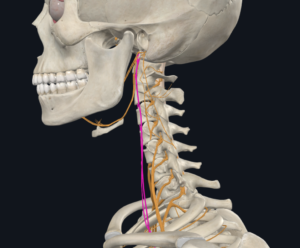
Understanding the Vagus Nerve
The vagus nerve is the longest cranial nerve in the body and serves as a major communication pathway between the brain and many vital organs. It contributes to:
• Heart rate regulation
• Blood pressure control
• Breathing patterns
• Digestive function
• Swallowing and vocalization
• Immune regulation
• Stress recovery and parasympathetic activity
Because of its widespread influence, disturbances in autonomic regulation can present as symptoms that seem unrelated to the musculoskeletal system, including digestive complaints, fatigue, dizziness, altered heart rate responses, breathing difficulties, and reduced stress resilience.
The Cervical Spine as a Neurological Hub
One of the most valuable points discussed in the article is that the neck serves as a convergence zone for multiple neurological structures. The vagus nerve travels through the cervical region alongside important vascular and neural tissues. The article proposes that cervical instability, altered posture, or mechanical dysfunction may contribute to changes in neural signaling.
Whether or not direct nerve compression is present, there is substantial scientific support for the idea that cervical function can influence nervous system behavior.
Research has demonstrated that the cervical spine contains a high density of proprioceptors that contribute to balance, head position awareness, eye movement coordination, and postural control. Altered sensory input from the neck can affect motor output throughout the body.
In other words, the neck is not simply a collection of joints and muscles. It is an important sensory organ that continuously provides information to the brain.
Why This Matters Clinically
At Physiokinetix, we frequently encounter individuals whose symptoms extend beyond isolated pain.
Many present with combinations of:
• Chronic neck tension
• Headaches
• Jaw dysfunction
• Breathing inefficiency
• Postural adaptations
• Balance deficits
• Movement avoidance behaviors
• Reduced exercise tolerance
While every case is unique, these presentations often involve an interaction between mechanical stress, altered sensory input, protective motor patterns, and autonomic nervous system responses.
This is where our approach differs from purely structural models.
Rather than assuming a single structure is responsible for every symptom, we evaluate how multiple systems interact.
The Physiokinetix Perspective
Physiokinetix is built on the understanding that movement is controlled by the nervous system.
The body constantly receives sensory information from joints, muscles, fascia, skin, the vestibular system, visual system, and internal organs. The brain uses this information to determine how much movement, force, stability, and protection should occur.
When sensory information becomes altered, movement often becomes altered as well.
This is why our clinical approach incorporates:
Neuro-Based Assessment
We evaluate how sensory input influences movement output.
This includes examining:
• Joint mechanics
• Arthrokinematics
• Balance and coordination
• Breathing strategies
• Cervical and cranial mechanics
• Functional movement patterns
Manual Therapy
Manual interventions are used to influence sensory input and improve movement options.
These may include:
• Musculoskeletal techniques
• Osteopathic-based manual therapy
• Soft tissue approaches
• Joint mobilization strategies
• Neurodynamic considerations
• Fascial and movement-based interventions
The goal is not simply tissue change. The goal is improved neurological efficiency and movement adaptability.
Graded Exposure and Movement Retraining
One of the most important principles within Physiokinetix is graded exposure.
The nervous system learns through experience. If movement has become associated with threat, discomfort, or uncertainty, carefully dosed movement can help create new motor solutions.
This process allows clients to gradually restore:
• Mobility
• Stability
• Coordination
• Confidence
• Functional capacity
Breathing and Autonomic Regulation
Because breathing influences both movement and autonomic function, it is often integrated into our rehabilitation and performance strategies.
Efficient breathing mechanics can influence rib cage function, cervical muscle activity, trunk stability, and nervous system regulation.
This creates opportunities to improve movement quality while simultaneously influencing recovery and resilience.
What We Teach in Our Workshops
Many of these concepts are explored throughout the Physiokinetix educational system.
Topics frequently covered include:
• Neurophysiology of movement
• Arthrokinematics and joint function
• Cervical spine mechanics
• Sensorimotor integration
• Mobility and stability progression models
• Neuro-based assessment strategies
• Manual therapy applications
• Movement restoration and performance
Our Table Neuro Training workshops, N.A.R.K. educational programs, and advanced manual therapy courses are designed to help clinicians better understand the relationship between biomechanics, neuroscience, and overall human performance.
Continuing Your Education
For clinicians interested in expanding their understanding of the nervous system’s role in movement and rehabilitation, our educational platform provides ongoing learning opportunities through:
• Live workshops
• Online training programs
• Monthly member education sessions
• Video libraries
• Clinical demonstrations
• Case discussions
As research continues to explore the relationship between cervical function, autonomic regulation, and whole-body health, one principle remains clear:
The body functions as an integrated system.
The more we understand the interaction between movement, sensory input, and nervous system regulation, the better equipped we are to help people move, feel, and perform at a higher level.