Most people think of the diaphragm as the muscle of breathing and stop there. The research on trunk control describes a muscle with a second job that runs alongside the first: helping to hold the trunk steady when an arm or a leg moves. Both jobs use the same muscle and the same abdominal cavity, so the way a person breathes and the way a person organizes the trunk are tied together more closely than either idea suggests on its own.
At Temple Human Performance, massage and osteopathic-based manual therapy work together with movement training and physical preparation in one plan of treatment and training. Hands-on work can change how freely the ribcage, spine, and hips move, and movement work decides whether that change is useful when a limb picks up load. This article looks at what the research shows about the diaphragm, intra-abdominal pressure, and breathing pattern in trunk control, where the evidence is strong and where it is thin, and how we work with it inside Physiokinetix.
Hodges and Gandevia (2000) studied the costal diaphragm directly, with intramuscular electrodes placed in four standing adults who moved an arm repeatedly “as fast as possible.” In contrast to standing at rest, diaphragm activity during the arm movement continued throughout expiration at about 78 percent of its peak inspiratory level, and a second rhythm appeared in the signal at the frequency of the arm movement itself. Faster arm movements, with greater peak acceleration, went with larger diaphragm activity. The pattern was similar sitting and standing. The authors concluded that diaphragm contraction is related to trunk control, and that its motor neurons contribute to both posture and respiration during a task that repeatedly challenges the trunk.
A companion study from the same group looked at the mechanical result. With the same kind of repeated limb movement, the diaphragm and transversus abdominis stayed active in a sustained way, with added modulation at the breathing rhythm and at the limb rhythm. Intra-abdominal pressure rose during limb movement in proportion to the reactive forces the movement created. The authors described a division of labor: coactivation of the diaphragm and abdominal muscles produces a sustained rise in intra-abdominal pressure, while inspiration and expiration come from opposing activity of those muscles that changes the shape of the pressurized abdominal cavity. Breathing, in this picture, happens on top of a pressure that the trunk is already holding.
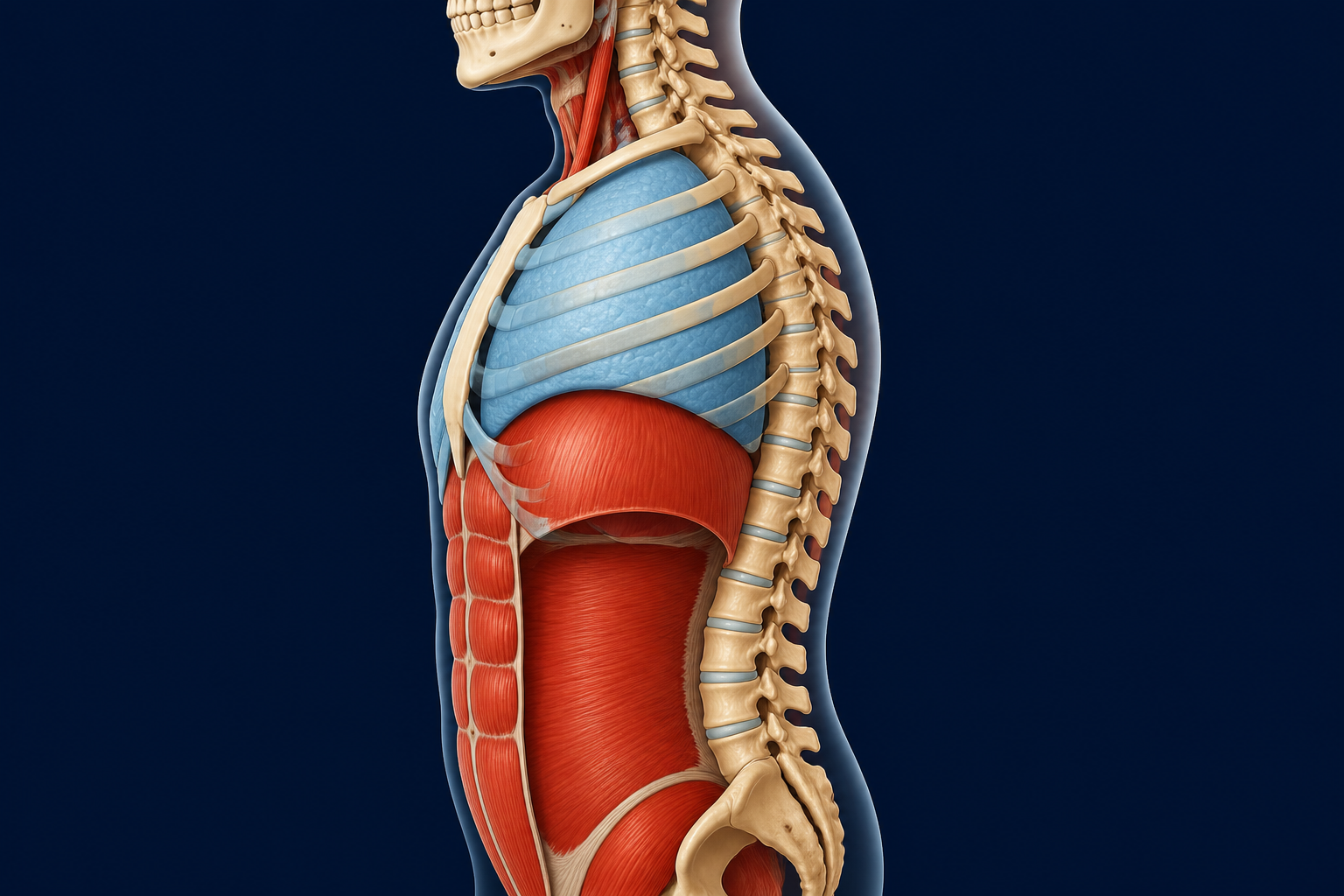
Kolar and colleagues (2010) added imaging. Thirty healthy adults lay supine in a dynamic MRI system with spirometry running at the same time, first breathing quietly and then breathing while pressing an arm or a leg against external resistance. Diaphragm excursion during the limb tasks was greater than during quiet breathing alone, with a larger effect for the lower limb, and the diaphragm sat lower at the end of inspiration. The authors read these results as both ventilatory and postural recruitment of the diaphragm in response to postural demand. This was a supine, laboratory test in healthy people, so it shows that the diaphragm participates in limb tasks, not how much it matters for any particular lift or sport.
Intra-abdominal pressure matters because it can contribute to stiffness of the trunk. Cholewicki, Juluru, and McGill (1999) built a physical model of the lumbar spine, an inverted pendulum held up by springs that stood for the abdominal and back muscles, and added a pneumatic piston to simulate pressure in the abdomen. Both co-contraction of opposing trunk muscles and a pressure mechanism raised the load the model could carry before buckling, and the two worked together. Their calculation matched the experimental result closely. The authors suggested that the pressure mechanism looks preferable in tasks that demand a trunk extensor moment, such as lifting or jumping, because it can raise stability without extra co-contraction of the back extensors. It is a model, not a person, and the paper does not claim to say how much pressure any individual uses. As a mechanical argument for why the abdominal cavity matters to the spine, it remains a clear one.
If the same muscle serves posture and breathing, the two demands have to be shared, and the research shows what happens when one grows. Hodges, Heijnen, and Gandevia (2001) recorded diaphragm and trunk muscle activity in 13 healthy volunteers who made rapid repeated arm movements while breathing normally and then while breathing through added dead space, which raises carbon dioxide and breathing drive. Early in the dead-space breathing, the diaphragm stayed tonic with modulation at both rhythms. After about 60 seconds of raised carbon dioxide, the tonic activity during expiration and the activity locked to the arm movement were reduced or absent in the diaphragm and in transversus abdominis, but not in the erector spinae. Intra-abdominal pressure and its changes with the arm movement were also smaller. The authors suggested that increased central respiratory drive can attenuate the postural commands reaching these muscles.
Illidi and Romer (2022) approached the balance from the other side, with 10 healthy young adults in a semi-recumbent position. At matched levels of ventilation, the diaphragm showed higher mean inspiratory transdiaphragmatic pressure during incremental cycling than during a carbon dioxide rebreathing task. The difference came from larger rises in gastric pressure and in the passive component of the pressure, which reflects static contraction, while diaphragm excursion was smaller. The rate of excursion and the diaphragm’s power output did not differ between the tasks. The authors interpreted this as the diaphragm preserving its power output during lower-limb exercise through coordinated changes in how far it shortens. It is a small study of healthy volunteers, but it fits the broader view that the diaphragm adjusts how it works as the task changes.
Taken together, these studies describe a muscle that is constantly negotiating. Our inference from them is practical: how a person breathes under load is part of how that person organizes the trunk under load, and the two cannot be fully separated in a session or in training.
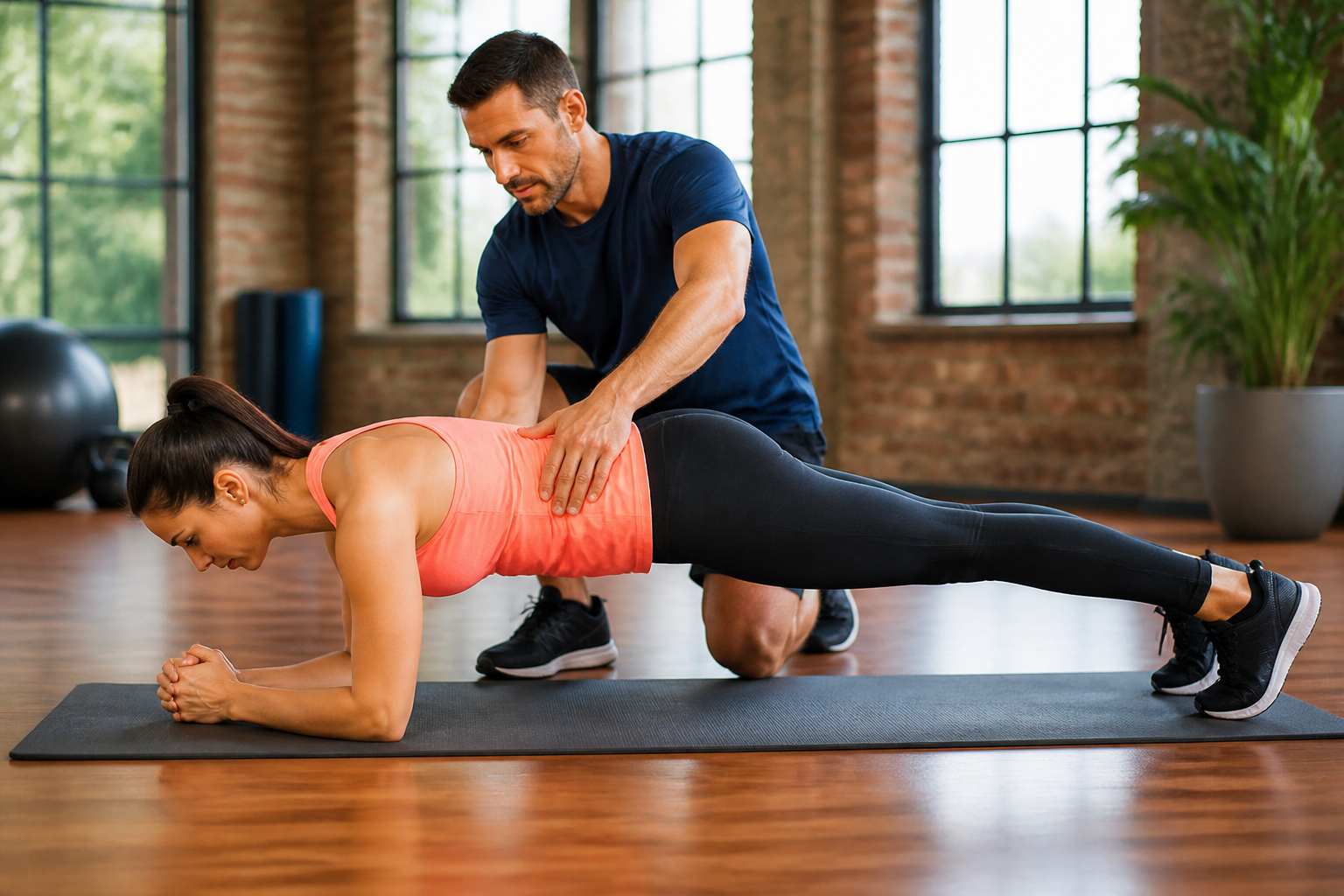
Kawabata and Shima (2023) asked how breathing pattern and posture interact in 14 healthy university students who studied sport science or physical education. They performed four breathing tasks, quiet nasal breathing, deep nasal breathing, completely forced expiration, and an exertional nasal inhalation with the abdominal muscles held in isometric contraction, in two positions: an elbow-toe plank and supine. Activity of the transversus abdominis and internal oblique rose to 47.6 percent of maximum voluntary contraction during forced expiration supine and to 35.7 percent during the exertional inhalation in the plank. During quiet and deep breathing it stayed under 20 percent. External oblique activity was higher in the plank, 22.5 to 30.6 percent, than supine, under 5 percent, across all breathing tasks. Intra-abdominal pressure stayed low in every task except forced expiration, at 24.9 percent.
The finding is specific. The plank mainly raised external oblique activity, while the transversus abdominis and internal oblique rose mainly with the breathing task. Ordinary deep breathing, even in a plank, did not drive the deep muscles strongly. The study had 14 young, active participants and measured muscle activity and pressure, not performance or movement quality, so it shows that breathing pattern is a lever on which muscles work, not that any one pattern is best.
Two recent trials put breathing into practice. Amiri and Zemková (2025) studied 18 sedentary adults with an average age of 36.2 years. After a protocol of eight exercises aimed at fatiguing the core muscles, which increased the velocity of the center of pressure during standing balance, each person tried four recovery conditions a week apart: diaphragmatic breathing, trunk stability exercises, foam rolling, and lying on a bed. Center of pressure velocity was restored most effectively after trunk stability exercises, followed by diaphragmatic breathing, foam rolling, and passive rest, and the trunk exercises and diaphragmatic breathing were the most effective for restoring center of pressure displacement. The authors concluded that both rapidly restored postural stability after fatigue. The abstract reports no significant changes at 15 minutes after recovery, so the effect described is an immediate one in a small group of sedentary adults.
Nazir and colleagues (2026) randomized 54 community-dwelling adults aged 65 to 75 into diaphragmatic breathing, diaphragmatic breathing plus diaphragmatic mobilization, or a control group, with sessions twice weekly for 8 weeks. Timed up-and-go scores and gait velocity improved in both intervention groups, as did balance confidence, fatigue, and several quality-of-life domains. Balance scores on the mini-BEST and five-times sit-to-stand time did not significantly change from baseline, and the authors described the effect on balance as limited. Because both intervention groups improved compared with control in the reported results, this trial alone does not separate what the added mobilization contributed. It is also a study in older adults, so how far it carries to athletic or occupational groups is open.
Three practical ideas come out of this evidence. First, the diaphragm takes part in postural control, so a person who struggles to keep the trunk organized as a limb moves may also be negotiating a breathing demand at that moment. Second, breathing pattern changes which abdominal muscles work, so the breath is a usable variable in a loaded position, not a separate topic. Third, breathing and trunk exercises can be practiced actively, and the trials that exist so far describe benefits that are short-term, small-sample, or in groups that differ from athletes. For athletic performance specifically, the effect is plausible but not established.
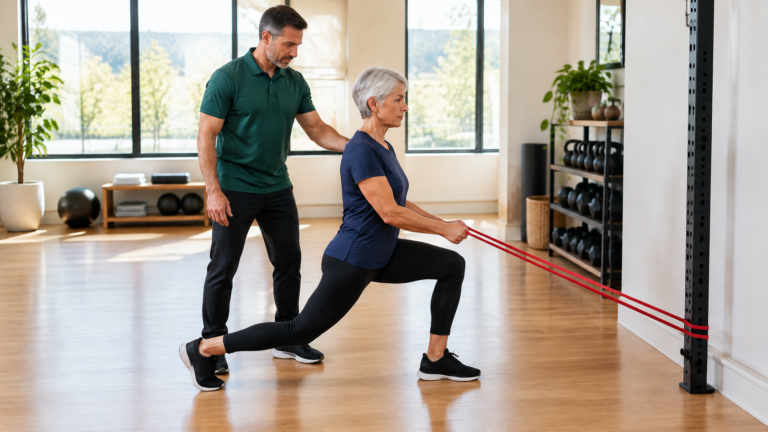
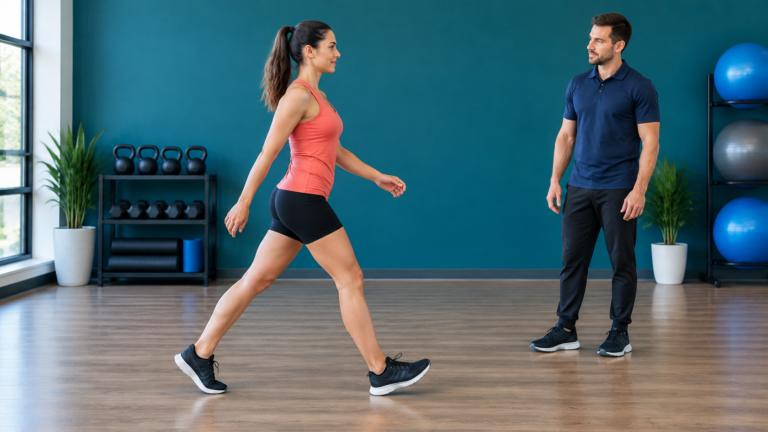
In an assessment, we watch breathing together with movement, because breathing and pressure relationships are one of the factors that shape how a person organizes a task. When a limb is loaded, we notice whether the ribcage and trunk stay available for breathing or lock down, and whether the trunk can hold its position as the breath changes. In our hands-on work, one of the earliest clues to how someone organizes the trunk is what happens to the breathing the moment an arm or a leg picks up load.
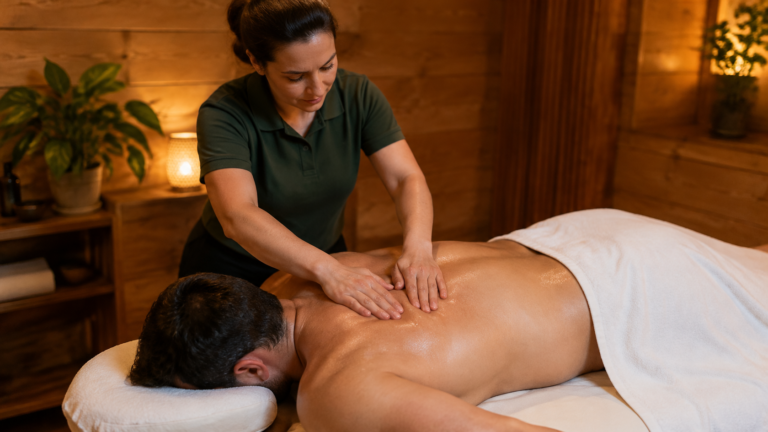
The hands-on work is aimed at what the person can do next. Manual input to the ribcage, thoracic spine, and abdominal wall region can change how freely those areas move and how the person senses them, and we then ask the person to use that change actively: breathing into a new available range, holding a position while the breath changes, and then moving a limb under that position. In Table Neuro Training, our flagship professional workshop, which was built to complement the Mobility and Stability levels of PKT Self-Care, the table becomes a place where hands-on input is paired with active breathing, positioning, and resistance. Breathing mechanics also feature in our NARK Head, Neck and Jaw education, a specialized course.
From there the same logic runs through the PKT framework. Mobility gives the ribcage and trunk options. Stability asks the person to control a position while the breath moves. Power and Performance then add greater load, speed, and task demand, including the moments when breathing drive is high and the trunk still has to do its job. Our reading of the Hodges and Illidi studies is that high-demand moments are where the competition between the two jobs shows up, so we introduce them progressively rather than avoiding them.
Physiokinetix looks at movement as the product of several systems working together, and breathing and pressure relationships are one of them. A symptom or a limitation in one region is a reason to ask about the whole system, not a reason to assume the cause is the breath or the trunk. The diaphragm research is a clear example of why. A muscle we usually file under respiration turns out to belong to trunk control too, and the pressure it helps create is part of how force moves between the legs and the arms.
That connects directly to the kinetic chain. Proximal organization supports distal output, and the trunk is the proximal link for both arms and legs. When we consider adjacent regions, the ribcage, the thoracic spine, the lumbar spine, and the pelvis, the diaphragm and the abdominal wall are part of what links them. The bridge we teach runs from hands-on input to active movement, then progressive loading, then performance, and breathing is one of the skills carried across that bridge.
The diaphragm breathes and also helps stabilize the trunk when the limbs move, and the research describes this with recordings from the muscle itself, with imaging, with pressure measurements, and with a mechanical model of the spine. Breathing demand can compete with the postural job, breathing pattern changes which abdominal muscles are used, and breathing practice improved some outcomes in small trials, mostly in the short term and in non-athletic groups. The strongest ideas here are about how the trunk is organized. The weaker ones are about what breathing practice does for performance. In our work, breathing is treated as part of movement quality, assessed along with load and position, influenced with hands-on work, and then practiced actively inside progressively more demanding tasks.