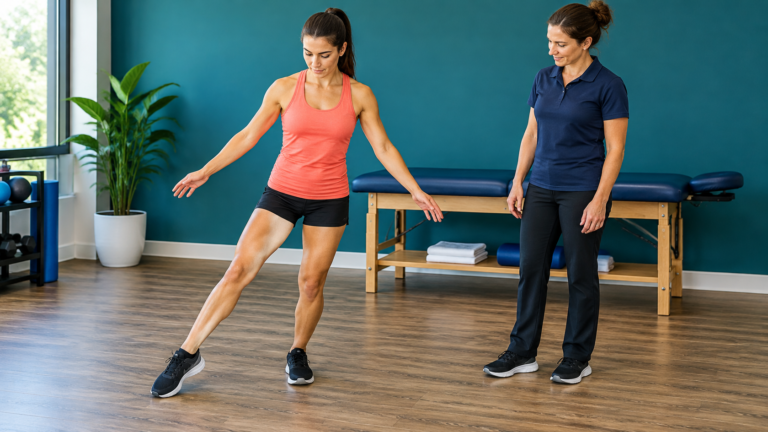
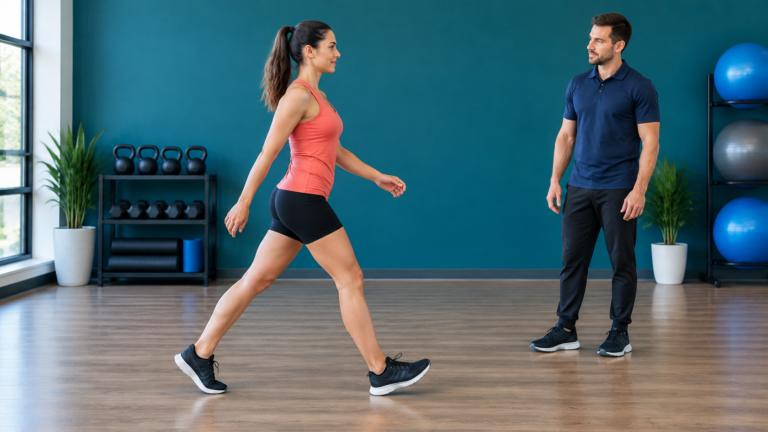
Picking a crate up from the floor, bending to load a dishwasher, or reaching for a bag in the back seat all ask the trunk to tip forward and come back. The bend has to come from somewhere. The lumbar spine can flex, and the pelvis can rotate forward over the hip joints, and every person divides the work between the two in a slightly different way. The pattern of that division is called lumbopelvic rhythm, and it is easy to treat as more settled than the research allows.
At Temple Human Performance, massage and osteopathic-based manual therapy work together with movement training and physical preparation in one plan of treatment and training. Hands-on work can change how freely a hip or a thoracic region moves, and movement work decides how that change is used in a bend or a lift. This article looks at what the research actually shows about lumbopelvic rhythm in bending and lifting, where it is variable, where it differs in people with back pain, and how we work with it inside Physiokinetix.
Zawadka and colleagues (2018) defined lumbopelvic rhythm as the magnitude and timing of lumbar spine and pelvic contributions during forward bending and the return. Clinicians commonly watch it as part of a routine examination of spine mobility, yet the same review noted limited knowledge about the factors that shape lumbar and hip mobility and coordination in the sagittal plane. Their review of 31 studies found that age and sex, hamstring muscle tightness, foot position, muscle fatigue, movement speed, external loading, and the phase of motion can each affect some aspect of the rhythm.
That list matters more than any single number. A rhythm is not a fixed property of a spine. It is the result of a person, a task, a speed, a load, and a moment in the day, and the first thing the literature establishes is that the rhythm moves when those things move.
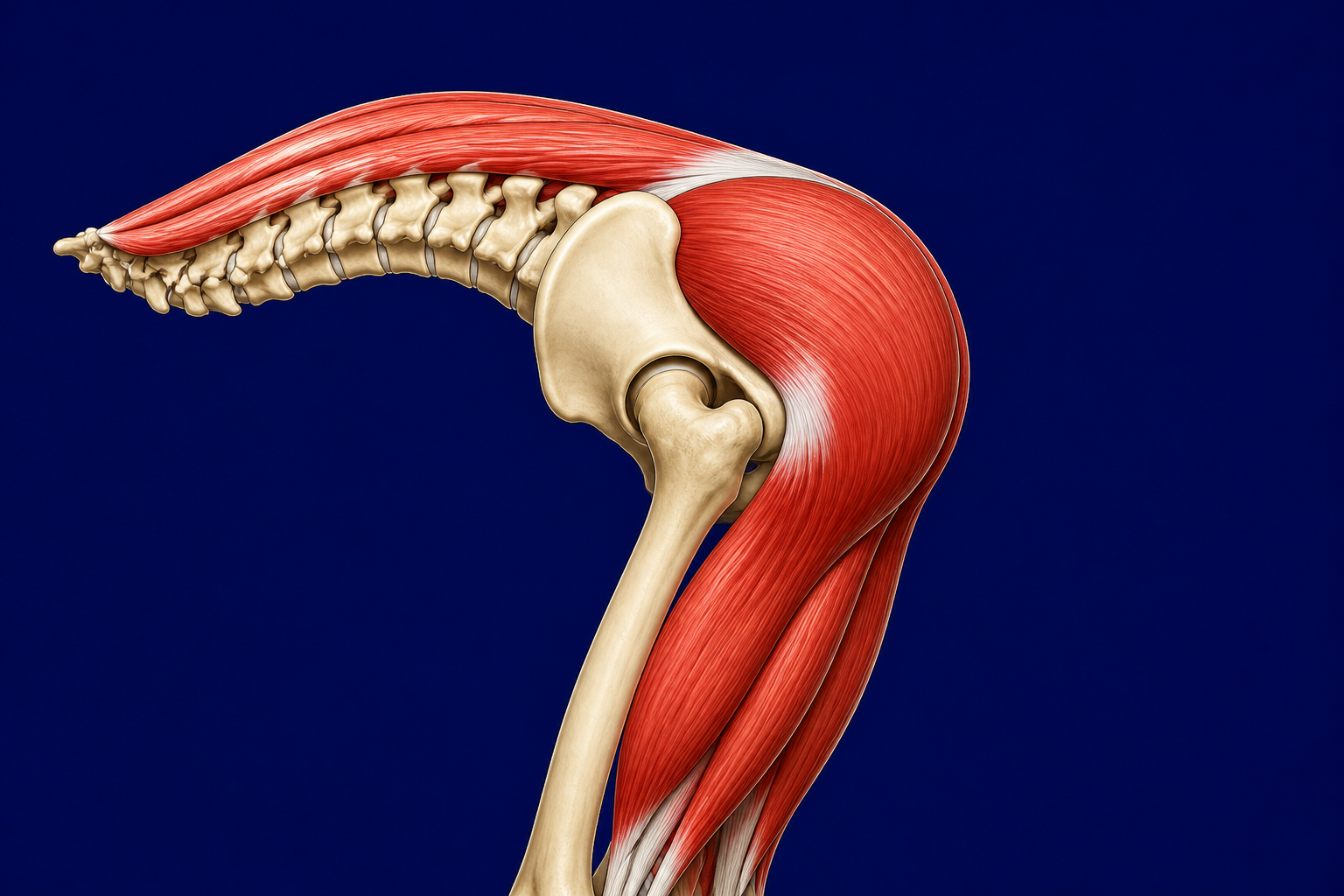
Before comparing people, it helps to know how repeatable the measure is. Laird and colleagues (2016) used wearable inertial sensors to measure lumbar lordosis, range of movement, and lumbopelvic rhythm in 63 adults with and without chronic low back pain, on three occasions: twice on the same day with different raters, and again one to two weeks later. Agreement between raters was good to excellent (mean r = 0.88). Between occasions, though, the lumbar contribution to flexion and lateral flexion varied by 8 to 15 percent, and the lumbar contribution to extension varied by 36 to 56 percent. The authors concluded that changes would need to exceed those amounts to be confident that the movement had really changed.
Group differences were modest. People with low back pain showed a lumbar contribution to trunk flexion of 45.8 percent against 51.3 percent in people without pain (p = 0.044), and a pelvic flexion range of 60.8 degrees against 54.8 degrees in people without. Lumbar lordosis did not differ. The practical reading is that a small shift in a rhythm measure from one visit to the next sits inside the noise of the measure itself.
Pan and colleagues (2020) measured sagittal lumbo-pelvic motion in 10 males and 10 females doing two lifting tasks: one weight lifted in front of the body to abdomen, chest, or head height with straight knees, and two weights lifted at the sides with bent knees. The ratio of lumbar to hip rotation was greater during lifting and lowering than during unloaded flexion in both tasks. Females generally showed a smaller ratio than males, and the ratio rose with greater lifting height in the bent-knee task. Lifting 10 kg compared with 20 kg (tested in males only) made no difference, and neither did lifting compared with lowering. With 20 participants, this is a lab study of healthy adults, and it shows the rhythm responding to the task more than to the number on the weight.
Individual structure appears to matter too. Pavlova and colleagues (2018) had 30 healthy adults do freestyle, stoop, and squat lifts with a box of self-selected weight (6 to 15 kg) and related the kinematics to the shape of each person’s lumbar spine on MRI. Greater overall lumbar curvature was associated with greater peak pelvis flexion (r = 0.38) and smaller peak knee flexion (r = -0.40), meaning people with curvier spines preferred a stooped lifting posture. People who squatted adapted more easily to different techniques than people who stooped, and across techniques individuals mostly changed knee flexion while keeping their own preferred range of lumbar flexion. The authors suggested that lifting tasks may need to be tailored to a person’s lumbar spine shape.
Repetition changes the pattern as well. Saraceni and colleagues (2021) had 21 people with a history of low back pain and 20 without perform a 100-lift task while reporting pain intensity every 10 lifts. At the beginning, the group with a history of back pain lifted more slowly and in a more squat-like way, with less peak lumbar anterior shear force and greater peak knee power. By the end of the task both groups lifted in a similar, more stoop-like and faster way. Of 21 biomechanical variables, only one, pelvic tilt at box lift-off, was associated with the rise in pain in the group with back pain. The authors noted that greater lumbar flexion or greater lumbar force was not observed in the pain group, which raises questions about common ideas of a single safe lifting technique. The study was done in a laboratory, which limits how far the findings carry into daily work.
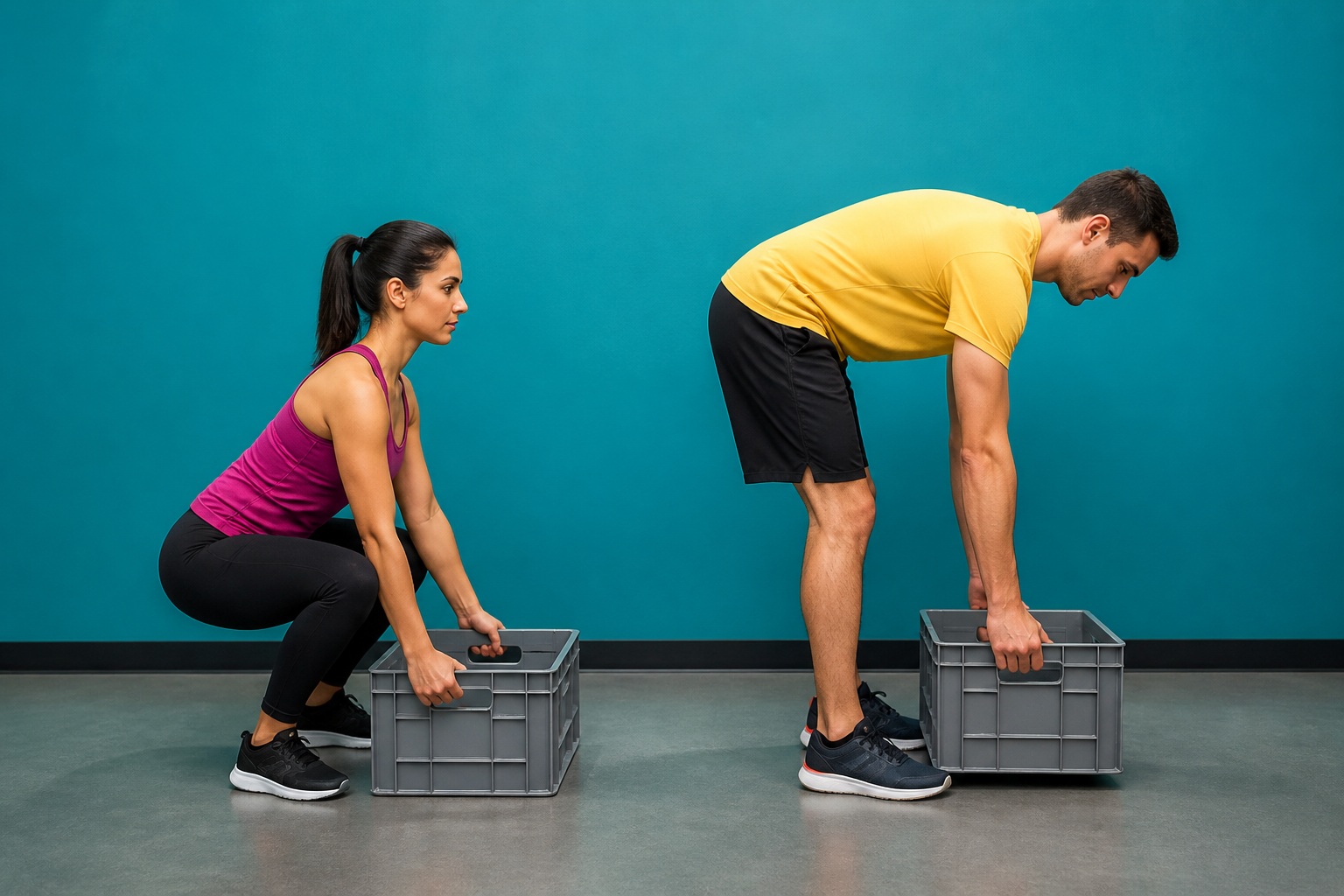
Laird and colleagues (2018) measured flexion in 126 people without a history of significant back pain and 140 with persistent back pain, using motion and muscle-activity sensors, and used latent class analysis to look for patterns. Four subgroups emerged. The first (133 people, 26 percent with back pain) had the greatest trunk flexion, the fastest movement, full flexion relaxation of the back extensor muscles, and synchronous lumbar and pelvic motion. The second (71 percent with back pain) had the greatest lumbar range, less flexion relaxation, and a 0.9-second lag of pelvic movement. The third (83 percent with back pain) had the smallest lumbar range and a 0.6-second delay of lumbar movement relative to the pelvis. The fourth (all with back pain, 19 people) had the least flexion relaxation, the slowest movement, and the smallest pelvic range, and reported greater activity limitation. The authors described the groups as standard, lumbar dominant, pelvic dominant, and guarded, and suggested that such subgroups may bear on who responds to movement-based interventions.
Kim and colleagues (2013) found a similar split in a smaller sample. In 16 healthy adults and two groups of people with back pain (17 and 14 people), lumbar flexion was larger in the flexion-with-rotation group, hip flexion was larger in the extension-with-rotation group, and the flexion relaxation response of the erector spinae disappeared in both pain groups. The two pain subgroups looked different from each other, which is the point: more than one pattern runs through people with back pain.
A large cohort adds the same message at scale. Bell and colleagues (2025) used inertial sensors in 954 adults with chronic low back pain and found variable patterns across tasks. The hip region played a critical role in functional tasks, and the group typically showed a hip-dominant pattern with slightly greater lumbar contribution early in flexion. That report had no comparison group without back pain, which the authors planned to add in later work.
Liu and colleagues (2019) combined a musculoskeletal model with a finite element model of the lumbosacral spine to compare three rhythms at 60 degrees of forward flexion. A rhythm with high pelvic rotation and low lumbar flexion engaged more global muscles and increased the disc’s role in resisting load. A rhythm with low pelvic rotation recruited more local muscles and engaged the ligaments, lowering disc load. A balanced rhythm gave nearly equal disc and ligament load sharing and a more balanced mix of global and local muscle action. Intradiscal pressure and annular fiber strain were less affected by the rhythm. This is a simulation, so it shows that load can be distributed differently, not which distribution suits a given person.
Taken together, the research does not describe a correct ratio. It describes a strategy that changes with load, lift height, sex, spine shape, repetition, and speed, that is measured with real noise from one session to the next, and that differs among people with back pain in more than one direction. A lumbar-dominant bend and a pelvic-dominant bend each exist in people with and without pain, and each shifts how tissues share the work. Neither is proven to be the cause of anything.
What follows is a way of asking questions. Where does the bend come from in this task, at this load, after this many repetitions? Can the person organize it more than one way? Does it change when something upstream or downstream changes?
We do not look for one ideal rhythm. In a session, we watch how a person bends and lifts across a few tasks: a hip hinge with no load, a lift from the floor, a lift to waist height, and the return. We repeat them, because a single trial says little and because the pattern can change as the set goes on. We note where the lumbar spine, the pelvis, and the hips each contribute, and whether the person has more than one way to do the movement.
When assessment shows that a hip or the thoracic region contributes little, we may use hands-on work there, then have the person practice the same hinge or lift actively, first on the table and then standing, so the change is organized rather than only received. Table Neuro Training (TNT), the flagship PKT workshop developed to complement the Mobility and Stability levels of the PKT Self-Care program, teaches practitioners to use the table in this way, combining hands-on input with active movement. Loading then rises through height, weight, and technique variations, which fits Pavlova’s observation that some people adapt more readily across lifting techniques. Our inference is that practicing more than one strategy keeps options available as demands change. No trial has tested this exact sequence.
Physiokinetix, the education and movement system I developed, treats the spine as a coordinated movement system that takes part in whole-body movement, with changes in movement strategy influencing loading and performance. The five key links describe how regions above and below the area of concern, on the same side and the opposite side, contribute to a movement. Lumbopelvic rhythm is a clear example, because the hip, the thoracic region, and foot position can all change how the bend is shared.
Mobility gives options, Stability is the ability to control them, Power adds progressive loading, and Performance applies the capacity to real tasks. The levels are progressive, not a rigid protocol. The principle of knowledge, not diagnosis, fits the research here: the useful question is what a person’s movement is doing and what they can do with it, not whether it matches a pattern.
Lumbopelvic rhythm is a real and measurable feature of bending and lifting, and it is also variable. It shifts with load, lift height, sex, spine shape, speed, fatigue, and repetition, and a single measure can move by 8 to 15 percent without any real change. People with back pain do not share one pattern, and the studies show lumbar-dominant, pelvic-dominant, and guarded strategies. Modeling work shows that the share of the bend changes how load is distributed across muscles, discs, and ligaments. At Temple Human Performance, we treat the rhythm as a strategy to observe, influence, and train across tasks, building options through hands-on work and active practice, and loading them progressively.